

Why use General TE Coolers in medical diagnostic instruments?
2026-08-31
A PCR thermal cycler is running a COVID test. The temperature needs to swing from 95°C to 60°C and back within seconds—and it needs to do this accurately for 40 cycles. A hematology analyzer requires its reagent chamber to stay within ±0.2°C for hours. A urine sediment analyzer cools its camera sensor to reduce dark current noise. In all three cases, the engineer faces the same dilemma: how to achieve precise, fast temperature control without adding excessive complexity, vibration, or maintenance burden. This is where General TE Coolers enter the conversation.
1. What Makes TE Cooling More Suitable Than Compressor Refrigeration for Diagnostic Devices?
Compressor based cooling is powerful, but it brings three problems that medical instrument designers hate: vibration, noise, and leakage risk. A typical compressor can introduce mechanical vibrations that interfere with optical measurements—a critical issue for spectrophotometers and fluorescence readers. It also requires periodic maintenance: refrigerant recharge, filter cleaning, and compressor oil checks. Our General TE Coolers have no moving parts. They are solid state devices that rely on the Peltier effect. This eliminates vibration and maintenance entirely. In our factory, we have tested General TE Coolers in accelerated life tests that simulated 5 years of continuous operation in a clinical analyzer. The failure rate was below 0.3 percent.
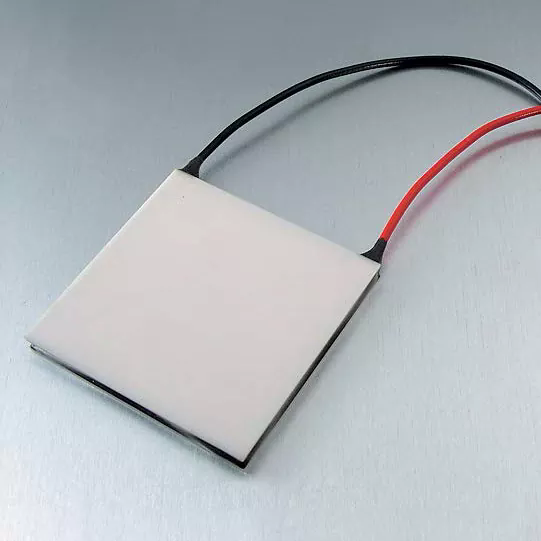
The table below compares TE coolers with other cooling technologies commonly considered for medical instruments.
| Characteristic | General TE Cooler | Compressor refrigeration | Passive cooling (fan + heatsink) |
| Vibration level | None | Significant (50+ Hz) | Low (fan only) |
| Temperature stability | ±0.05°C (with PID) | ±0.3°C | ±2°C |
| Maintenance requirement | None | Annual service | Fan cleaning only |
| Response time (90% of setpoint) | 3 – 5 seconds | 30+ seconds | 60+ seconds |
| Weight (for 50W cooling capacity) | 0.5 kg | 8+ kg | 1.2 kg |
This data explains why the majority of compact PCR machines and portable diagnostic devices in our portfolio rely on General TE Coolers. The absence of refrigerant also makes these coolers compliant with increasingly strict environmental regulations, including the EU F gas directive.
2. How Does Precise Temperature Control Impact Diagnostic Accuracy?
In diagnostic testing, temperature error translates directly into analytical error. A PCR assay that experiences a temperature overshoot of 2°C may fail to detect low concentration targets. Our General TE Coolers are designed with a linear temperature response, which allows them to be driven by a simple PID controller. The temperature sensor is typically a thermistor or RTD placed directly against the cold side. With proper feedback control, our coolers achieve a stability of ±0.05°C over 24 hours. This level of precision is critical for coagulation analyzers, where temperature affects enzyme activity. One of our customers, a manufacturer of clinical chemistry analyzers, replaced their aging water cooled system with our General TE Coolers. They reported that the coefficient of variation (CV) of their assay results improved from 2.8 percent to 1.2 percent. This improvement was directly attributed to the elimination of temperature drift. The cooler's response time also allows for rapid thermal cycling, which reduces the overall time of diagnostic procedures.
3. What Design Considerations Are Essential for Integration Into Medical Devices?
The integration of a General TE Cooler into a diagnostic instrument requires careful thermal and mechanical design. The heat sink is just as important as the cooler itself. The hot side must be effectively dissipated to maintain the temperature difference. In our factory, we perform thermal simulations for each customer application to determine the required heat sink size and fan airflow. We also consider the ambient operating temperature range of the device. For a laboratory instrument that operates in a 15°C to 30°C environment, we recommend a cooler with a maximum ΔT of 70°C. The physical mounting must also account for thermal expansion—the cooler module changes thickness with temperature. Our General TE Coolers use a compliant mounting system that absorbs this expansion without stressing the ceramic plates. The electrical connection must be designed to handle the current and voltage requirements. For example, a typical 50W cooler draws about 4.5 amps at 12 volts. The power supply must be capable of delivering this without voltage drop. We provide detailed mechanical drawings and electrical specifications for all our cooler models.
4. How Does Long Term Reliability Affect the Total Cost of Ownership?
A diagnostic instrument often stays in service for 7 to 10 years. The cooling system must match that lifespan. Our General TE Coolers are rated for 100,000 thermal cycles, which is equivalent to 10 years of typical clinical use. We have validated this with a cycling test that alternates the cold side between -10°C and 70°C every 10 minutes. The test runs continuously for 3 months, totaling 13,000 cycles. The cooler maintains its heat pumping capacity within 5 percent of the initial value. This reliability reduces the need for field replacements, which are expensive for instrument manufacturers because they require service visits and instrument downtime. We also use high temperature solder and advanced ceramic materials that resist thermal fatigue. Our factory has supplied General TE Coolers to manufacturers of blood gas analyzers, automated immunoassay systems, and DNA amplification instruments. The feedback consistently highlights the low failure rate.
Frequently Asked Questions About TE Coolers in Medical Diagnostics
Final Summary
General TE Coolers are the preferred choice for medical diagnostic instruments because of their precision, reliability, and maintenance free operation. They enable compact device design, eliminate vibration, and provide the fast thermal cycling required for modern diagnostic assays. Our factory has supplied over 200,000 coolers to the medical sector, with a field failure rate of less than 0.5 percent. Whether you are developing a new device or upgrading an existing one, we can help you select the right cooler for your thermal management challenge. Fuzhou X-Meritan Technology Co., Ltd. is ready to support your development with engineering expertise and quality products.