

Why Is the ZT Value Critical in Thermoelectric Materials?
2026-10-08
Two suppliers offer Thermoelectric Materials with the same nominal composition. The first supplier quotes a ZT of 1.2 at 500 K. The second quotes a ZT of 0.9 at the same temperature. The price difference is 15 percent. The application engineer must decide which material to use for a waste heat recovery module. The decision is not simply about the ZT number. It is about how the ZT is measured, how it translates to module-level performance, and whether the higher ZT material will actually deliver more power in the specific temperature gradient of the application. This guide explains what the ZT value represents and why it is the single most important figure of merit for thermoelectric materials.
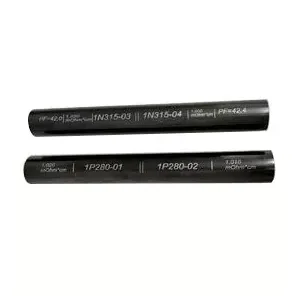
1. What Does the ZT Value Actually Represent?
The ZT value, also called the dimensionless figure of merit, is a measure of how efficiently a Thermoelectric Materials converts heat into electricity. It is defined by the equation ZT = (S²σT) / κ, where S is the Seebeck coefficient, σ is the electrical conductivity, T is the absolute temperature, and κ is the thermal conductivity. The numerator (S²σ) is called the power factor. The denominator (κ) is the thermal conductivity. A high ZT means that the material produces a large voltage for a given temperature difference while conducting very little heat. The table below shows the ZT values of common thermoelectric materials at their optimal temperatures.
| Material | Optimal temperature (K) | ZT value | Typical application |
| Bismuth telluride (Bi₂Te₃) | 300 – 400 | 0.8 – 1.2 | Cooling, low-grade waste heat |
| Lead telluride (PbTe) | 500 – 700 | 1.0 – 1.8 | Mid-temperature waste heat |
| Silicon germanium (SiGe) | 900 – 1200 | 0.8 – 1.2 | High-temperature waste heat |
| Half-Heusler alloys | 600 – 900 | 0.8 – 1.5 | Automotive waste heat recovery |
| Skutterudites | 500 – 800 | 1.0 – 1.7 | Industrial waste heat |
In our factory, we measure the ZT value of every batch of Thermoelectric Materials using a combined Seebeck coefficient and electrical conductivity tester, along with a laser flash thermal conductivity analyzer. The ZT is calculated at the temperature of interest. Fuzhou X-Meritan Technology Co., Ltd. provides ZT data at multiple temperatures so that customers can select the material that performs best in their specific temperature range.
2. Why Is ZT Difficult to Increase?
The three parameters in the ZT equation are interdependent. Increasing the Seebeck coefficient usually decreases the electrical conductivity. Increasing the electrical conductivity usually increases the thermal conductivity. This coupling makes it difficult to improve ZT by optimizing a single parameter. Researchers use several strategies to decouple these parameters. The first is nanostructuring, which reduces the thermal conductivity by scattering phonons at grain boundaries without significantly affecting the electrical conductivity. The second is band engineering, which increases the Seebeck coefficient by aligning the electronic bands. The third is doping, which optimizes the carrier concentration. The table below shows the effect of these strategies on the ZT parameters.
| Strategy | Seebeck coefficient | Electrical conductivity | Thermal conductivity | Net effect on ZT |
| Nanostructuring | No change | Slight decrease | Large decrease | Increase |
| Band engineering | Large increase | Slight decrease | No change | Increase |
| Doping optimization | Decrease | Large increase | Increase | Optimized at peak |
| Combined approach | Moderate increase | Moderate increase | Large decrease | Maximum increase |
The highest ZT values reported in laboratory settings are 2.5 to 3.0 for nanostructured materials. Commercial materials typically have ZT values of 0.8 to 1.5. The gap between laboratory and commercial performance is due to the difficulty of scaling up nanostructuring and maintaining the material properties in mass production. In our factory, we produce Thermoelectric Materials with ZT values that are within 90 percent of the laboratory record for the same composition.
3. How Does the ZT Value Translate to Module Performance?
The ZT value of the material is not the same as the efficiency of the module. The module efficiency is always lower than the material ZT because of contact resistance, thermal losses, and electrical losses. The conversion efficiency of a thermoelectric module is approximately 10 to 15 percent of the Carnot efficiency for a material with ZT = 1.0. For a material with ZT = 2.0, the efficiency is approximately 20 to 25 percent of the Carnot efficiency. The table below shows the relationship between material ZT and module efficiency for a temperature difference of 300 K.
| Material ZT | Carnot efficiency (300 K / 600 K) | Module efficiency (typical) | Power output (relative) |
| 0.5 | 50% | 5 – 7% | 1.0 |
| 1.0 | 50% | 8 – 12% | 1.8 |
| 1.5 | 50% | 12 – 16% | 2.5 |
| 2.0 | 50% | 15 – 20% | 3.2 |
| 2.5 | 50% | 18 – 23% | 3.8 |
The module efficiency is the ratio of the electrical power output to the heat input. It is always lower than the Carnot efficiency because of the irreversible losses in the material and the module. In our factory, we measure the module efficiency of our Thermoelectric Materials in a test rig that simulates the operating conditions of the application. We provide the efficiency curve as a function of temperature difference and current.
4. How Should the ZT Value Be Used in Material Selection?
The ZT value should be used as a starting point for material selection, not as the sole criterion. The engineer should consider four factors. First, the temperature range of the application. A material with a high ZT at 500 K may have a low ZT at 300 K. The material should be selected for the temperature range where it will operate. Second, the thermal conductivity. A material with a high ZT but a high thermal conductivity may require a larger module to achieve the same temperature difference. Third, the contact resistance. A material with a high ZT but a high contact resistance may have a lower module efficiency than a material with a lower ZT but a lower contact resistance. Fourth, the cost and availability. A material with a high ZT but a high cost may not be economical for a large-scale application.
Selection rule of thumb: For waste heat recovery below 400 K, use bismuth telluride with ZT = 1.0. For 400 to 700 K, use lead telluride or skutterudites with ZT = 1.2 to 1.5. For 700 to 1000 K, use half-Heusler alloys with ZT = 1.0 to 1.3. For above 1000 K, use silicon germanium with ZT = 0.8 to 1.0. Always verify the ZT at the actual operating temperature, not at the peak temperature.
Frequently Asked Questions About the ZT Value in Thermoelectric Materials
Summary for Thermoelectric Application Engineers
The ZT value is the critical figure of merit for Thermoelectric Materials because it combines the Seebeck coefficient, electrical conductivity, and thermal conductivity into a single number that predicts the material's efficiency. A higher ZT means more power for the same temperature difference. However, the ZT value must be evaluated at the operating temperature, and the module-level performance will be lower than the material ZT because of contact resistance and thermal losses. By understanding the ZT value and its limitations, engineers can select the right material for each application. Fuzhou X-Meritan Technology Co., Ltd. has been manufacturing Thermoelectric Materials for over 10 years and provides full material characterization and application support.
Fuzhou X-Meritan Technology Co., Ltd. manufactures Thermoelectric Materials with ZT values from 0.8 to 1.8, depending on the material system and temperature range. We provide ZT measurement reports, module efficiency data, and application engineering support.