

Why is Signal Integrity Critical for Reliable Leak Detector PCBA Performance
2026-05-08
In the world of precision sensing, Leak Detector PCBA forms the brain of any water or gas leak alert system. Without strong signal integrity, even the most advanced Unixplore engineered board can produce false alarms or miss real leaks entirely. Signal integrity ensures that electrical signals travel from sensors to processors without distortion, delay, or data corruption—directly determining whether your Leak Detector PCBA behaves predictably in real-world conditions.
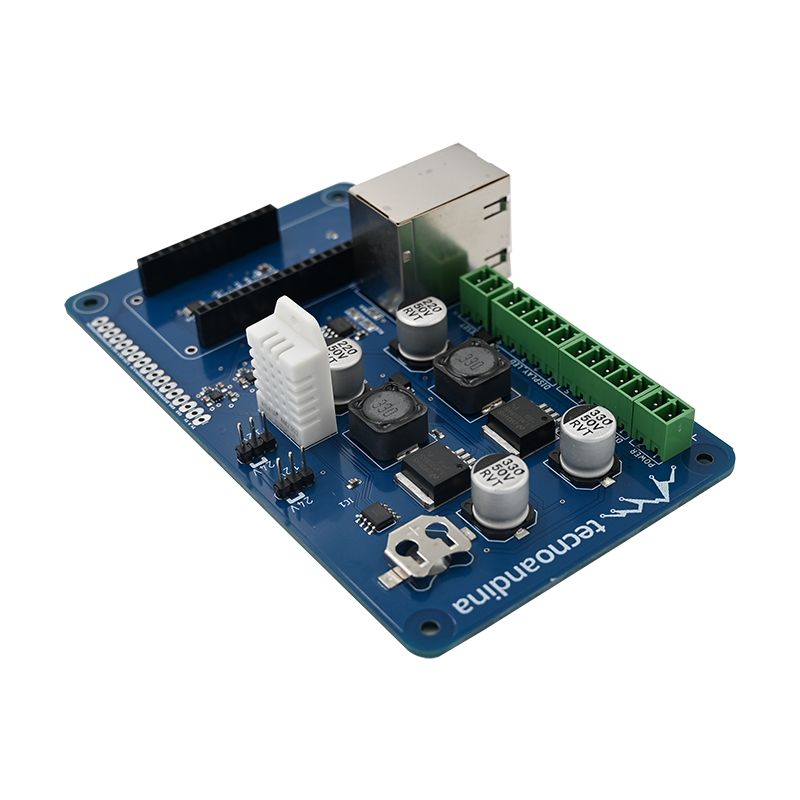
Why Signal Integrity Matters for Leak Detection Reliability
Signal degradation on a Leak Detector PCBA leads to three major risks: missed leak events, intermittent alerts, and premature sensor failure. When high-frequency signals reflect off poorly routed traces, the microcontroller may misinterpret sensor output. This is especially critical in capacitive or acoustic leak sensors, where analog readings must remain noiseless to trigger accurate thresholds.
| Signal Integrity Issue | Impact on Leak Detector PCBA | Mitigation Technique |
|---|---|---|
| Impedance mismatch | Signal reflection, false triggering | Controlled impedance routing |
| Crosstalk | Cross‑channel interference | Increased trace spacing, guard traces |
| Power supply noise | Unstable analog readings | Dedicated ground planes, decoupling caps |
| Long return paths | Radiated emissions, timing errors | Solid ground plane under signal layers |
Key Design Rules for High‑Integrity Leak Detection
To maintain robust performance, Unixplore applies four non‑negotiable principles in every Leak Detector PCBA:
-
Shortest possible trace length between sensor input and ADC.
-
Separate analog and digital ground domains connected only at the power entry point.
-
Differential pairs for any communication bus (I²C, SPI) longer than 10 cm.
-
Conformal coating without high‑loss dielectric materials that alter capacitance.
Frequently Asked Questions about Leak Detector PCBA
What is the most common signal integrity problem in a Leak Detector PCBA?
The most frequent issue is poor power supply decoupling near the sensor interface. When the voltage regulator’s output has high‑frequency ripple, the analog‑to‑digital converter (ADC) sees varying baseline levels. This causes the Leak Detector PCBA to report small leaks or humidity changes that do not exist. Adding a 0.1 µF ceramic capacitor within 2 mm of each sensor power pin resolves over 80% of these false positives.
Can a Leak Detector PCBA be repaired if signal integrity is already compromised?
Partial repair is possible but not cost‑effective. Damage from crosstalk or impedance mismatch typically requires re‑routing the printed circuit board. However, some symptoms—like intermittent triggering due to a floating ground—can be corrected by soldering a low‑inductance ground strap between the sensor return and main ground plane. Unixplore recommends replacing the Leak Detector PCBA instead of patching a poorly laid out original, because hidden timing violations may remain.
How does temperature affect signal integrity on a Leak Detector PCBA?
Temperature changes two critical parameters: copper resistivity and dielectric constant of the PCB substrate. A Leak Detector PCBA operating near a hot water pipe or in a cold basement can experience impedance variation of up to 15%. This alters edge rates and can corrupt digital handshakes between the microcontroller and wireless transmitter. Using low‑loss, temperature‑stable materials like Isola 370HR keeps signal integrity consistent from −20°C to +85°C.
Best Practices for Testing Signal Integrity
Before approving any Leak Detector PCBA for production, Unixplore runs three validation steps:
-
Time Domain Reflectometry (TDR) to measure impedance along each critical trace.
-
Eye diagram test on the communication bus at maximum baud rate.
-
Power integrity scan with an oscilloscope to confirm noise below 30 mV peak‑to‑peak.
Contact Us
Every Leak Detector PCBA designed and validated by Unixplore undergoes full signal integrity simulation and physical testing. Avoid false alarms and undetected leaks—ensure your next project uses a board built for real‑world environments. Contact us today for a design review or to request engineering samples tailored to your leak detection system.