

Why Is Durability Critical for Cycling Thermoelectric Coolers?
2026-09-29
A Cycling Thermoelectric Coolers is not used in a laboratory. It is strapped to a rack on a bike that travels over gravel roads, cobblestones, and potholes. It is exposed to rain, dust, and direct sunlight. It draws power from a dynamo hub or a battery pack that may fluctuate as the rider pedals uphill or coasts downhill. Under these conditions, the durability of the cooler is not a minor specification. It is the difference between a device that lasts one season and a device that lasts five. The most common failures are not in the Peltier module itself. They are in the fans, the solder joints, the connectors, and the control circuit. This guide explains the durability challenges and how to evaluate a cooler before you buy it.
1. How Does Vibration Affect the Internal Components of a Cycling Thermoelectric Coolers?
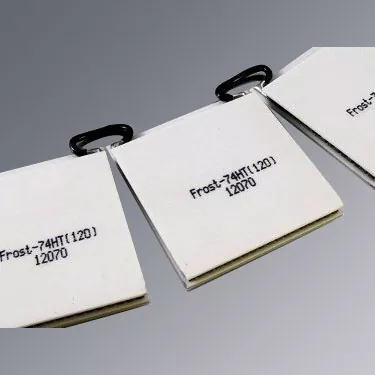
Vibration is the most destructive force for a cooler mounted on a bike. The constant shaking loosens screws, cracks solder joints, and fatigues wires. The Peltier module is a ceramic sandwich that is soldered to the heat sink. If the solder joint cracks, the module loses thermal contact, and the cooling performance drops. The fans are also vulnerable. The fan blades are balanced for smooth operation. Vibration can cause the blades to rub against the housing, which increases noise and eventually causes the fan to seize. The table below shows the vibration sensitivity of different components.
| Component | Vibration sensitivity | Typical failure mode | Mitigation |
| Peltier module solder joints | High | Cracking, loss of thermal contact | Use flexible adhesive or spring mounting |
| Axial fan bearings | High | Noise, seizure | Use sleeve bearings or magnetic levitation fans |
| Wire connectors | Moderate | Loosening, intermittent contact | Use locking connectors or soldered joints |
| PCB mounting screws | Moderate | Loosening, board damage | Use thread locking compound |
| Heat sink fins | Low | Bending, reduced airflow | Use thicker fins or a protective grill |
In our factory, we test every Cycling Thermoelectric Coolers on a vibration table that simulates 500 kilometers of gravel road. The test runs for 4 hours at 10 g RMS. After the test, we inspect the solder joints, the fan bearings, and the connectors. Fuzhou X-Meritan Technology Co., Ltd. uses spring-mounted Peltier modules and magnetic levitation fans in our cycling coolers. These components are more resistant to vibration than standard rigid-mounted modules and sleeve-bearing fans.
2. How Do Dust and Water Ingress Reduce Cooler Life?
A cooler that is mounted on a bike is exposed to dust from the road and water from rain or puddles. Dust accumulates on the heat sink fins and the fan blades. This reduces the airflow, which increases the operating temperature of the Peltier module. A 10°C increase in operating temperature reduces the module life by 50 percent. Water ingress can short the control circuit and corrode the connectors. The table below shows the ingress protection ratings and their suitability for cycling.
| IP rating | Dust protection | Water protection | Suitability for cycling |
| IP20 | No protection | No protection | Not suitable |
| IP43 | Limited dust | Light rain | Fair weather only |
| IP54 | Dust protected | Splashing water | Good for most conditions |
| IP65 | Dust tight | Water jets | Excellent for all conditions |
| IP67 | Dust tight | Immersion (30 min) | Overkill for cycling |
Our factory recommends an IP54 rating as the minimum for a Cycling Thermoelectric Coolers. This rating protects against dust and splashing water from rain or puddles. For riders who travel in heavy rain or on muddy roads, we recommend IP65. Fuzhou X-Meritan Technology Co., Ltd. manufactures cycling coolers with IP54 and IP65 enclosures. We use sealed fans and gasketed connectors to prevent water ingress.
3. How Does Power Fluctuation Affect the Control Circuit?
A cooler that draws power from a dynamo hub or a battery pack experiences voltage fluctuations. The voltage can drop when the rider stops pedaling or climbs a steep hill. It can spike when the rider coasts downhill and the dynamo produces excess voltage. The control circuit must be designed to handle these fluctuations without damage. The table below shows the voltage ranges and the required protection.
| Power source | Typical voltage range | Required protection | Consequence of failure |
| Dynamo hub (6V) | 3 – 12 V | Overvoltage clamp, rectifier | Control board burnout |
| 12V battery pack | 10 – 14 V | Undervoltage lockout, fuse | Deep discharge, cell damage |
| USB power bank (5V) | 4.5 – 5.5 V | Boost converter, current limit | Insufficient cooling |
| Solar panel (12V) | 0 – 22 V | MPPT controller, overvoltage | Voltage spike damage |
In our factory, we design the control circuit with a wide input voltage range of 9 to 15 V for 12V systems and 4 to 6 V for USB systems. We also include an overvoltage clamp and a reverse polarity protection diode. The circuit is tested with a programmable power supply that simulates the voltage fluctuations of a dynamo hub. Fuzhou X-Meritan Technology Co., Ltd. uses automotive-grade components in our cycling coolers to ensure reliable operation under these conditions.
4. How Should Riders Evaluate Durability Before Buying a Cooler?
Before buying a Cycling Thermoelectric Coolers, riders should check four things. First, the mounting system. The cooler should have a vibration-isolated mounting bracket. Rubber grommets or spring mounts reduce the transmission of vibration to the internal components. Second, the fan type. Magnetic levitation fans or sleeve-bearing fans are more durable than ball-bearing fans under vibration. Third, the IP rating. An IP54 rating is the minimum for outdoor use. Fourth, the connector type. Locking connectors or soldered joints are more reliable than friction-fit connectors. In our factory, we provide a durability test report with every cooler that shows the vibration test results, the IP rating, and the connector type. We also offer a 2-year warranty on the Peltier module and the fan.
Frequently Asked Questions About Cycling Thermoelectric Cooler Durability
Summary for Cyclists and Outdoor Enthusiasts
Durability is the most critical specification for a Cycling Thermoelectric Coolers. Vibration, dust, water, and power fluctuation are the four forces that destroy coolers on the road. The components that fail first are the fans, the solder joints, and the connectors. By selecting a cooler with a vibration-isolated mounting system, magnetic levitation fans, an IP54 or higher rating, and a wide-input control circuit, riders can expect 5 to 8 years of reliable service. Fuzhou X-Meritan Technology Co., Ltd. has been manufacturing thermoelectric coolers for over 12 years and supplies to cyclists and outdoor enthusiasts worldwide.
Fuzhou X-Meritan Technology Co., Ltd. manufactures Cycling Thermoelectric Coolers with IP54 and IP65 enclosures, magnetic levitation fans, and wide-input control circuits. We provide durability test reports and a 2-year warranty on critical components.