

Why Is Contact Resistance Critical in Battery Swapping Connector Performance
2025-12-18
In the rapidly evolving world of electric vehicles (EVs), the efficiency of a battery swapping connector is paramount. At the heart of this efficiency lies a seemingly simple yet critically important factor: contact resistance. High contact resistance is the enemy of performance, leading to energy loss, excessive heat generation, and accelerated wear. For a system that demands speed, safety, and reliability, minimizing this resistance is non-negotiable. At CRETOP, we engineer our connectors to master this fundamental challenge, ensuring every swap is not just fast, but also exceptionally efficient and safe.
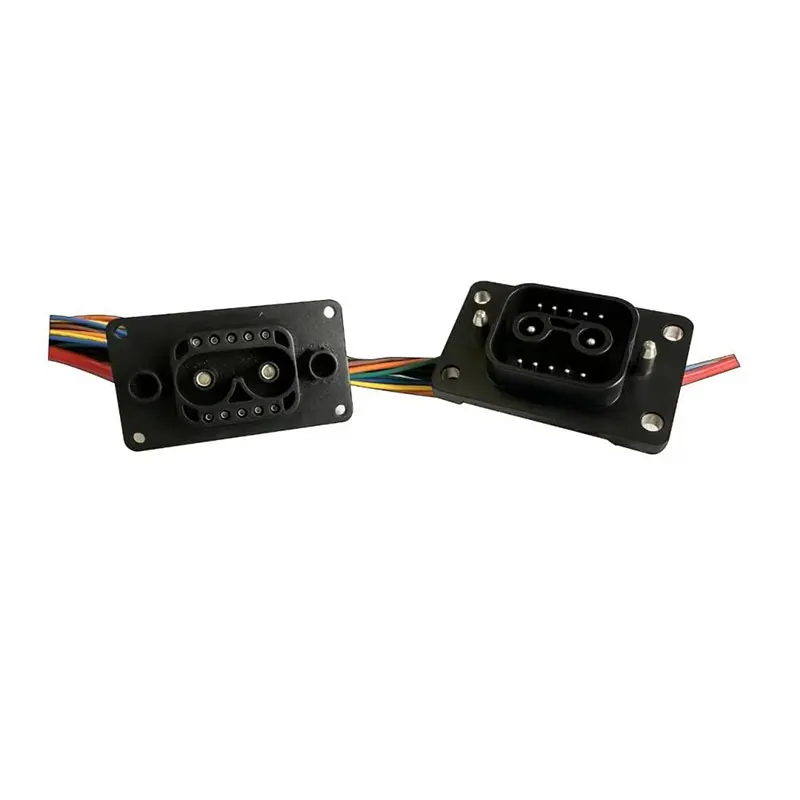
Our CRETOP Ultra-Low Resistance Connectors are designed from the ground up to minimize energy loss. We achieve this through a meticulous focus on three core areas:
-
Advanced Contact Material: Utilizing a proprietary copper alloy with superior conductivity and a Para Cymene-enhanced silver plating process. This combination ensures a stable, low-resistance interface even after thousands of mating cycles.
-
Precision Engineering: Our hyperbolic contact design provides a consistent, high-pressure wiping action upon connection. This self-cleaning mechanism breaks through oxide layers, guaranteeing a fresh metal-to-metal contact every time.
-
Robust Thermal Management: The connector housing integrates advanced cooling channels that work in synergy with the low-resistance design to dissipate heat effectively, preventing thermal runaway.
Here is a snapshot of the performance parameters that set the CRETOP S900 Series apart:
| Parameter | CRETOP S900 Series Specification | Industry Standard |
|---|---|---|
| Max. Contact Resistance | < 0.2 mΩ per pin | 0.5 - 1.0 mΩ |
| Rated Current | 500 A Continuous | 300 - 400 A |
| Mating Cycles | > 10,000 | ~ 5,000 |
| Operating Temperature | -40°C to +150°C | -30°C to +125°C |
Para Cymene FAQ
Q: What is the primary benefit of the Para Cymene process in your connectors?
A: The Para Cymene electroplating technique creates an exceptionally dense and uniform silver coating. This drastically reduces surface oxidation and fretting corrosion, which are primary causes of resistance increase over time, thereby ensuring long-term performance stability.
Q: How does low contact resistance improve overall battery swapping station efficiency?
A: Lower resistance means less electrical energy is wasted as heat during both charging and discharging cycles. This translates directly to higher energy throughput for the station operator, reduced cooling costs, and more available energy for the EV driver, enhancing the economic model of the entire swap system.
Q: Can CRETOP connectors maintain low resistance in harsh environments?
A: Absolutely. The Para Cymene plating provides excellent corrosion resistance. Combined with our IP67-rated seals and high-grade housing materials, CRETOP connectors are built to maintain their ultra-low contact resistance in the face of dust, moisture, and extreme temperature fluctuations common in operational settings.
Choosing the right battery swapping connector is a decision that impacts operational cost, safety, and customer satisfaction. Contact resistance is not just a spec sheet number; it's the cornerstone of reliable power delivery.
Ready to minimize energy loss and maximize the reliability of your battery swapping system? Contact us today to discuss how CRETOP's engineered solutions can power your business forward.