

Why is Braided Copper Shielding Tube Preferred Over Solid Copper Conduits in Flexible Cabling
2026-05-13
When designing flexible cabling systems for industrial, automotive, or telecommunications applications, the choice between a Braided Copper Shielding Tube and solid copper conduits often determines long-term reliability. Quande has engineered precision shielding solutions that highlight why flexibility, durability, and EMI protection make braided designs the superior choice.
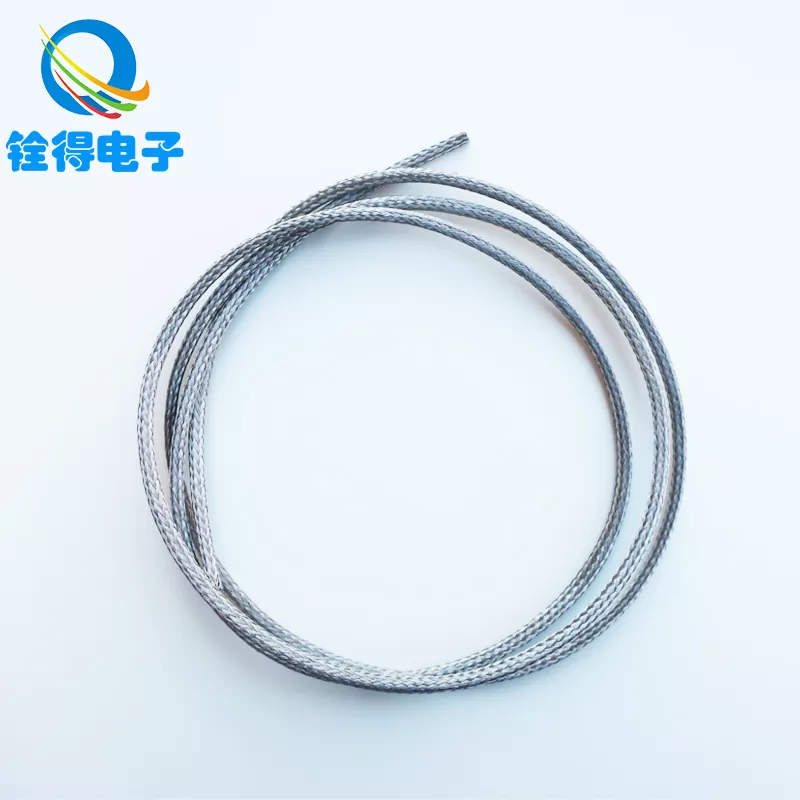
The Core Advantages of Braided Over Solid Copper
| Feature | Braided Copper Shielding Tube | Solid Copper Conduits |
|---|---|---|
| Flexibility | High bending radius without kinking | Rigid, prone to permanent deformation |
| Repeated Bending Performance | Maintains shielding effectiveness after >10,000 cycles | Cracks or work-hardens under repeated stress |
| Weight per meter | Lightweight (coverage 70–95%) | Heavy, often double the weight |
| EMI Shielding Consistency | Uniform due to interwoven strands | Uniform but breaks if bent |
| Installation in tight spaces | Excellent for harnesses and cable tracks | Very poor |
A Braided Copper Shielding Tube from Quande uses fine copper wires woven into a mesh. This structure allows continuous grounding even when the cable bends around corners or moves with machinery. Solid copper conduits, while offering 100% coverage in static installations, fail in dynamic environments because bending creates stress points.
Three Key Reasons for Preference in Flexible Cabling
-
Dynamic Fatigue Resistance – Solid copper develops micro-cracks after repeated flexing. The braided design distributes mechanical stress across thousands of contact points.
-
Ease of Termination – Braided tubes can be expanded, slid over cable bundles, and clamped or soldered to connectors. Solid conduits require exact pre-cutting and cannot adapt to varying bundle diameters.
-
Superior Bend Radius – A Braided Copper Shielding Tube achieves bend radii as low as 4x its diameter without loss of shielding. Solid conduits typically fail below 15x diameter.
Braided Copper Shielding Tube FAQ
Q1: Can a Braided Copper Shielding Tube provide as much EMI protection as a solid conduit in high-frequency applications above 1 GHz?
A: Yes, but with a caveat. Solid copper offers theoretical 100% shielding at low frequencies, but above 1 GHz, gaps in braided coverage (typically 5–15% optical coverage) slightly reduce effectiveness compared to solid tube. However, Quande produces high-density braided tubes with up to 98% coverage and adds an aluminum foil layer for critical high-frequency scenarios. For most industrial and automotive applications (30 MHz to 1 GHz), braided performance exceeds requirements while maintaining flexibility.
Q2: How does moisture or corrosive environment affect Braided Copper Shielding Tube compared to solid copper conduits?
A: Solid copper conduits with pinholes or seam welds trap moisture internally, causing hidden corrosion. A Braided Copper Shielding Tube has an open weave that allows ventilation, reducing condensation risk. For severe environments, Quande offers tinned or nickel-plated braided copper versions, which resist salt spray and industrial chemicals. Solid copper cannot be easily coated internally after forming, giving braided designs a clear durability advantage in marine or outdoor flexible cabling.
Q3: What is the maximum current carrying capacity of a Braided Copper Shielding Tube when used as a ground return path in a dynamic cable assembly?
A: The current rating depends on the copper cross-sectional area. A typical Braided Copper Shielding Tube with 16mm width and 0.15mm wire thickness has a DC resistance of approximately 0.002–0.005 ohms per meter, supporting continuous grounding currents up to 50–80 amperes depending on ambient temperature. Unlike solid conduits, the braid dissipates heat more efficiently due to increased surface area. Quande provides detailed ampacity charts for each braid density. For high-power applications above 100A, multiple braided layers or a heavier single braid can be custom manufactured.
Real-World Applications
In robotics, automated assembly lines, and electric vehicle charging cables, the Braided Copper Shielding Tube has replaced rigid conduits. Quande supplies these tubes with flexible PVC or silicone jackets, ensuring mechanical protection without losing the core flexibility advantage.
Why Engineers Choose Quande
Quande specializes in custom braiding angles (30° to 60°), coverage rates (80% to 98%), and material options (bare copper, tinned copper, silver-plated). Every batch undergoes dynamic flex testing to simulate 20,000 bending cycles, guaranteeing performance where solid copper would fracture.
Contact Us
For application-specific guidance or to request samples of our Braided Copper Shielding Tube for your flexible cabling project, please contact Quande directly through our website or sales team. Your next reliable shielding solution starts with a conversation.