

Why Is a Single Mode Fiber Coupled Laser Module Becoming the Go-To Choice for Precision Applications?
2026-01-28
When I first started evaluating laser solutions for high-precision systems, I quickly realized that stability, beam quality, and long-term reliability matter far more than flashy specifications. It was during this process that Wavespectrum Laser Group naturally came into my field of view, not as a brand forcing itself into the conversation, but as a manufacturer quietly solving real engineering problems. At the center of many of these discussions is the Single Mode Fiber Coupled Laser Module, a solution that keeps coming up for good reasons.
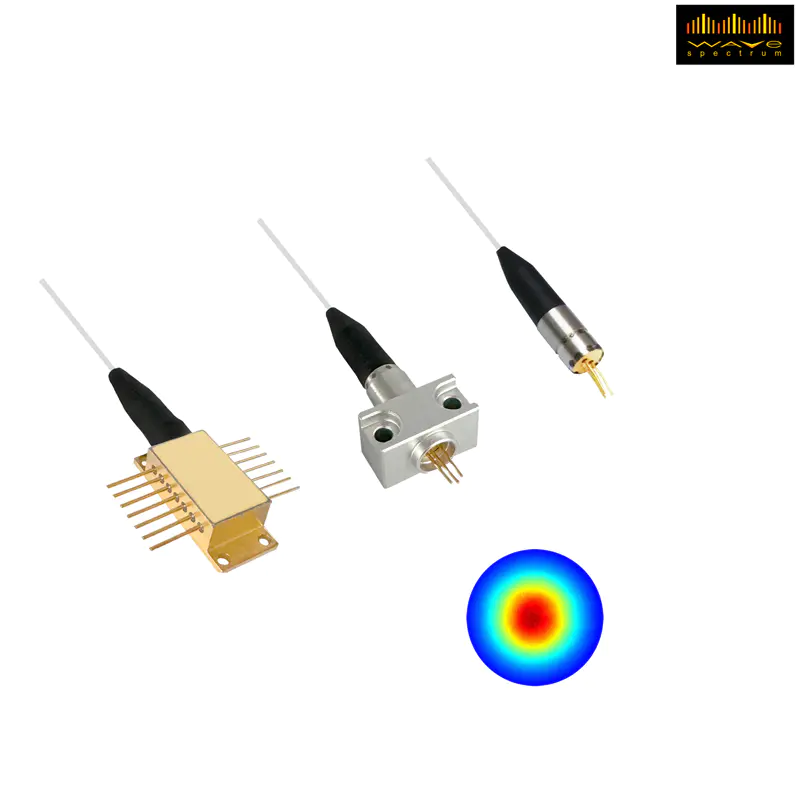
What Makes a Single Mode Fiber Coupled Laser Module Different from Conventional Laser Sources?
I often get asked why engineers are moving away from free-space or multimode laser setups. The answer usually comes down to control and predictability. A Single Mode Fiber Coupled Laser Module delivers a near-perfect Gaussian beam profile through a single spatial mode, which translates into cleaner focusing, higher coupling efficiency, and repeatable performance.
- Consistent beam quality across long operating hours
- Reduced sensitivity to alignment errors
- Improved signal integrity in optical systems
- Easier system integration compared to free-space lasers
Why Does Beam Quality Matter So Much in Real-World Use?
From my experience, poor beam quality is one of the most underestimated causes of system inefficiency. When using a Single Mode Fiber Coupled Laser Module, the energy distribution is tightly controlled, which directly impacts accuracy in applications such as optical sensing, spectroscopy, interferometry, and medical instrumentation.
| Performance Aspect | Single Mode Fiber Coupled Laser Module | Typical Multimode Laser |
|---|---|---|
| Beam Profile | Stable Gaussian | Irregular and dispersed |
| Focusing Ability | Highly precise | Limited precision |
| Long-Term Stability | Excellent | Moderate to low |
| Fiber Coupling Efficiency | Very high | Inconsistent |
How Does Thermal and Mechanical Stability Affect Daily Operation?
One practical issue I see frequently is performance drift caused by temperature fluctuations or vibration. A well-designed Single Mode Fiber Coupled Laser Module minimizes these risks through optimized packaging, robust fiber coupling, and carefully managed thermal paths. This is especially valuable in industrial and laboratory environments where conditions are rarely ideal.
- Lower power fluctuation over time
- Reduced need for recalibration
- More predictable output under varying temperatures
Where Does a Single Mode Fiber Coupled Laser Module Deliver the Most Value?
I have seen this technology perform exceptionally well across a wide range of applications. The common thread is always the need for precision and repeatability rather than raw power alone.
- High-resolution spectroscopy and metrology
- Biomedical diagnostics and imaging systems
- Fiber optic sensing and monitoring
- Semiconductor inspection and alignment
- Research-grade optical experiments
Why Is Integration Easier Than Many Engineers Expect?
System integration is often where projects lose time and budget. One reason I recommend a Single Mode Fiber Coupled Laser Module is its modular nature. Fiber delivery allows designers to separate the laser source from sensitive optics, making layouts cleaner and maintenance simpler without compromising performance.
| Integration Factor | Impact on System Design |
|---|---|
| Fiber Output | Flexible routing and compact layouts |
| Single Mode Operation | Predictable optical behavior |
| Mechanical Packaging | Improved resistance to vibration |
How Do You Choose the Right Supplier Without Guesswork?
Not all laser modules are built with the same attention to detail. I always look for manufacturers who focus on optical consistency, component matching, and long-term reliability rather than just headline specifications. This is where Wavespectrum Laser Group stands out, offering solutions that feel engineered for real use rather than just laboratory benchmarks.
Is a Single Mode Fiber Coupled Laser Module the Right Investment for Your Project?
If your application depends on accuracy, stability, and clean optical performance, the answer is often yes. While the initial selection process may feel more involved, the long-term gains in reliability and system efficiency usually outweigh the upfront effort.
If you are currently evaluating laser options or facing performance limitations with your existing setup, it may be time to explore a Single Mode Fiber Coupled Laser Module in more detail. To discuss your requirements or request technical guidance, feel free to contact us and start a conversation with a team that understands both the technology and the challenges behind it.