

Why Is a Programmable Controller Still the Smartest Choice for Modern Automation?
2026-01-26
When I first started working closely with industrial automation projects, I quickly realized how often control systems became the hidden bottleneck. As projects scaled, stability, flexibility, and long-term maintenance mattered far more than flashy features. That is where I gradually became familiar with Aicheng Electronic Technology Co, Ltd., a manufacturer that approaches automation with a practical mindset, and how their Programmable Controller solutions fit naturally into real-world industrial environments.
Instead of forcing users to adapt their processes to rigid systems, I have seen how a well-designed Programmable Controller allows the control logic to evolve alongside production demands. This adaptability is exactly what many manufacturers are missing when downtime, wiring complexity, or expansion costs start to pile up.
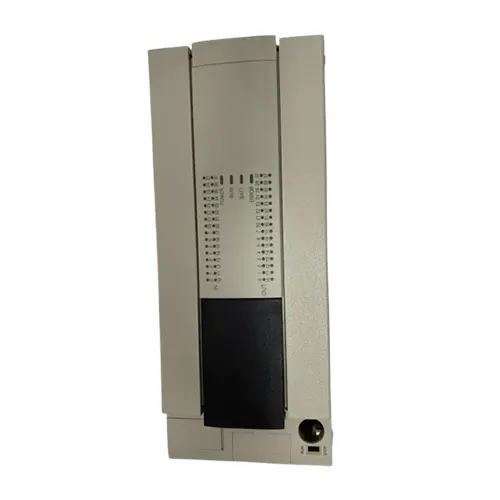
What Problems Do Manufacturers Actually Face Without a Programmable Controller?
From my experience on factory floors and system integration discussions, the challenges tend to repeat themselves. Traditional relay-based or semi-automatic control systems struggle once production requirements change. Without a reliable Programmable Controller, even small upgrades can turn into costly rewiring projects.
- Frequent downtime caused by manual troubleshooting
- Limited scalability when adding new equipment
- Complex wiring that increases maintenance risks
- Inconsistent process control affecting product quality
What stood out to me is how programmable control logic directly addresses these issues. By centralizing control and allowing software-based adjustments, a Programmable Controller reduces physical intervention and keeps operations stable over time.
How Does a Programmable Controller Improve Daily Operations?
I often describe a Programmable Controller as the operational brain of an automated system. Once configured correctly, it quietly manages inputs, outputs, timing, and logic without constant human oversight. This consistency becomes especially valuable in continuous production environments.
In practical terms, I have seen measurable improvements in:
- Response speed between sensors and actuators
- Repeatability of automated processes
- Ease of diagnosing faults through monitoring interfaces
- Overall energy efficiency through optimized control logic
Because the control logic is programmable, adjustments no longer require dismantling panels or replacing hardware. This is one of the most underestimated advantages of using a modern Programmable Controller.
Why Does System Compatibility Matter When Choosing a Programmable Controller?
One lesson I learned early is that no control system operates in isolation. A reliable Programmable Controller must integrate smoothly with sensors, drives, HMIs, and communication networks already in place. Compatibility issues can quietly undermine even the best-designed automation plan.
From what I have observed, systems designed with standard communication protocols and flexible I/O configurations significantly reduce integration risks. This approach allows engineers to focus on process optimization rather than fighting hardware limitations.
| Key Consideration | Practical Impact |
|---|---|
| Communication Protocols | Simplifies data exchange with existing equipment |
| I/O Scalability | Allows future expansion without redesign |
| Programming Flexibility | Supports process changes with minimal downtime |
| Environmental Reliability | Ensures stable operation in industrial conditions |
How Can a Programmable Controller Reduce Long-Term Costs?
Many buyers focus only on the initial purchase price, but I have found that the real value of a Programmable Controller becomes clear over time. Reduced maintenance hours, fewer unexpected shutdowns, and easier upgrades all contribute to lower operational costs.
Instead of replacing entire control panels, engineers can fine-tune logic, add modules, or adjust timing parameters through software. Over the lifecycle of a production line, this flexibility often translates into substantial savings.
What Should You Look for Before Selecting a Programmable Controller Supplier?
Choosing the right hardware is only part of the equation. Based on my experience, supplier support and product consistency are just as critical. A dependable Programmable Controller should come from a manufacturer that understands industrial realities, not just specifications.
Working with suppliers like Aicheng Electronic Technology Co, Ltd. has shown me the importance of clear documentation, stable product availability, and technical support that speaks the same language as system engineers. These factors often determine whether a project stays on schedule or faces costly delays.
Is It Time to Upgrade Your Automation System with a Programmable Controller?
If your current control setup feels rigid, difficult to maintain, or costly to expand, upgrading to a modern Programmable Controller may be the most practical next step. From improved reliability to long-term cost control, programmable systems offer tangible benefits that directly impact productivity.
If you are evaluating control solutions or planning a system upgrade, I recommend taking a closer look at how a Programmable Controller can be tailored to your specific application. For detailed product information, technical guidance, or project discussions, feel free to contact us today. A well-chosen controller can make the difference between constant adjustments and a system that simply works.