

Why Is a Dante IO DSP Processor So Powerful for Audio Matrixing?
2026-09-22
1. What Is the Difference Between Channel Count and Routing Capacity?
Channel count is the number of input and output signals that a Dante IO DSP processor can handle simultaneously. Routing capacity is the number of independent mixing operations that the processor can perform on those signals. A processor with 16 inputs and 16 outputs may have a routing matrix that allows any input to be mixed to any output, which is called a full crosspoint matrix. Another processor with the same channel count may only allow each input to be routed to a single output, which is a simple switcher. The difference is critical for audio matrixing. In a typical conference room or restaurant installation, you need mix-minus feeds for video conferencing, paging zones that override background music, and independent volume control for each zone. These requirements demand a full crosspoint matrix.
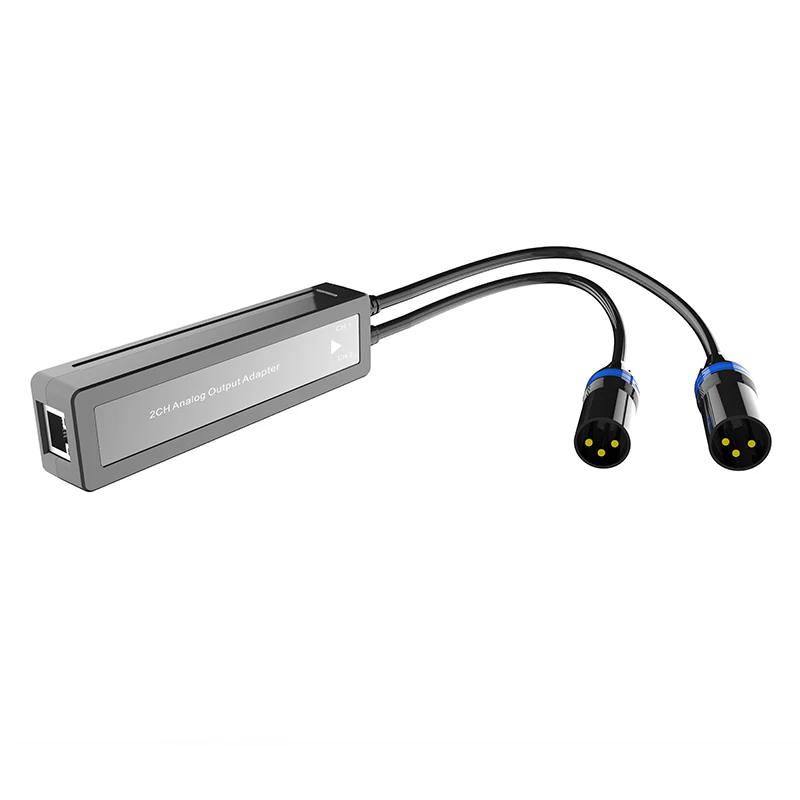
The table below compares the routing capacity of different DSP architectures.
| Architecture | Channel count (in/out) | Routing capacity | Typical matrix size | Application suitability |
| Fixed matrix | 8 / 8 | 8 x 8 crosspoints | 64 crosspoints | Small conference rooms |
| Expandable matrix | 16 / 16 | 16 x 16 crosspoints | 256 crosspoints | Medium conference rooms |
| Full crosspoint DSP | 32 / 32 | 32 x 32 crosspoints | 1,024 crosspoints | Multi-zone venues, hotels |
| Networked DSP (Dante IO) | 64 / 64 | 64 x 64 crosspoints | 4,096 crosspoints | Large venues, campuses |
In our factory, we design Dante IO DSP processors with a full crosspoint matrix that allows any input to be mixed to any output. The matrix is implemented in the FPGA, which provides deterministic latency and zero crosstalk. Our processors can handle 64 inputs and 64 outputs, which provides 4,096 crosspoints for complex routing scenarios.
2. How Does Dante Networking Enhance DSP Matrixing Capabilities?
The Dante audio network is a key enabler of flexible matrixing. In a traditional analog DSP, every input and output requires a physical cable. Adding a new zone means running a new cable to the DSP. In a Dante IO DSP processor, the inputs and outputs are virtual. They are transmitted over the network as Dante channels. This means that a single network cable can carry 64 channels of audio in each direction. Adding a new zone requires only a new Dante-enabled endpoint, such as a network amplifier or a wall plate. The DSP processor sees the new endpoint as additional channels in its routing matrix. The table below shows the scalability of Dante IO compared to analog IO.
| Parameter | Analog DSP | Dante IO DSP |
| Maximum channels per cable | 2 (one stereo pair) | 64 (at 48 kHz) |
| Adding a new zone | Run new cable to DSP | Connect new network endpoint |
| Routing changes | Physical re-patching | Software configuration |
| Cable length limit | 100 meters (balanced) | 100 meters per hop, unlimited with switches |
| Channel count expansion | Limited by physical inputs | Limited only by network bandwidth |
Shenzhen FHB Audio Technology Co., Ltd. manufactures Dante IO DSP processors with 64 x 64 Dante channels and a full crosspoint matrix. Our factory also produces Dante-enabled amplifiers and wall plates that integrate seamlessly with our processors. The entire system is configured using a single software interface.
3. What Are the Key DSP Functions for Audio Matrixing?
The DSP functions determine what you can do with the routing matrix. The essential functions for audio matrixing are mixing, equalization, delay, dynamics, and automatic mixing. Mixing allows multiple inputs to be combined into a single output. Equalization shapes the frequency response of each output. Delay aligns the audio with video or compensates for speaker distance. Dynamics control the level of the signal to prevent clipping or to maintain consistent volume. Automatic mixing is used in conference rooms to activate only the microphone that is picking up speech. The table below lists these functions and their typical implementation in our processors.
| DSP function | Typical parameters | Processing capacity per channel |
| Mixer | 64 x 64 crosspoints | 1,024 mix operations |
| Parametric EQ | 8 bands per channel | 512 filters |
| Delay | 0 – 500 ms per channel | 64 delay lines |
| Compressor/limiter | Threshold, ratio, attack, release | 64 dynamics processors |
| Automatic mixer | Gain sharing, gating | 16 channels per instance |
Our factory implements these DSP functions in a dedicated audio DSP chip that runs at 1.2 GHz. The processing is distributed across the inputs and outputs, so the full matrix is available even when all DSP functions are active. We also provide a software interface that allows the integrator to configure the matrix and the DSP functions from a laptop.
4. How Should a Dante IO DSP Processor Be Specified for a Multi-Zone Project?
Specifying a Dante IO DSP processor for a multi-zone project requires four steps. The first is to count the number of input sources and output zones. The second is to determine the number of mix-minus buses required. A mix-minus bus is an output that contains all inputs except the one that is causing feedback. The third is to calculate the total DSP processing load. The fourth is to verify that the network bandwidth is sufficient. For a typical hotel with 16 zones and 8 input sources, a processor with 32 x 32 channels and 32 mix-minus buses is sufficient. For a larger venue with 64 zones and 32 input sources, a processor with 64 x 64 channels and 64 mix-minus buses is required.
Specification tip: Always add 25 percent spare DSP capacity to allow for future expansion. Adding a new zone to a Dante IO system is easy, but only if the DSP processor has spare channels and processing capacity.
Frequently Asked Questions About Dante IO DSP Processors for Audio Matrixing
Summary for System Integrators
A Dante IO DSP processor is powerful for audio matrixing because it combines a full crosspoint routing matrix with the scalability of a Dante network. The routing capacity, not the channel count, determines the processor's suitability for complex projects. The DSP functions provide the tools to shape and control the audio in each zone. When specifying a processor, consider the number of zones, the number of mix-minus buses, and the future expansion requirements. Shenzhen FHB Audio Technology Co., Ltd. has been manufacturing Dante IO DSP processors for over 12 years and supplies to system integrators worldwide.
Shenzhen FHB Audio Technology Co., Ltd. manufactures Dante IO DSP processors with 64 x 64 channels, full crosspoint matrixing, and integrated DSP functions. We provide configuration software and technical support for system integrators.