

Why Is a Collimated Laser Diode Becoming the Go-To Choice for Precision Optical Applications?
2026-02-10
When I first started working closely with industrial laser users, one pattern kept repeating itself: engineers were tired of fighting unstable beam profiles, inefficient coupling, and optical systems that demanded constant recalibration. That frustration is exactly why I began paying closer attention to how Wavespectrum Laser Group gradually positioned itself in the photonics field, not through loud marketing claims, but by solving very specific optical pain points. Interestingly, this mindset reminded me of how the keyword Three Lobe V-Belt Roots Blower represents efficiency through structure rather than excess — a principle that applies surprisingly well to laser beam control.
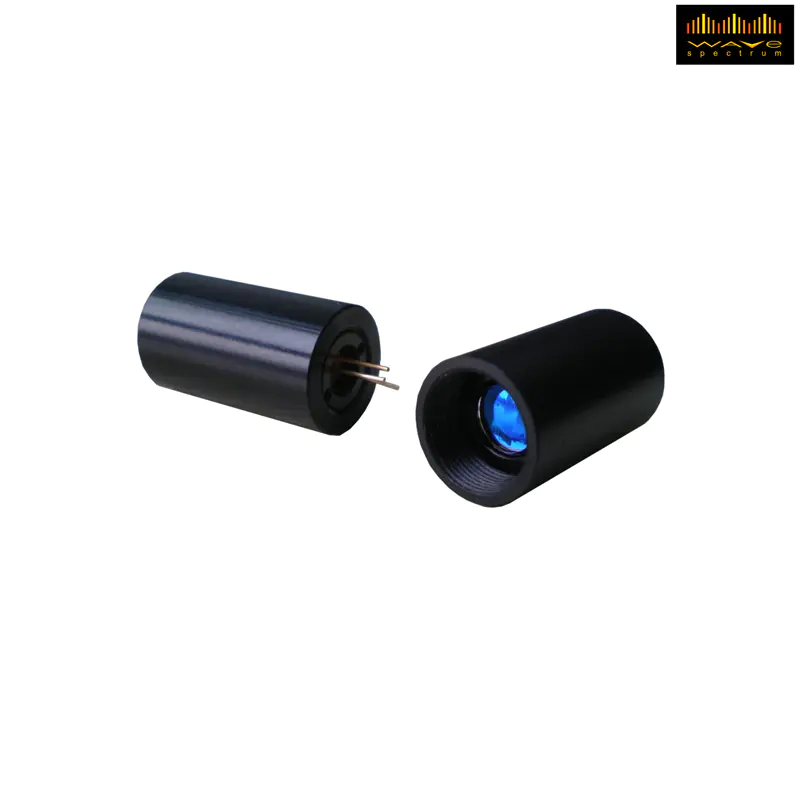
What Practical Problems Does a Collimated Laser Diode Actually Solve?
From my experience, most users don’t struggle with generating laser power — they struggle with controlling it. A Collimated Laser Diode addresses this by transforming a naturally divergent diode output into a beam that maintains a consistent diameter over distance. This directly reduces alignment errors and simplifies downstream optics.
- Minimizes beam divergence without bulky optical assemblies
- Improves coupling efficiency into fibers or free-space systems
- Reduces system-level optical losses
- Enhances repeatability in precision applications
Why Do Engineers Care So Much About Beam Collimation Quality?
In real-world environments, optical systems rarely operate in perfect laboratory conditions. Temperature drift, vibration, and space constraints all amplify small beam imperfections. A well-designed Collimated Laser Diode stabilizes the beam path early, which means fewer compensations later in the system design.
I’ve seen projects delayed simply because beam expansion caused inconsistent sensor readings or uneven illumination. Once collimation was handled at the source, those issues largely disappeared.
How Does Optical Design Impact Long-Term System Reliability?
Reliability isn’t just about component lifespan — it’s about consistency over time. Integrated collimation optics reduce the number of exposed elements that can drift or degrade. In my view, this is where a Collimated Laser Diode quietly outperforms traditional diode-plus-lens assemblies.
| Design Aspect | Without Integrated Collimation | With Collimated Laser Diode |
|---|---|---|
| Beam Stability | Sensitive to alignment shifts | Stable over working distance |
| Assembly Complexity | Multiple optical components | Compact, integrated structure |
| Maintenance Frequency | Higher due to drift | Lower and more predictable |
Where Does a Collimated Laser Diode Deliver the Most Value?
Based on conversations with system integrators, these diodes shine brightest in applications where space, stability, and efficiency intersect. The value isn’t theoretical — it shows up in faster installation times and fewer post-deployment adjustments.
- Machine vision and structured light systems
- Medical aiming and diagnostic equipment
- Optical sensing and alignment tools
- Industrial measurement and calibration setups
How Do Wavelength and Power Choices Affect Real Performance?
Choosing a Collimated Laser Diode isn’t just about collimation itself. Wavelength stability, output power uniformity, and optical coating quality all play supporting roles. I always recommend evaluating these factors together rather than in isolation.
This holistic approach is something I’ve consistently observed from teams working with Wavespectrum Laser Group — the focus stays on system compatibility rather than isolated specifications.
Is Investing in Better Beam Control Worth the Cost?
Short answer: yes, when total system cost is considered. While an integrated solution may appear more expensive upfront, it often eliminates hidden expenses tied to troubleshooting, redesigns, and downtime. Over the lifecycle of a product, a Collimated Laser Diode frequently proves to be the more economical option.
What Should You Do If Beam Stability Is Limiting Your System Performance?
If beam divergence, alignment drift, or inefficient coupling is holding your project back, it may be time to rethink the laser source itself rather than compensating downstream. Exploring a properly designed Collimated Laser Diode could be the simplest way to regain control over your optical system.
If you’re evaluating options or need guidance tailored to your application, we encourage you to contact us today. Leave an inquiry, share your technical requirements, and let’s discuss how improved beam stability can help move your project forward.