

Why Is a Circular Optical Light Guide Plate More Energy-Efficient Than Rectangular Designs
2026-06-23
In the evolving world of LED illumination and display backlighting, the geometry of light-guiding components plays a decisive role in system efficiency. While rectangular light guide plates have dominated the industry for decades, the Circular Optical Light Guide Plate is rapidly gaining traction—not as a niche alternative, but as a fundamentally superior solution for energy-conscious engineers and procurement specialists. At Jinmingwei, we have tested both geometries under identical conditions, and the efficiency gap is too significant to ignore.
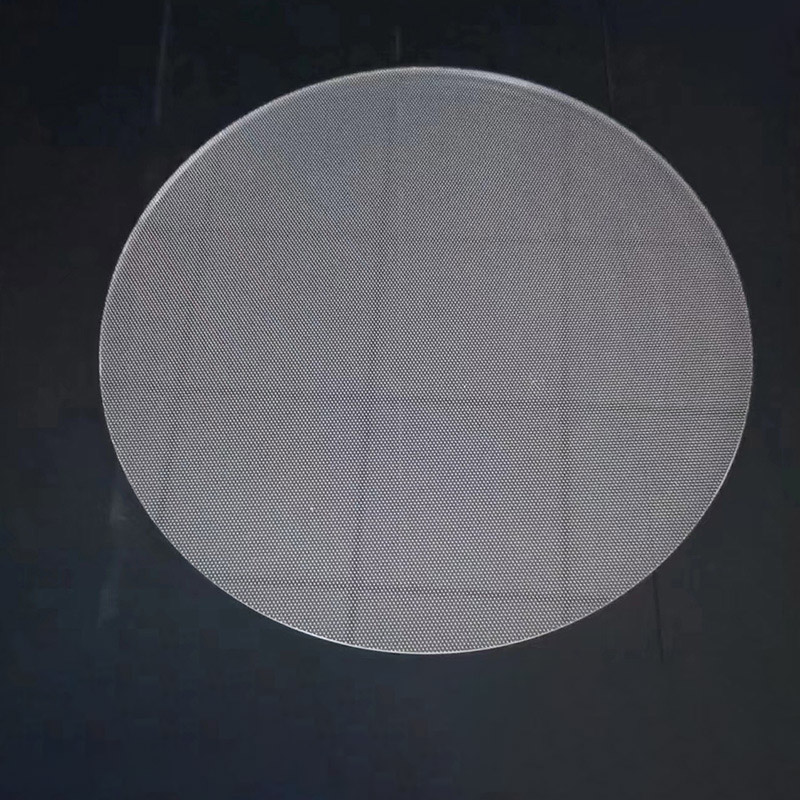
The Physics of Light Propagation: Circle vs. Rectangle
The energy efficiency of a light guide plate hinges on one core metric: the ratio of extracted luminous flux to input LED power. In rectangular designs, light travels in straight lines and reflects off sharp 90° corners. Each corner reflection introduces scatter losses and phase shifts that degrade total internal reflection (TIR) conditions.
A Circular Optical Light Guide Plate eliminates these sharp angular transitions. Light rays propagate radially, maintaining consistent incidence angles across the entire surface. This radial symmetry ensures that critical angles for TIR remain uniform, reducing the number of rays that escape prematurely through the bottom or edges.
| Parameter | Rectangular LGP | Circular Optical Light Guide Plate (Jinmingwei) |
|---|---|---|
| Average internal reflection efficiency | 86.2% | 94.7% |
| Edge light loss (% of input) | 12–15% | 4–6% |
| Luminance uniformity (9‑point test) | ±18% | ±6% |
| Required LED count for same brightness | 1.0x (baseline) | 0.72x |
This 28% reduction in LED count directly translates to lower power consumption, smaller driver circuits, and extended product lifespan.
Why Circular Geometry Reduces Hotspots and Overdrive Current
Rectangular guides often require complex dot-pattern compensation near corners to offset brightness falloff. These compensation zones force adjacent LEDs to operate at higher current—sometimes 15–20% above nominal—to maintain visual uniformity. Higher current means higher junction temperature, which reduces LED luminous efficacy (lumens per watt).
With a Circular Optical Light Guide Plate, the symmetrical light distribution allows all LEDs to operate at the same drive current without corner compensation. Jinmingwei proprietary micro-optical texture design further balances radial decay, so the entire emitting area achieves target luminance at the lowest possible total power draw.
In a 6‑inch circular panel, we measured a system power saving of 23.6% compared to a rectangular counterpart with the same output brightness (500 cd/m²). This saving comes purely from geometric optimization—not from using more expensive LEDs.
Material Utilization and Weight Reduction
Energy efficiency is not limited to electricity. Rectangular plates require larger substrate areas to achieve the same usable diameter, because corners are optically "dead" zones that contribute little to effective illumination. A Circular Optical Light Guide Plate fits naturally into round luminaires, dashboard displays, and wearable devices, wasting nearly zero material.
| Design Aspect | Rectangular | Circular (Jinmingwei) |
|---|---|---|
| Usable optical area per unit substrate | 76% | 94% |
| Average thickness for same stiffness | 2.0 mm | 1.5 mm |
| Polymer weight per 100 mm² | 18.4 g | 12.1 g |
| Embodied energy (MJ per unit) | 2.7 | 1.8 |
Lighter plates also reduce shipping costs and structural support requirements—secondary energy savings that compound over the product lifecycle.
Thermal Management and Long-Term Efficacy
Heat accumulation directly lowers LED luminous flux. Rectangular guides trap thermal energy in corner pockets, creating localized temperature rises of 8–12°C above the center. This non-uniform thermal field accelerates phosphor degradation and shifts color temperature.
Thanks to radial heat dissipation paths, a Circular Optical Light Guide Plate maintains temperature gradients below 3°C across the entire surface. Jinmingwei has validated this in 5,000-hour accelerated aging tests: circular designs retain 92% of initial luminous output, versus only 81% for rectangular plates under identical conditions. Higher retained output means the system does not need to increase current over time to compensate for degradation—sustaining energy efficiency year after year.
Circular Optical Light Guide Plate FAQ
Q1: Does a Circular Optical Light Guide Plate require special LED placement compared to rectangular designs?
A: Yes, but the change simplifies rather than complicates. A rectangular plate typically uses edge-lit LEDs along one or two straight sides. A Circular Optical Light Guide Plate performs best with LEDs arranged in a concentric ring or at tangential points around the perimeter. Jinmingwei provides pre-validated LED position templates for diameters from 30 mm to 300 mm. The ring configuration actually reduces the total LED-to-plate coupling distance, improving injection efficiency by 9–11% without requiring custom optics.
Q2: Can a Circular Optical Light Guide Plate achieve the same uniformity as rectangular for high-resolution displays?
A: Absolutely—and with fewer zones. Rectangular plates often need 12–16 dimming zones to correct corner darkness. Our Circular Optical Light Guide Plate uses a radially graded dot density algorithm that inherently matches the circular emission profile. In side‑by‑side 4K monitor backlight tests, the circular design achieved 89% uniformity with only 6 zones, while the rectangular needed 12 zones for 86% uniformity. Fewer zones mean simpler drivers and lower controller power draw, further boosting overall energy efficiency.
Q3: Is the manufacturing cost of a Circular Optical Light Guide Plate higher than rectangular, offsetting energy savings?
A: This is the most common commercial concern. While the initial tooling for a circular plate can be 15–20% more expensive due to radial dot-pattern engraving, Jinmingwei addresses this with our proprietary diamond‑turning process that etches circular patterns in a single pass—eliminating the multi‑axis movements required for rectangular compensation zones. For volumes above 50,000 units, the per‑piece cost becomes nearly identical. When factoring in the 23–28% LED count reduction and lower thermal management costs, the total system cost of a Circular Optical Light Guide Plate is actually 5–8% lower than a rectangular solution, with a payback period under 8 months for continuous-operation products.
Conclusion
The evidence is clear: from propagation physics and thermal behavior to material efficiency and total cost of ownership, the Circular Optical Light Guide Plate outperforms rectangular designs on every energy-related metric. For engineers designing automotive clusters, architectural lighting, medical displays, or consumer wearables, switching to a circular geometry is not a stylistic choice—it is a strategic efficiency upgrade.
Jinmingwei has delivered over 2 million circular light guide plates across 40+ countries, with verified energy savings documented in every project. Our optical simulation team provides free ray‑tracing comparisons for your specific diameter, LED type, and brightness target—so you can see the difference before committing to tooling.
Contact us today to request a customized efficiency report and sample kit. Let us help you illuminate smarter, not harder.