

Why is "Multi-Axis Linkage" the Game-Changer for Modern Laser Processing?
2026-03-04
In the rapidly evolving world of precision manufacturing, standard two-dimensional laser cutting often falls short. As industries like aerospace, medical device manufacturing, and automotive demand increasingly complex geometries and tighter tolerances, the limitations of traditional laser systems become apparent. This is where the Multi-Axis Linkage Laser Control System steps in—not merely as an upgrade, but as a fundamental shift in how we approach laser processing.
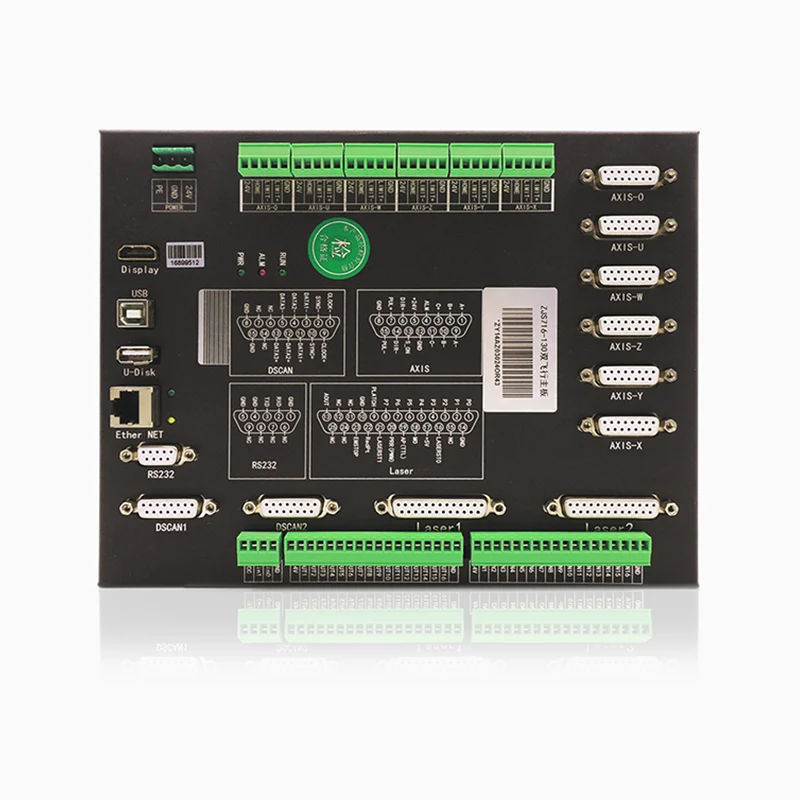
What is a Multi-Axis Linkage Laser Control System?
At its core, a Multi-Axis Linkage Laser Control System is a sophisticated numerical control solution that synchronizes the movement of multiple linear and rotary axes simultaneously. Unlike simple 2D or 3D systems that move step-by-step (point-to-point), true linkage ensures that all axes reach their exact positions at the exact same moment to maintain a precise tool path.
According to technical literature, these systems integrate several critical subsystems: the Linear Axis Control, the Rotary Axis Control, and the Laser Control Subsystem itself . By utilizing high-speed industrial computers and advanced servo drives, the system interprets complex G-code and converts it into fluid, synchronized motion. This allows for the processing of complex curved surfaces, deep internal features, and large-scale components with micron-level accuracy .
The Core Components: A Technical Overview
To better understand how this technology achieves its remarkable performance, it is helpful to break down its architecture. The effectiveness of a Multi-Axis Linkage Laser Control System relies on the seamless integration of the following key modules:
| Component | Function | Impact on Processing |
|---|---|---|
| Motion Control Platform | The central "brain" (e.g., industrial PC) that handles speed planning, interpolation, and coordinate transformation . | Ensures smooth, jerk-limited motion to prevent mechanical stress and maintain accuracy. |
| Servo Drive & Motor Units | Executes the commands from the controller. Includes linear motors, torque motors, and ball screws . | Provides the force and precision needed to move heavy gantries or rotate workpieces with high dynamic response. |
| Laser Source & Path Control | Includes the laser generator and the optical path (mirrors, galvo scanners) . | Determines the spot size, power density, and mode (pulse or continuous). |
| Synchronization Logic | The unique algorithm that links the motion axes to the laser firing signal (PWM or PSO) . | Guarantees that the laser fires only when the tool is in the correct position, preventing corner distortion or overburn. |
The Importance of True Linkage in Laser Processing
Why go through the complexity of true linkage? The primary reason is dynamic accuracy. In traditional systems, the laser might pause briefly as axes change direction, leading to excess heat input and "dwell marks" on the corner of a cut.
With a high-performance Multi-Axis Linkage Laser Control System, the laser pulse is synchronized with the position feedback from the encoder. As explained by automation experts, advanced controllers can subdivide the resolution of the encoder so that the firing position occurs below the natural resolution of the system, dramatically improving placement accuracy . This is particularly crucial for applications like femtosecond laser processing of brittle materials, where any deviation can cause micro-fractures .
Use Cases and Effects
The implementation of multi-axis linkage technology yields tangible benefits across various applications:
-
Medical Device Manufacturing: Producing vascular stents requires cutting intricate patterns on small-diameter tubes. A 5-axis linkage system rotates the tube while the laser head remains oriented perpendicular to the curved surface, ensuring consistent kerf width.
-
Automotive and Aerospace: For large-scale components like door panels or turbine blades, the system enables "cold cutting" with minimal heat-affected zones (HAZ) . Furthermore, modern systems can combine large-stroke linear axes with high-speed galvo scanners to process large areas without stitching errors .
-
Optical Microstructures: In high-tech fields, these systems achieve the precise feedback control needed to create micro-lens arrays and diffraction gratings with nanometer-scale surface finishes .
The Shenyan Advantage: Precision You Can Rely On
While the theory of multi-axis control is well-established, the execution determines the return on investment. At Shenzhen Shenyan CNC Co., Ltd. , we understand that your production line cannot afford inconsistencies. Our expertise lies in tailoring Multi-Axis Linkage Laser Control System solutions that bridge the gap between raw motion and intelligent processing.
We focus on the holistic system architecture. Whether you need to retrofit an existing machine or build a custom production line from scratch, our engineering team ensures that the interplay between servo drives, laser sources, and CAD/CAM software is perfectly optimized. We prioritize openness and scalability, allowing our clients to integrate the latest technologies without being locked into proprietary ecosystems .
Conclusion
As manufacturing moves toward ever-greater complexity and miniaturization, the Multi-Axis Linkage Laser Control System stands as a pillar of modern industrial capability. It transforms the laser from a simple cutting torch into a precision instrument capable of sculpting the microscopic and machining the massive with equal fidelity.
To achieve the highest standards of efficiency and accuracy, you need a partner who speaks the language of integration. Contact Shenzhen Shenyan CNC Co., Ltd. today to discuss your specific application. Let our engineers design a control solution that brings your most complex designs to life with speed and precision.