

Why Does the Right LED Lighting PCBA Matter More Than Ever for Reliable Lighting Products?
2026-01-28
When I started working closely with lighting manufacturers a few years ago, one issue kept coming up again and again: unstable performance caused by poorly designed control boards. As production volumes grew and energy standards tightened, many teams began rethinking the role of the circuit board behind the light. That was also when I first encountered Shenzhen Greeting Electronics Co., Ltd. through a project that required a far more robust LED Lighting PCBA than what the market typically offered. Instead of treating the board as a hidden component, we began treating it as the core of product reliability.
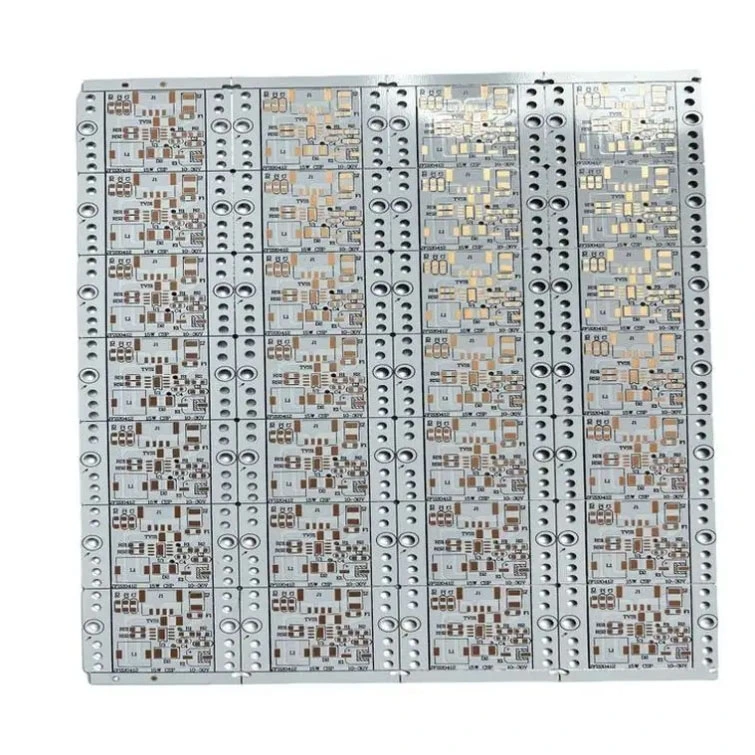
What Problems Do Manufacturers Commonly Face with LED Lighting PCBA Solutions?
In real production environments, lighting failures rarely come from LEDs alone. From my experience, most issues trace back to the LED Lighting PCBA design and assembly stage. These problems often appear only after products have been installed in the field.
- Inconsistent current control leading to flicker or shortened LED lifespan
- Poor thermal management causing overheating in enclosed fixtures
- Incompatible layouts that limit flexibility for different lighting designs
- Unstable solder joints under long-term vibration or temperature cycles
- Difficulties meeting regional safety and energy-efficiency standards
Addressing these challenges requires more than standard layouts or off-the-shelf boards. A well-engineered LED Lighting PCBA must be designed with the full application environment in mind.
How Does a Well-Designed LED Lighting PCBA Improve Product Performance?
I have seen firsthand how thoughtful board design changes the entire performance curve of a lighting product. A reliable LED Lighting PCBA stabilizes power delivery, protects sensitive components, and ensures consistent light output over time.
| Design Focus | Impact on Lighting Products |
|---|---|
| Precise current regulation | Reduces flicker and maintains uniform brightness |
| Optimized thermal layout | Extends LED lifespan and prevents overheating failures |
| Component placement strategy | Improves electrical stability and simplifies enclosure design |
| High-quality PCB materials | Enhances durability in demanding operating environments |
When these elements work together, the LED Lighting PCBA becomes a performance multiplier rather than a hidden risk.
Why Should Customization Be Considered for LED Lighting PCBA Projects?
One misconception I often encounter is that one board can fit every lighting application. In reality, different fixtures impose very different electrical and mechanical demands. Customizing a LED Lighting PCBA allows manufacturers to balance efficiency, cost, and reliability without compromise.
- Board size and shape adapted to fixture constraints
- Driver topology matched to specific power requirements
- Component selection optimized for local certifications
- Support for dimming, smart control, or sensor integration
This level of customization reduces redesign cycles later and helps products reach the market faster with fewer field issues.
How Does Manufacturing Quality Influence Long-Term LED Lighting PCBA Reliability?
Even the best design can fail if manufacturing quality is inconsistent. Over time, I have learned that strict process control is just as important as schematic accuracy for any LED Lighting PCBA.
Key factors that make a difference include controlled soldering profiles, automated optical inspection, and thorough functional testing under load. These steps may seem routine, but skipping them often leads to early failures that damage brand reputation and increase warranty costs.
| Process Control Area | Risk If Overlooked |
|---|---|
| Solder joint inspection | Intermittent connections and early field failures |
| Electrical testing | Unstable output or hidden defects |
| Thermal stress validation | Reduced lifespan under real-world conditions |
What Should Buyers Look for When Selecting an LED Lighting PCBA Partner?
From a buyer’s perspective, choosing the right partner goes beyond price. I always recommend evaluating experience, engineering support, and communication efficiency when sourcing a LED Lighting PCBA.
- Proven experience in lighting-specific PCBA projects
- Ability to support both prototyping and mass production
- Clear understanding of regulatory and market requirements
- Responsive engineering feedback during development
These factors directly influence how smoothly a project moves from concept to stable production.
Is Your Next Lighting Project Ready for a More Reliable LED Lighting PCBA?
If you are developing or upgrading a lighting product and want to avoid common performance and reliability issues, it may be time to rethink the role of your control board. A carefully engineered LED Lighting PCBA can protect your investment, improve user experience, and strengthen your brand in competitive markets.
If you would like to discuss your project requirements or explore tailored solutions, we encourage you to contact us and share your inquiry. The right technical conversation at the right time often makes the biggest difference.