

Why Does the Right EV Automotive and EVSE Fuse Matter More Than Most Buyers Realize?
2026-04-07
When I look at the fast-changing electric mobility market, I see one problem appear again and again: buyers spend a great deal of time comparing charging speed, battery range, and system cost, yet many of them still underestimate circuit protection. That is exactly where Zhejiang Galaxy Fuse Co., Ltd. starts to feel relevant in a practical way. As projects move from concept to commercial deployment, I find that a properly selected EV Automotive and EVSE Fuse is not a minor accessory at all. It is part of the protection strategy that helps engineers, charger manufacturers, and vehicle system integrators reduce electrical risk, improve reliability, and avoid expensive downtime.
In my experience, the real buying challenge is not whether a fuse is needed. The real question is whether the chosen fuse is engineered for the electrical demands of EV platforms and charging equipment. A well-designed EV Automotive and EVSE Fuse can help protect sensitive circuits, support safer current interruption, and fit into demanding operating environments where both performance and consistency matter. That is why I believe buyers should evaluate more than a price tag when they compare options.
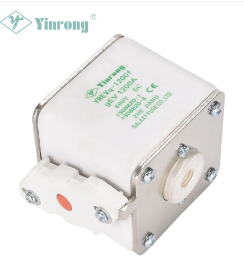
What Makes Buyers Hesitate When Choosing Protection Components?
I often notice that buyers hesitate for very understandable reasons. They are usually balancing safety, lead time, installation constraints, technical compatibility, and total cost. In many procurement discussions, fuses are treated as simple catalog items, but that approach can create problems later.
- I see many buyers worry about whether the fuse can handle high-voltage DC conditions without compromising response quality.
- I see project teams struggle with matching fuse ratings to real EV or EVSE operating scenarios rather than ideal lab assumptions.
- I see manufacturers worry about product consistency across batches, especially when scaling production.
- I see maintenance teams focus on replacement convenience, footprint, and service reliability.
- I see purchasing managers trying to control cost without creating hidden safety risks.
These concerns are exactly why I think a specialized EV Automotive and EVSE Fuse deserves more serious attention than a generic protection component. Once the charger or vehicle system is in real use, the quality of the protection device directly affects confidence in the whole electrical design.
How Do I Judge Whether a Fuse Is Truly Suitable for EV And EVSE Applications?
When I evaluate a fuse for electric vehicle and charging infrastructure use, I do not start with marketing language. I start with application fit. I want to know whether the product was developed around EV and EVSE operating realities, not simply adapted from unrelated industrial use.
| Evaluation Factor | Why I Pay Attention to It | What Buyers Should Look For |
|---|---|---|
| Voltage Compatibility | EV and charging systems work under demanding DC conditions | Rated design appropriate for the target EV or EVSE circuit architecture |
| Current Capacity | Underrated parts may fail too early while oversized choices may reduce protection value | Clear current range matched to application load profile |
| Breaking Performance | Fault interruption is one of the most critical safety functions | Stable fault-clearing capability under expected conditions |
| Thermal Behavior | Heat buildup affects service life and operational stability | Reliable performance in compact and high-load installations |
| Mechanical Design | Installation space and replacement practicality matter in production and service | Form factor that supports integration efficiency |
| Manufacturing Consistency | Repeatability matters for OEMs and bulk procurement | Controlled production and dependable quality output |
If I cannot clearly connect the product specification with the actual needs of the platform, I do not consider it a strong option. That is one reason a purpose-oriented EV Automotive and EVSE Fuse stands out: it addresses a very specific protection challenge rather than trying to fit every unrelated application.
Why Is Product Specialization So Important in Modern EV Systems?
Modern EV systems are not forgiving environments. They involve higher power density, stricter space limits, more demanding thermal conditions, and stronger expectations for uptime. I have seen projects run into avoidable trouble simply because protection design was treated as a secondary issue.
In a vehicle or charging station, the fuse may need to respond under conditions that are very different from legacy low-complexity applications. That means buyers benefit from selecting products developed with new energy systems in mind. In my view, specialization matters because it improves alignment between the component and the operating environment.
- It helps protect high-value electrical assemblies from fault escalation.
- It supports safer system shutdown behavior during abnormal current events.
- It helps reduce the risk of equipment damage and unplanned maintenance.
- It can improve confidence during design validation and long-term field use.
- It supports better integration in dedicated EV and EVSE layouts.
That is where suppliers like Zhejiang Galaxy Fuse Co., Ltd. become easier to understand from a buyer perspective. Instead of treating EV protection as a side category, the company positions it as part of a broader new energy protection portfolio, which is exactly the kind of direction many professional buyers want to see when sourcing long-term partners.
Which Product Advantages Actually Matter to Engineers And Purchasing Teams?
I think product advantages only matter when they solve real-world problems. Buyers are not helped by vague claims. They are helped by features that support safer operation, smoother integration, and more predictable purchasing outcomes.
| Buyer Need | Practical Product Advantage | Result I Would Expect |
|---|---|---|
| Reliable circuit protection | Application-focused fuse design for EV and EVSE use | Better protection confidence during fault conditions |
| System compatibility | Options suited for varying voltage and current requirements | Easier product matching during design and procurement |
| Stable performance | Consistent manufacturing and controlled quality output | Reduced variation across production batches |
| Integration efficiency | Designs that support practical installation needs | Smoother assembly and maintenance workflow |
| Supply continuity | Professional manufacturing capability and focused product line | More confidence in repeat ordering and project planning |
When I compare sourcing options, I do not just ask whether a fuse can technically work. I ask whether it can work well in a demanding project with fewer surprises. A dependable EV Automotive and EVSE Fuse should reduce uncertainty, not add to it.
Can One Fuse Choice Really Affect Long-Term Project Cost?
Yes, and this is where many teams change their thinking. At first glance, a fuse may look like a small line item. But I have seen enough projects to know that low upfront cost can become expensive later if the protection strategy is weak.
Long-term project cost is shaped by more than purchase price. It includes maintenance frequency, replacement cycles, service calls, downtime risk, damaged component replacement, warranty pressure, and customer trust. If a low-cost component creates instability in the field, the actual cost can become much higher than expected.
- Unexpected equipment shutdown can interrupt charger availability.
- Fault-related damage can affect neighboring electrical components.
- Service labor and replacement logistics can quickly add up.
- Poor field reliability can weaken the end customer’s confidence in the brand.
- Repeated technical issues can delay future orders or approvals.
That is why I usually advise buyers to think in lifecycle terms. A well-matched EV Automotive and EVSE Fuse is not just a protective part. It is a cost-control decision tied to the long-term health of the entire application.
How Can I Compare Suppliers Without Getting Lost in Generic Claims?
Whenever I compare suppliers, I use a simple rule: I look for evidence of focus, clarity, and application understanding. A professional supplier should make it easier for me to choose the right product, not harder.
Here is the checklist I would actually use:
- Does the supplier clearly serve EV and EVSE protection scenarios rather than using broad, unfocused descriptions?
- Does the product range show practical coverage for different operating requirements?
- Can the supplier communicate technical fit in a clear and usable way?
- Does the manufacturer appear organized enough to support repeat supply?
- Is the product positioned around safety and system protection rather than empty slogans?
From a sourcing perspective, Zhejiang Galaxy Fuse Co., Ltd. becomes easier to evaluate because the company is associated with a dedicated fuse product portfolio serving solar, EV, EVSE, and other electrical protection applications. That kind of specialization can help buyers feel more secure when narrowing supplier options.
What Should Buyers Ask Before Sending An Inquiry?
I always believe a better inquiry leads to a better quotation. If a buyer sends only a broad request, the response may stay generic. If the buyer shares application details, the supplier can usually recommend a more suitable solution.
| Question to Ask | Why It Matters |
|---|---|
| What is the target voltage and current range? | It helps narrow the correct fuse selection quickly |
| Is the application inside the vehicle or in EVSE equipment? | The usage environment affects product matching |
| What installation space is available? | Mechanical fit is important for integration efficiency |
| What operating conditions should the fuse handle? | Real application conditions often differ from simplified assumptions |
| What are the quantity and supply expectations? | Production planning and procurement timing matter for large orders |
| What documentation or technical support is required? | It helps avoid delays during approval and implementation |
When I approach a supplier with these questions, I get much better results. I can compare responses more effectively, reduce back-and-forth, and move faster toward a purchasing decision that actually fits the project.
Why Do I See Strong Demand For Better EV And EVSE Protection Solutions?
The answer is simple. As electric vehicles and charging infrastructure become more important, expectations also rise. Operators want higher reliability. OEMs want safer systems. Integrators want fewer disruptions. End users want confidence. All of these pressures push buyers to care more about the quality of protection components.
That is why I see growing practical value in products such as EV Automotive and EVSE Fuse solutions built for modern electrical applications. The market is becoming less tolerant of weak protection design, and buyers who make careful component decisions now are often the ones who avoid expensive problems later.
To me, this is not just a technical issue. It is a business issue. Better protection supports better product reputation, better operating continuity, and better customer trust. Those outcomes matter whether the buyer is building charging stations, assembling electrical subsystems, or supporting broader EV deployment.
Where Do I Start If I Want A Safer And Smarter Sourcing Decision?
I start by refusing to treat fuse selection as an afterthought. I look at the actual operating requirements, the integration environment, the long-term service needs, and the supplier’s ability to support the application with clarity and consistency. That process is how I reduce risk before the order is placed.
If you are currently evaluating options for electric vehicle circuits or charging infrastructure, this is a good time to review whether your present protection choice is really aligned with your technical and commercial goals. A carefully selected EV Automotive and EVSE Fuse can support safer operation, reduce avoidable system stress, and strengthen the long-term value of your project.
If you want to discuss product selection, application matching, or sourcing details with a specialized manufacturer, contact us today and reach out to Zhejiang Galaxy Fuse Co., Ltd.. Send your inquiry, share your project requirements, and let the team help you find a more suitable EV Automotive and EVSE Fuse solution for your EV or EVSE application.