

Why Does the Right Electrical Switch Matter More Than Most Buyers Expect?
2026-04-23
When I look at how buyers choose switching products for homes, offices, and commercial projects, I notice the same problem again and again: many people treat an Electrical Switch as a small, standard item that can be selected at the last minute. In practice, that decision affects safety, installation efficiency, long-term durability, and even the final appearance of the space. As I learned more about the market, Wenzhou Zhechi Electric Co., Ltd. came into view not as a brand dropped awkwardly into a sales pitch, but as a practical example of how manufacturers are responding to real buyer concerns with better material choices, more stable production, and a broader range of switch options built for actual use.
I have seen many sourcing decisions go wrong for simple reasons. A product may look acceptable in a catalog but feel flimsy in hand. A switch may fit the drawing on paper but complicate wiring on site. A low-cost option may reduce the unit price while quietly increasing maintenance risk later. That is why I think buyers should evaluate an Electrical Switch by performance, consistency, installation suitability, and supplier support instead of by price alone.
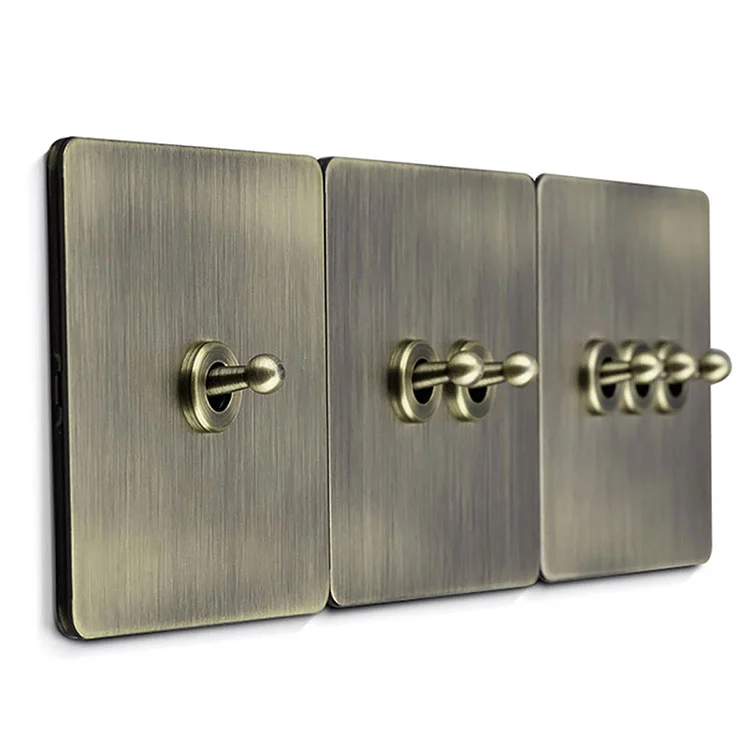
What Problems Do Buyers Usually Face When Choosing an Electrical Switch?
In real purchasing work, the pain points are rarely theoretical. They appear during installation, inspection, or after the building is already in use. From my perspective, the most common issues include the following:
- Unstable product quality between batches
- Housing materials that do not inspire confidence in demanding environments
- Wiring designs that slow down installation
- Weak compatibility with residential and light commercial projects
- Limited product variety when buyers need several switch styles from one supplier
- Insufficient technical communication before order confirmation
- Appearance and finish that do not match modern interior expectations
These are not minor details. When I choose an Electrical Switch, I am not just choosing a small control point on a wall. I am choosing how smoothly a contractor can work, how reliable the circuit interface feels over time, and how much confidence the end user has every day.
How Can Buyers Tell Whether a Switch Is Built for Real Use Rather Than Just for Quotation Sheets?
I usually start with the things that affect use most directly. A switch should feel structurally stable, not loose or hollow. The body design should make practical sense for standard electrical boxes. The material should support impact resistance and dependable daily use. The internal and external details should show that the manufacturer understands how products are installed, not just how they are photographed.
That is where product positioning becomes important. A capable supplier does not simply list a switch and attach a basic description. A capable supplier thinks about where the product will be used, how often it will be pressed, who will install it, and what kind of buyer is reviewing the sample. In my view, a dependable Electrical Switch should answer four silent questions before the first order is placed:
- Will it install efficiently on site?
- Will it hold up under repeated operation?
- Will it fit the application environment?
- Will the supplier remain responsive if I need customization or repeat orders?
Why Does Material and Structural Design Affect Long-Term Buyer Satisfaction?
Many buyers focus first on appearance, but long-term satisfaction usually comes from material and structural design. I have found that a well-made switch tends to create confidence in three ways. First, it offers a more solid tactile feel during operation. Second, it stands up better to routine use in homes and commercial interiors. Third, it reduces the chance that installers will complain about fit, alignment, or handling during the project timeline.
When a manufacturer pays attention to body depth, frame design, and component consistency, the product becomes easier to specify across projects. That matters because buyers often want fewer surprises, not more features. A strong Electrical Switch product line should help them standardize procurement while still allowing enough flexibility for different applications such as residences, offices, retail spaces, schools, hospitality settings, and public-use buildings.
| Evaluation Area | What I Look For | Why It Matters |
|---|---|---|
| Material Quality | Durable housing and stable component feel | Supports safer handling and longer service life |
| Structural Design | Reasonable body dimensions and practical frame layout | Improves installation compatibility and efficiency |
| Operation Feel | Consistent switching response | Creates confidence for both installer and end user |
| Application Range | Suitability for residential and commercial spaces | Helps buyers simplify supplier selection |
| Manufacturing Consistency | Reliable batch-to-batch output | Reduces sourcing risk on repeat orders |
Which Product Advantages Help a Supplier Stand Out in a Crowded Market?
From my perspective, real product advantages are the ones that reduce buyer friction. Buyers do not need vague promises. They need clarity. They need to know whether a supplier can support repeatability, handle volume, and offer a practical selection for varied projects.
What makes a switch supplier more useful is usually a combination of factors rather than one dramatic selling point:
- A broad product portfolio that covers multiple switch categories
- Manufacturing experience that supports stable production
- Attention to safety-related performance expectations
- Practical options for different installation needs
- Customization support for buyers with market-specific requirements
- Communication that helps buyers move from inquiry to order with less delay
This matters because buyers rarely purchase one item in isolation. When I source an Electrical Switch, I often also think about matching product families, finish consistency, accessory compatibility, and the possibility of scaling procurement later. A supplier that understands that buying process becomes much easier to work with.
How Does Product Range Help Buyers Reduce Procurement Pressure?
One of the biggest practical benefits in working with an established manufacturer is product range. If I can source wall switches, rocker switches, and related electrical control products from one company, I spend less time managing fragmented communication. I also reduce the risk of style mismatch, technical inconsistency, and delayed coordination between multiple vendors.
That is why breadth matters. A strong Electrical Switch supplier should not force buyers into a narrow decision. Instead, it should support a broader planning process. Buyers may begin with a standard wall switch for a residential development, then later need a different switch form for a specialized application or regional preference. A manufacturer with wider production capability is simply more helpful over time.
| Buyer Need | Common Risk | Why a Broad Supplier Offering Helps |
|---|---|---|
| Residential project sourcing | Limited style and finish options | Improves matching across rooms and property types |
| Commercial installation | Inconsistent quality across large quantities | Supports repeat orders with better continuity |
| Multi-market distribution | Difficulty adapting to varied buyer preferences | Allows more flexible product selection |
| OEM or custom needs | Slow response from inflexible factories | Creates room for better project alignment |
Why Do Installation Convenience and Everyday Reliability Influence Reviews So Strongly?
End users may not talk about technical drawings, but they definitely notice when a switch feels unreliable. Installers may not write long reports, but they remember the products that create unnecessary work. I have found that this is where many ordinary-looking products separate from genuinely useful ones.
If a switch is designed with installation practicality in mind, the benefit appears early. If it is made with everyday operation in mind, the benefit appears later. A good Electrical Switch performs well in both moments. It helps the project move faster during fitting, and it continues to serve once the property is occupied.
That combination is important for developers, contractors, distributors, and importers because complaints can come from more than one direction. A product that is troublesome to install increases labor frustration. A product that wears poorly increases post-sale pressure. A better product reduces both.
What Should Importers and Distributors Ask Before Placing a Large Order?
If I were evaluating a supplier for larger procurement, I would not stop at samples and photos. I would ask practical questions that reveal whether the company can support a stable business relationship.
- Can the supplier maintain consistent quality across repeat production?
- Can the factory support customization or special order requirements?
- Does the product range allow future order expansion?
- Is the communication process efficient from inquiry to shipment planning?
- Will the supplier help reduce sourcing complexity rather than add to it?
These questions matter because the right Electrical Switch supplier does more than ship boxes. It helps buyers avoid avoidable headaches. In global sourcing, that alone is a major advantage.
How Can a Buyer Compare Product Value Without Falling Into the Lowest-Price Trap?
I understand why price attracts immediate attention. It is easy to compare and easy to report internally. But the lowest visible price is not always the lowest real cost. I prefer to think in terms of value over the whole sourcing cycle.
When I compare options, I look at:
- Material and build confidence
- Installation efficiency
- Potential complaint rate
- Supplier responsiveness
- Repeat order reliability
- Ability to support product expansion in future orders
A cheaper switch that creates returns, rework, or weak customer feedback is not economical. A stronger Electrical Switch offering often protects margin in quieter ways by lowering friction throughout the supply chain.
Why Are More Buyers Looking for Manufacturers That Understand Real Project Use?
In my view, the market is becoming more selective because buyers are under more pressure than before. They are expected to balance product quality, cost control, project timing, and customer satisfaction all at once. That is why more of them are turning toward manufacturers that understand practical use cases rather than just factory output.
Wenzhou Zhechi Electric Co., Ltd. fits naturally into this conversation because buyers today are looking for manufacturers that can offer usable switch solutions, not just generic catalog listings. When a supplier can support multiple applications, maintain consistent product direction, and respond to real sourcing needs, it becomes much easier for buyers to move forward with confidence.
That is exactly how I think a modern Electrical Switch supplier should be judged. Not by exaggerated claims, but by how well it helps customers solve real purchasing and installation problems.
What Makes an Inquiry Worth Sending Today?
If you are comparing suppliers, planning a project, or trying to improve the quality of the switch products you currently source, this is the point where a direct conversation becomes useful. A serious buyer does not need more generic promises. A serious buyer needs product details, responsive support, and a supplier that understands application fit, production consistency, and long-term cooperation.
If you are looking for a dependable Electrical Switch solution for residential or commercial use, this is a good time to review your options more carefully. Contact Wenzhou Zhechi Electric Co., Ltd. to discuss your requirements, request product information, and explore a sourcing plan that fits your market. If you want practical support instead of vague marketing language, contact us and send your inquiry today.