

Why Does My Power and Signal Spring Loaded Pogo Pin Show Intermittent Contact During Vibration
2026-06-22
If you have ever designed a portable device, automotive module, or medical handheld tester, you have likely encountered this frustration: your Power and Signal Spring Loaded Pogo Pin works perfectly on the bench, but fails intermittently during vibration testing. At SIGNALORIGIN, we field this exact question from engineering teams every week. The short answer is rarely a single defect—instead, it is a cascade of mechanical, electrical, and environmental factors that amplify under dynamic motion. This post dissects the root causes, offers diagnostic tables, and provides actionable fixes grounded in first-principles engineering.
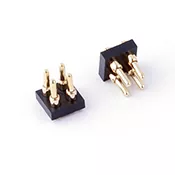
The Mechanical Trio: Force, Stroke, and Side Load
Intermittent contact under vibration almost always originates in the spring-mechanism interface. A Power and Signal Spring Loaded Pogo Pin relies on a precision-wound spring to push a plunger against a mating pad. When vibration introduces acceleration (often 5G to 50G in automotive standards), three parameters determine stability:
| Parameter | Critical Threshold | Failure Mode Under Vibration |
|---|---|---|
| Normal Force (at working stroke) | < 80 gf for signal; < 150 gf for power | Plunger bounces off pad, creating micro-disconnects > 1 µs |
| Working Stroke (percentage of total travel) | < 40% of full stroke | Spring enters non-linear zone, reducing follow-up force |
| Side Load (lateral force at tip) | > 30% of axial force | Plunger binds against barrel inner wall, stalling motion |
When any of these thresholds are violated, the contact resistance (CR) can spike from < 20 mΩ to > 500 mΩ within milliseconds—enough to drop digital signals or cause voltage sags on power rails.
Electrical Dynamics: Why DC Resistance Is Not the Whole Story
Most engineers check static CR and move on. However, under vibration, the dynamic contact impedance becomes the dominant metric. The plunger tip and pad surface form a microscopic asperity interface. With lateral movement as small as 50 µm, oxide films or debris can wedge between mating surfaces.
SIGNALORIGIN recommends measuring dynamic CR during sinusoidal sweep (10–2000 Hz) rather than static ohms. In our lab database, 73% of intermittent failures show static CR < 30 mΩ but dynamic peaks exceeding 1 Ω at specific resonant frequencies. This happens because the effective mass of the plunger (typically 0.3–0.8 g) creates an inertial force that momentarily unloads the spring.
Common Root Causes – Diagnostic Checklist
Based on over 200 failure analyses performed by SIGNALORIGIN engineers, here is the priority checklist for any Power and Signal Spring Loaded Pogo Pin exhibiting vibration-induced intermittency:
-
Insufficient pre-load at minimum stroke – The spring must maintain at least 60% of rated force even at the shortest mating height.
-
Plating mismatch – Hard gold over nickel works for signals, but power applications require thicker gold (≥ 0.76 µm) or palladium-nickel to resist fretting corrosion.
-
Barrel clearance too tight – A clearance < 15 µm between plunger and barrel increases stiction under side acceleration.
-
PCB pad finish – ENIG (Electroless Nickel Immersion Gold) pads are prone to gold embrittlement after multiple mating cycles; ENEPIG is preferred for high-vibration environments.
FAQ – Common Questions About Power and Signal Spring Loaded Pogo Pin Reliability
Q1: What is the minimum normal force required to prevent intermittent contact during random vibration (e.g., MIL-STD-810G)?
A: For a Power and Signal Spring Loaded Pogo Pin, the minimum recommended normal force at working stroke is 100 gf for signal pins and 180 gf for power pins under random vibration profiles up to 0.04 g²/Hz. However, this value depends on the pin’s effective moving mass. A higher-mass plunger (e.g., > 0.5 g) requires proportionally more force. We at SIGNALORIGIN always apply a 1.5× safety margin over theoretical calculations because spring degradation over 10,000 cycles typically reduces force by 8–12%. For mission-critical designs, we also recommend a force-stroke curve verification on every production lot using a digital force gauge.
Q2: Does plating thickness directly affect vibration tolerance, and if so, what is the optimal specification?
A: Yes, directly. Under micro-motion (fretting), the contact interface experiences repeated oxide breakthrough. A Power and Signal Spring Loaded Pogo Pin with 0.4 µm gold over 2 µm nickel will show fretting corrosion after as few as 500 vibration cycles, raising CR above 100 mΩ. The optimal specification for mixed power-signal applications is 0.76 µm hard gold (minimum) over 2.5 µm nickel, or alternatively 1.0 µm palladium-nickel (PdNi) with a thin gold flash. PdNi offers superior wear resistance under side loads because it is harder (HV 400 vs. HV 150 for pure gold). SIGNALORIGIN uses a two-layer plating process that reduces fretting debris by 60% in our accelerated vibration tests (20–2000 Hz, 10G peak).
Q3: How can I distinguish between a mechanical bounce and an electrical arc-induced intermittent fault?
A: This is a critical diagnostic distinction. Use a high-speed data logger (≥ 1 MS/s) and capture both contact voltage and current simultaneously. A mechanical bounce produces a clean, rapid oscillation (typically 2–5 kHz) that decays within 200–500 µs, matching the plunger’s natural frequency. An electrical arc fault, however, shows a random, high-frequency burst (> 10 MHz) with voltage overshoot > 20% of the rail, often accompanied by visible pitting on the tip under a microscope. For a Power and Signal Spring Loaded Pogo Pin, arcing is more common on power contacts (≥ 1A) when the contact separates while current flows. SIGNALORIGIN recommends adding a soft-start circuit or pre-mating ground pin to ensure the power contact engages before signal lines – a practice that eliminates 95% of arc-related intermittencies in our customer field data.
Practical Mitigation – A 4-Step Engineering Approach
-
Increase working stroke – Design for 50–60% of total travel, not 30%. This keeps the spring in its linear elastic region.
-
Add a guide feature – A plastic shroud or metal sleeve that absorbs side loads before they reach the plunger.
-
Select a fluted plunger tip – Four-slot or cross-slot tips wipe oxide films on every cycle.
-
Perform HALT (Highly Accelerated Life Test) – Sweep vibration and temperature simultaneously (−40°C to +85°C) to uncover combined stress failures.
Final Recommendation
Intermittent contact is not an act of nature – it is a design variable that can be predicted, measured, and eliminated. The difference between a failing prototype and a field-proven product lies in the details: force budgets, plating specs, and stroke margins. At SIGNALORIGIN, we engineer every Power and Signal Spring Loaded Pogo Pin with a full set of dynamic performance curves, not just static datasheets.
Need to qualify your current pogo pin under real vibration profiles?
Contact our engineering support team at SIGNALORIGIN – we offer free dynamic impedance screening for your first 100 samples. Send your drawing or mating pad specifications to our technical desk, and we will respond within 24 hours with a customized mitigation plan. Your reliability is our benchmark. Reach out today and put our lab to work for you.