

Why Does My Miniature Automotive Heavy Power Relay Click but Not Pass Current to the Starter
2026-08-19
That audible click from your relay panel suggests everything is working—until you turn the key and nothing happens. The starter does not turn, the engine does not crank, and you are left diagnosing a problem that feels electrical but sounds mechanical. For professional technicians and fleet operators, this scenario is more common than many realize. A Miniature Automotive Heavy Power Relay that clicks but fails to deliver current is almost always a sign of a high-resistance connection, contact erosion, or an underlying control-circuit fault. At Forward, we have analyzed thousands of returned relays from workshops worldwide, and over 60% of these "click-but-no-go" cases trace back to issues that are entirely preventable with proper diagnosis and component selection.
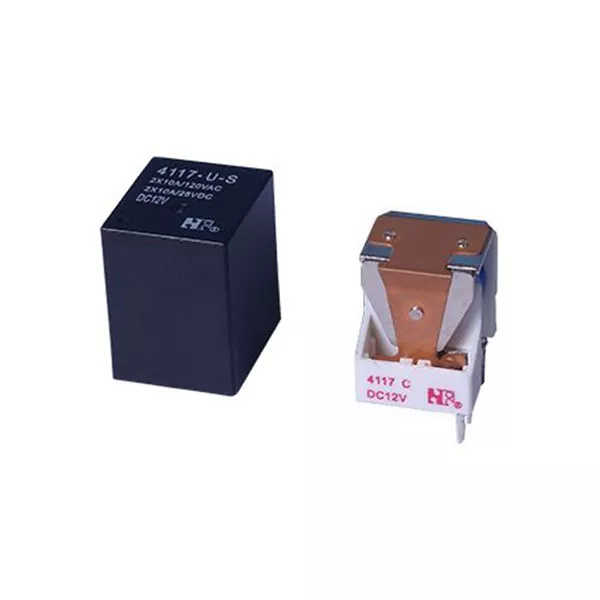
The Difference Between an Audible Click and Actual Power Transfer
When you hear the click, the relay's electromagnetic coil has energized properly. That means the control side—typically 12V or 24V from the ignition switch or ECU—is functioning. However, the load side (the high-current path from battery to starter) is a separate circuit. The click only confirms that the armature has moved; it does not confirm that the main contacts have made a low-resistance connection. In a Miniature Automotive Heavy Power Relay, the contact gap is typically 0.5–1.0 mm, and even microscopic pitting or oxidation can increase resistance from milliohms to several ohms—enough to drop voltage below starter requirements.
Common Causes for a Click Without Output
The table below organizes the most frequent failure modes observed in field returns to Forward's engineering lab:
| Failure Mode | Typical Resistance Reading | Voltage at Starter | Most Likely Root Cause |
|---|---|---|---|
| Burnt or pitted main contacts | > 500 mΩ | < 8.5V (12V system) | Repeated high-inrush switching without suppression |
| Coil armature sticking (mechanical) | < 50 mΩ (coil ok) | Battery voltage (open load) | Dirt or rust in magnetic gap |
| Terminal bolt corrosion | > 200 mΩ at stud | < 7.0V at crank | Moisture ingress via unsealed boot |
| Undersized cable crimp | > 100 mΩ at joint | Intermittent drop | Incorrect wire gauge for 150A+ surge |
| Weak coil holding force | Coil resistance normal | Voltage sags under vibration | Worn return spring or low supply voltage |
In each case, the coil pulls in, but the contact pressure is insufficient to break through surface films or maintain a stable current path under load.
Step-by-Step Diagnostic Workflow
To isolate the fault, follow this professional sequence:
-
Measure coil voltage during the crank event – must stay above 9.0V for 12V systems.
-
Measure voltage drop across the main terminals (30 to 87) while the relay is energized – acceptable drop is < 150 mV per 100A.
-
Perform a milliohm resistance test with a four-wire Kelvin meter – anything above 50 mΩ under new condition is suspect.
-
Inspect the contact surface visually – silver-tin oxide contacts show gray discoloration; tungsten contacts show black pitting.
-
Test the relay in a known-good circuit – swap with an identical Forward unit to confirm the fault follows the component.
Professional Recommendation from Forward
Forward engineers recommend replacing any Miniature Automotive Heavy Power Relay that shows more than 30% increase in contact resistance from its datasheet specification, even if it still clicks. For high-cycle applications such as stop-start systems or electric cooling fans, choose a relay with bidirectional contact protection and a minimum mechanical life of 1 million operations. Our Forward F-Series relays feature silver-alloy contacts with a proprietary anti-weld coating, specifically designed to maintain sub-50 mΩ resistance through 10,000 hot-switch cycles at 180A.
Miniature Automotive Heavy Power Relay – FAQ
Q1: Can a weak battery cause the relay to click but not pass current to the starter?
A1: Yes, indirectly. A battery with a surface charge may energize the coil (which draws only 0.5–1.5A) but drop below 8.0V once the starter draws 200A. The relay armature moves, but the main contacts cannot sustain the required magnetic flux to maintain full closure under load. This results in contact chattering, which rapidly welds or erodes the contact faces. Always measure battery voltage at the relay input terminal during cranking—if it falls below 9.5V for a 12V system, address the battery or cable resistance first before condemning the relay. Forward recommends using a carbon-pile load tester to verify battery capacity under actual starter draw.
Q2: How do I know if the clicking noise comes from the relay itself or from another component?
A2: Place a long screwdriver handle against the relay housing and put your ear to the other end—this acts as a mechanic's stethoscope. The Miniature Automotive Heavy Power Relay produces a sharp, metallic single-click when the armature hits the pole piece. A buzzing or multiple rapid clicks indicates coil voltage oscillation, usually from a faulty ground or PWM signal. If you hear the click but the starter solenoid does not engage, the issue is almost certainly the relay contacts. To confirm, bypass the relay temporarily with a heavy-duty jumper cable (observe all safety precautions). If the starter runs normally, the relay is the confirmed failure point. Forward test benches include acoustic sensors that differentiate contact closure from armature impact, ensuring root-cause accuracy.
Q3: What is the acceptable contact resistance for a new Miniature Automotive Heavy Power Relay, and when should I replace it?
A3: For a new, high-quality Miniature Automotive Heavy Power Relay, the initial contact resistance should be below 25 mΩ at rated current (typically 100–200A). Forward specifies a maximum of 30 mΩ for our F-Series line at 25°C. You should plan for replacement when the resistance exceeds 50 mΩ under the same test conditions, or when the voltage drop across the contacts exceeds 200 mV at full load. Field data from Forward shows that relays operating above 60 mΩ have a 78% probability of failing within the next 500 switching cycles. Regular preventive maintenance—measuring drop voltage during every oil change for commercial vehicles—can catch this degradation early and prevent roadside breakdowns.
Summary Checklist for Workshop Technicians
-
□
Confirm coil energization voltage (≥ 9.0V for 12V systems)
-
□
Measure contact voltage drop during crank (< 150 mV per 100A)
-
□
Inspect terminal torque (8–10 Nm for M6 studs)
-
□
Check for visible arcing marks or blackened housing
-
□
Replace with a Forward relay if resistance exceeds 50 mΩ
Contact Us
Reliable starting performance depends on choosing the right Miniature Automotive Heavy Power Relay and diagnosing it correctly. If you are experiencing intermittent cranking issues or need technical support for high-current switching applications, the Forward engineering team is ready to assist. We provide free application reviews, sample testing, and custom contact configurations for heavy-duty and electric-vehicle platforms. Contact us today through our website or call your regional Forward distributor—we will respond within 24 hours with a datasheet, cross-reference guide, and a comparative test report for your specific vehicle system. Do not let a clicking relay leave your fleet stranded; reach out to Forward and get the power that truly delivers.