

Why Does a Single Mode Laser Diode Matter More Than Ever in Precision Applications?
2026-01-21
When I first started working with high-precision laser components, I quickly realized that performance issues rarely come from “big” design mistakes. More often, they come from small optical inconsistencies that quietly undermine stability, efficiency, and long-term reliability. That was exactly why I began paying closer attention to Single Mode Laser Diode technology, and why, over time, Wavespectrum Laser Group naturally entered my field of view as a supplier focused on real-world laser performance rather than marketing buzz.
In practical terms, a Single Mode Laser Diode is not just about narrower linewidths or textbook beam quality. It is about predictability, repeatability, and confidence in systems that cannot afford optical noise or power fluctuation.
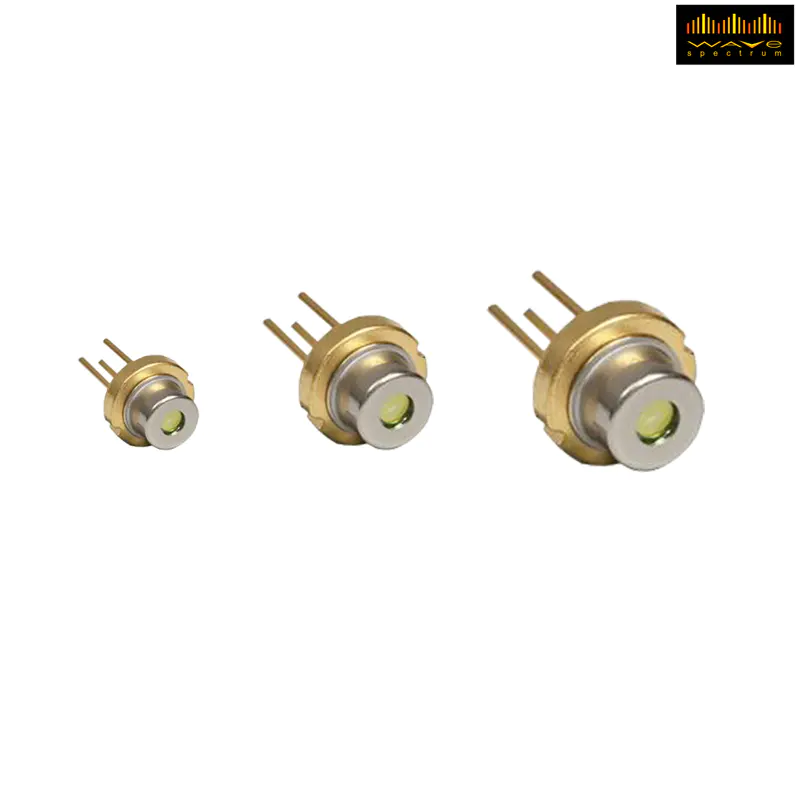
What Problems Do Engineers Face When Using Conventional Laser Diodes?
In many projects I have reviewed, users initially chose multimode or loosely controlled laser diodes because of cost or availability. Over time, several pain points consistently surfaced:
- Unstable beam profiles affecting measurement accuracy
- Mode hopping under temperature or current variation
- Lower coupling efficiency in fiber-based systems
- Excess optical noise in sensing or communication setups
These issues may appear minor during early testing, but in deployed systems they often translate into calibration drift, signal degradation, or higher maintenance costs. This is where a Single Mode Laser Diode changes the equation.
How Does a Single Mode Laser Diode Improve Optical Stability?
From my experience, the most immediate benefit of using a Single Mode Laser Diode is consistency. Operating in a single transverse and longitudinal mode allows the laser to deliver a clean, well-defined beam with minimal divergence.
This directly improves:
- Fiber coupling efficiency in single-mode fibers
- Signal-to-noise ratio in optical detection
- Wavelength stability for spectroscopy and sensing
When these factors are stable, downstream components behave more predictably, reducing the need for constant recalibration.
Why Does Beam Quality Affect System Cost Over Time?
Many buyers focus on the upfront price of a laser component, but long-term system cost tells a different story. Poor beam quality often leads to:
- Higher optical losses requiring additional amplification
- Increased thermal management complexity
- Shortened component lifespan due to operating margins
A well-designed Single Mode Laser Diode helps avoid these hidden costs by maintaining tight optical control from the source itself.
Which Applications Benefit Most from Single Mode Laser Diodes?
Over the years, I have seen Single Mode Laser Diode solutions adopted across a wide range of industries where precision is non-negotiable:
- Fiber-optic communication systems
- Optical sensing and interferometry
- Biomedical instrumentation
- High-resolution measurement and metrology
- Laboratory research and calibration equipment
In each case, the common requirement is optical clarity and stability under real operating conditions.
What Technical Parameters Should Be Evaluated Before Selection?
When comparing laser options, I always recommend looking beyond nominal output power. The table below highlights parameters that directly impact performance when choosing a Single Mode Laser Diode.
| Parameter | Why It Matters | Impact on System Performance |
|---|---|---|
| Side Mode Suppression Ratio | Indicates single-mode purity | Improves signal stability and accuracy |
| Linewidth | Defines spectral precision | Reduces noise in sensing and communication |
| Beam Divergence | Affects coupling efficiency | Optimizes fiber and optical alignment |
| Wavelength Stability | Maintains consistent output | Minimizes recalibration requirements |
How Do Manufacturing Standards Influence Real-World Reliability?
Even the best design can fail without controlled manufacturing. What stood out to me when reviewing suppliers like Wavespectrum Laser Group was the emphasis on process control and testing rather than purely theoretical specifications.
A Single Mode Laser Diode that performs well in a datasheet but degrades under temperature cycling or long-term operation quickly loses its value. Consistent screening and quality assurance are what turn a component into a dependable system element.
Is Upgrading to a Single Mode Laser Diode Worth It?
Based on practical system evaluations, the answer is yes when precision, stability, and lifecycle cost matter. While the initial investment may be higher, the operational benefits of a Single Mode Laser Diode often outweigh the difference through reduced downtime, improved accuracy, and longer service life.
If you are designing or upgrading a laser-based system and want to reduce optical uncertainty at the source, it may be time to reconsider your laser choice.
If you would like to explore how a Single Mode Laser Diode can fit into your specific application, I encourage you to contact us or leave an inquiry today. The right discussion at the design stage can save months of troubleshooting later, and our team is ready to help you move forward with confidence.