

Why Do Industrial Relays Still Determine Whether Your System Runs Smoothly or Stops at the Worst Possible Time?
2026-04-23
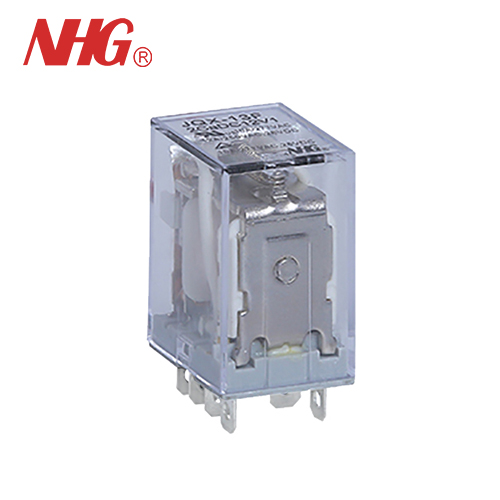
When I look at how control systems fail in real projects, I rarely start with the biggest and most expensive component. I usually start with the switching point, because that is where small weaknesses turn into costly interruptions. As I learned more about how Ningbo Huaguan Electronics Co., Ltd. approaches relay manufacturing and application needs, I found a practical angle worth sharing. In many real working environments, Industrial Relays are not just simple electrical parts. They are the decision-makers behind signal transfer, circuit isolation, load control, and operating stability. When buyers choose the wrong relay, they often do not notice the mistake until downtime, contact wear, vibration issues, or inconsistent switching starts affecting the entire system.
I have seen many buyers focus too heavily on price and basic ratings while overlooking the daily realities of industrial use. A relay may look suitable on paper, yet fail to deliver in cabinets exposed to vibration, frequent switching, temperature variation, or long operating cycles. That is why I believe the discussion around Industrial Relays should be more practical. The real question is not whether a relay can switch a load once. The real question is whether it can keep doing that reliably, safely, and consistently after thousands of operations in a demanding environment.
What Problems Do Buyers Usually Face When Choosing Industrial Relays?
When I speak with purchasing teams, panel builders, and equipment manufacturers, the same frustrations come up again and again. Many of them are not struggling to find relays. They are struggling to find relays that match real application conditions without creating hidden maintenance costs later.
- I often see uncertainty about how to balance switching capacity with relay size.
- Many buyers worry about contact reliability under repeated load changes.
- Some teams are unsure whether plug-in or PCB mounting is better for their assembly process.
- Others need help reducing vibration-related failure in machinery or transport-linked equipment.
- I also notice concern about service life, insulation performance, compliance, and replacement stability across future orders.
These concerns matter because weak relay selection creates a chain reaction. A poor choice can lead to false switching, overheating, unstable performance, more maintenance calls, and a shorter product life cycle. In other words, when Industrial Relays are treated like interchangeable low-cost parts, they often become expensive problems later.
Why Does Relay Reliability Matter More Than Buyers First Expect?
I think reliability is often underestimated because relays are small compared with the rest of the system. Yet in actual operation, they sit at the center of repeated electrical decisions. Every switching action affects continuity, control precision, and overall equipment stability. If the relay response becomes inconsistent, the machine may not stop, start, protect, or communicate as intended.
This is especially important in applications such as automation control panels, industrial machinery, household electrical equipment with demanding duty cycles, and communication-related systems. In these cases, Industrial Relays need to handle more than a specification sheet. They need to withstand mechanical stress, support dependable switching, and integrate smoothly into the broader control architecture.
| Buyer Concern | What It Can Cause If Ignored | What A Better Relay Choice Should Deliver |
| Unstable contact performance | Signal interruption, load switching failure, system inconsistency | Reliable contact action and stable switching over repeated use |
| Poor resistance to shock or vibration | Unexpected trip, loose performance, shorter service life | Better mechanical stability in demanding working conditions |
| Mismatch in mounting design | Assembly inefficiency, redesign cost, replacement inconvenience | Flexible mounting options for different equipment layouts |
| Weak insulation or protection margin | Safety risk, lower reliability, maintenance pressure | Strong electrical isolation and dependable operating performance |
| Short electrical life | Frequent replacement, service interruptions, higher total cost | Long-term durability and more predictable operating cycles |
How Can Better Industrial Relays Reduce Hidden Operating Costs?
Many buyers ask me how to lower component cost, but I usually turn the question around. I ask how much an unexpected stop, a field service visit, or a replacement batch really costs them. Once you look at the full picture, the cheapest unit price often stops being the smartest choice.
Well-designed Industrial Relays help reduce hidden costs in several ways. First, they support more stable switching performance, which reduces nuisance failures. Second, they can improve installation efficiency when the mounting structure fits the system design. Third, they help maintain product consistency across repeat orders, which matters a great deal for OEM production and long-term maintenance planning. Finally, better reliability can lower after-sales pressure, which protects both margins and customer relationships.
In my experience, buyers who think beyond the initial quotation often make better decisions. They look at failure rate, ease of integration, maintenance intervals, and the effect of relay quality on the final equipment reputation. That is where the real value of dependable Industrial Relays becomes obvious.
Which Product Advantages Actually Matter in Daily Industrial Use?
I prefer to evaluate relay strengths through use-case logic rather than advertising language. A good relay should solve real engineering problems. It should not just sound impressive in a catalog. The following advantages tend to matter most when I assess industrial options for practical use.
- I pay attention to switching capability because load handling must match the application without leaving too little margin.
- I value anti-shock and anti-vibration performance because many installations are not perfectly static.
- I look for stable insulation and dependable contact behavior because safety and consistency are not optional.
- I consider optional mounting styles because equipment layouts vary from project to project.
- I prefer designs that support efficient integration into automated and electrical control systems.
- I also treat manufacturing consistency as a real advantage because repeatability matters in procurement.
These points may sound basic, but they affect the daily life of every buyer, assembler, and maintenance engineer. The best Industrial Relays are the ones that quietly keep working without demanding attention, redesign, or repeated troubleshooting.
What Should I Compare Before I Commit To A Relay Supplier?
I never suggest comparing suppliers on product images and price alone. That approach creates trouble later. Instead, I prefer to evaluate whether a supplier can support a stable, repeatable purchasing process. A good supplier does not only sell relays. A good supplier reduces uncertainty for the buyer.
| Evaluation Point | Why I Think It Matters | What Buyers Should Ask |
| Product range | It helps buyers source different relay needs from one partner | Can the supplier support multiple industrial applications and structures? |
| Quality consistency | Stable batches reduce production and after-sales risk | How is quality controlled across repeat orders? |
| Technical understanding | Application guidance helps avoid wrong selection | Can the supplier recommend suitable models based on working conditions? |
| Delivery support | Reliable supply affects project timelines and inventory planning | How does the supplier handle lead time and order continuity? |
| Communication efficiency | Fast and clear responses save time in sourcing decisions | Can the team respond quickly to inquiry, specification, and sample needs? |
From a sourcing perspective, this is where a manufacturer with focused relay experience becomes useful. Instead of offering vague promises, the supplier should help buyers narrow the choice based on installation type, switching requirements, environmental conditions, and long-term use expectations.
Why Do Application Fit And Not Just Product Specs Decide Purchasing Success?
I have seen technically acceptable relays fail in practice simply because the selection process ignored the actual operating environment. A relay may meet voltage and current requirements, but still create trouble if the mounting method, operating temperature, vibration level, or switching frequency does not align with the application.
That is why I always treat application fit as part of product quality. Good Industrial Relays do not just exist as isolated components. They function as part of a working system. If a relay is easier to integrate, more stable under mechanical stress, and better suited to repeated switching demand, it creates smoother production and fewer field problems.
For buyers, this means asking more useful questions early. Is the relay intended for compact PCB integration or a plug-in replacement structure? Will the application face repeated on-off cycles? Does the environment include vibration, electrical noise, or temperature variation? Will maintenance teams need easy replacement access later? Once I ask these questions, the selection process becomes much smarter.
How Can I Explain The Value Of Industrial Relays To A Cost-Focused Purchasing Team?
If I need to explain relay value to a team focused only on purchase price, I keep it simple. I do not start with abstract quality language. I start with risk, downtime, and total operating cost. A slightly better relay can help avoid production delays, warranty complaints, service trips, and line interruptions. That is a language every purchasing manager understands.
- A stable relay can reduce unplanned replacement frequency.
- A better-matched relay can improve assembly efficiency and reduce rework.
- A consistent supplier can lower sourcing uncertainty over time.
- A more dependable component can support the reputation of the final equipment brand.
That is why I do not treat Industrial Relays as minor accessories in a bill of materials. In many systems, they are small parts with oversized influence. Buyers who recognize that usually make more durable and more profitable sourcing decisions.
What Makes A Long-Term Relay Partner More Valuable Than A One-Time Quote?
I think long-term sourcing works best when the supplier understands repeat business, not just one shipment. In real manufacturing, buyers need continuity. They need consistent specifications, dependable communication, and practical support when applications change or new projects appear. A supplier who only competes on the first quote often becomes difficult when the second or third order brings a technical question, timeline pressure, or customization need.
That is why I pay close attention to whether the manufacturer can support long-term procurement logic. A supplier with focused relay experience, stable production thinking, and a broad view of industrial use cases can help buyers avoid repeated selection mistakes. Over time, that kind of support becomes more valuable than chasing the lowest initial price.
Why Should I Act Before Small Relay Problems Become Big System Problems?
In my view, relay selection is one of those decisions that feels small at the purchasing stage and looks very large after installation. That is exactly why buyers should take it seriously before problems appear. If you are evaluating options for more reliable switching, easier integration, and better long-term performance, this is the right time to compare the practical value behind different Industrial Relays rather than choosing by price alone.
If you want support in selecting the right solution for your application, or if you need a dependable manufacturing partner for your next project, contact us and start the conversation with confidence. The right relay choice can protect your equipment, reduce avoidable failures, and make your procurement process far more efficient. Reach out to Ningbo Huaguan Electronics Co., Ltd. today and send your inquiry if you are ready to discuss your requirements in detail.