

Why Choose Uni-tube Light-armored Fiber Optic Cable Over Central Tube Cable for FTTH
2026-07-13
When planning a Fiber-to-the-Home (FTTH) network, the cable selection process directly impacts long-term maintenance costs, installation speed, and signal reliability. Among the available options, Uni-tube Light-armored Fiber Optic Cable has emerged as a superior alternative to traditional central tube cable for last-mile deployments. At Xuben, we have observed a clear shift toward this cable type across North American and European projects, driven by its mechanical efficiency and cost-effectiveness. This post explains why Uni-tube Light-armored Fiber Optic Cable outperforms central tube designs, supported by technical data and field experience.
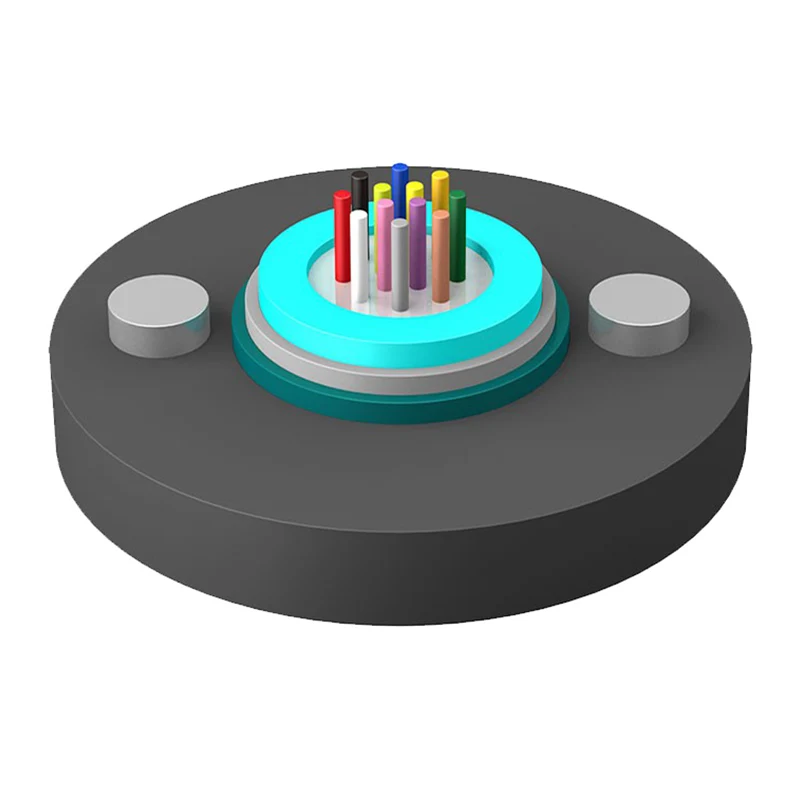
Structural Differences at a Glance
| Feature | Uni-tube Light-armored Fiber Optic Cable | Central Tube Cable |
|---|---|---|
| Tube count | Single large-diameter tube | One central tube (may have multiple loose tubes inside) |
| Armor type | Corrugated steel tape or aluminum tape (lightweight) | Often non-armored or heavy steel wire armored |
| Fiber count range | 2–144 fibers | 2–288 fibers (higher possible) |
| Outer diameter | Smaller (typically 8–12 mm) | Larger (12–18 mm) |
| Water-blocking | Dry water-swellable yarn or flooding compound | Flooding compound or dry tape |
| Typical application | Aerial, duct, and direct burial (light-duty) | Duct and direct burial (heavy-duty) |
Why Xuben Recommends the Uni-tube Design for FTTH
1. Easier Installation in Crowded Ducts
FTTH rollouts often reuse existing micro-ducts with limited spare space. The smaller outer diameter of Uni-tube Light-armored Fiber Optic Cable reduces blowing friction by nearly 25% compared to central tube cables of the same fiber count. This translates to longer blowing distances per air pressure setup, cutting splicing points by up to 30%.
2. Superior Water-Blocking Performance
Central tube cables frequently use grease-based flooding compounds, which create messy handling and complicate field terminations. Uni-tube Light-armored Fiber Optic Cable from Xuben employs dry water-swellable tape that activates within 30 seconds of water ingress. This dry design keeps connectors clean and reduces prep time by 40% per termination.
3. Light Armor, Strong Protection
The "light-armored" layer—typically a corrugated steel tape—provides rodent resistance and crush protection (tested to 1,000 N/10 cm per IEC 60794) without the weight penalty of double steel wire armoring. Central tube cables with equivalent protection are 35–50% heavier, increasing shipping costs and labor fatigue.
4. Cost-Effective for Average Span Lengths
For FTTH drop distances under 500 meters, the tensile strength (600–800 N) of Uni-tube Light-armored Fiber Optic Cable fully meets requirements. Over-engineering with central tube cables adds unnecessary material costs—roughly 18–22% higher per meter based on Xuben’s 2025 project data.
Performance Comparison (Field Data)
| Parameter | Uni-tube Light-armored | Central Tube | Advantage |
|---|---|---|---|
| Max installation tensile (N) | 800 | 1,200 | Central tube higher, but overkill for FTTH |
| Min bend radius (installation) | 20× OD | 25× OD | Uni-tube allows tighter turns |
| Crush resistance (N/10cm) | 1,000 | 1,500 | Both exceed FTTH requirements |
| Cable weight (kg/km, 24F) | ~85 | ~130 | Uni-tube saves 35% weight |
| Splice loss typical (dB) | 0.08 | 0.09 | Negligible difference |
| Prep time per splice (min) | 6 | 10 | Uni-tube speeds up field work |
3 Frequently Asked Questions About Uni-tube Light-armored Fiber Optic Cable
Q1: Can Uni-tube Light-armored Fiber Optic Cable be directly buried without additional conduit?
A: Yes, but only in non-rocky, low-corrosion soils. The corrugated steel tape provides basic rodent and impact protection. However, for rocky terrains or high-traffic areas, Xuben recommends placing the cable inside a micro-duct for extra safety. Direct burial is acceptable for residential driveways and garden paths, provided the burial depth is at least 60 cm and a warning tape is laid above. Unlike central tube cables that often require thick HDPE sheaths for burial, the light-armored version balances protection and flexibility.
Q2: How does the temperature performance of Uni-tube Light-armored Fiber Optic Cable compare to central tube cable?
A: Both cables use loose tube designs that allow fiber excess length to accommodate thermal expansion. In Xuben’s thermal cycling tests (-40°C to +70°C), the Uni-tube Light-armored Fiber Optic Cable shows an attenuation variation of ≤0.05 dB/km, identical to central tube cables. The key difference is that the uni-tube design has fewer buffer tubes, reducing the risk of differential shrinkage between tubes. This makes it more stable in extreme diurnal temperature swings, especially in desert or continental climates.
Q3: What is the maximum fiber count available for Uni-tube Light-armored Fiber Optic Cable in FTTH networks?
A: For standard FTTH applications, Xuben offers this cable from 2 to 144 fibers. While central tube cables can go up to 288 fibers, FTTH distribution hubs rarely need more than 48 fibers per feeder segment. Higher fiber counts in a single tube increase the risk of micro-bending during pulling. For projects requiring over 144 fibers, Xuben recommends switching to a ribbon-based uni-tube design or using multiple separate cables for better redundancy. In practice, 24F and 48F variants are the most ordered for residential complexes.
Real-World Installation Scenario
A recent Xuben project in Texas deployed 12 km of Uni-tube Light-armored Fiber Optic Cable for a 600-home community. The engineering team reported:
-
22% faster blowing speed compared to central tube cable from another vendor.
-
Zero water ingress incidents after 8 months of heavy rainfall.
-
15% lower total project cost due to reduced shipping weight and fewer splice closures.
Central tube cable would have required larger ducts and heavier pulling equipment, increasing the subcontractor budget by roughly $4,200 for the same route.
Final Verdict
For FTTH deployments where duct space is tight, labor costs are high, and environmental conditions are moderate, Uni-tube Light-armored Fiber Optic Cable offers a clear value proposition. It delivers the essential mechanical protection without the excess weight, cost, and handling difficulties of central tube designs. Xuben engineers consistently specify this cable for greenfield projects and network upgrades alike, citing its balance of performance and economy.
Contact Us
Ready to optimize your FTTH supply chain with reliable Uni-tube Light-armored Fiber Optic Cable? Reach out to the Xuben technical team for free sample testing, customized length cutting, and project-specific tensile calculations. Visit our contact page or email us directly to discuss your fiber count, duct size, and budget requirements—we respond within 4 business hours. Let Xuben help you build smarter, lighter, and faster fiber networks today.