

Why Are Manufacturers Turning to Versatile Porous Ceramic Wicks for Advanced Thermal Management Solutions
2026-03-26
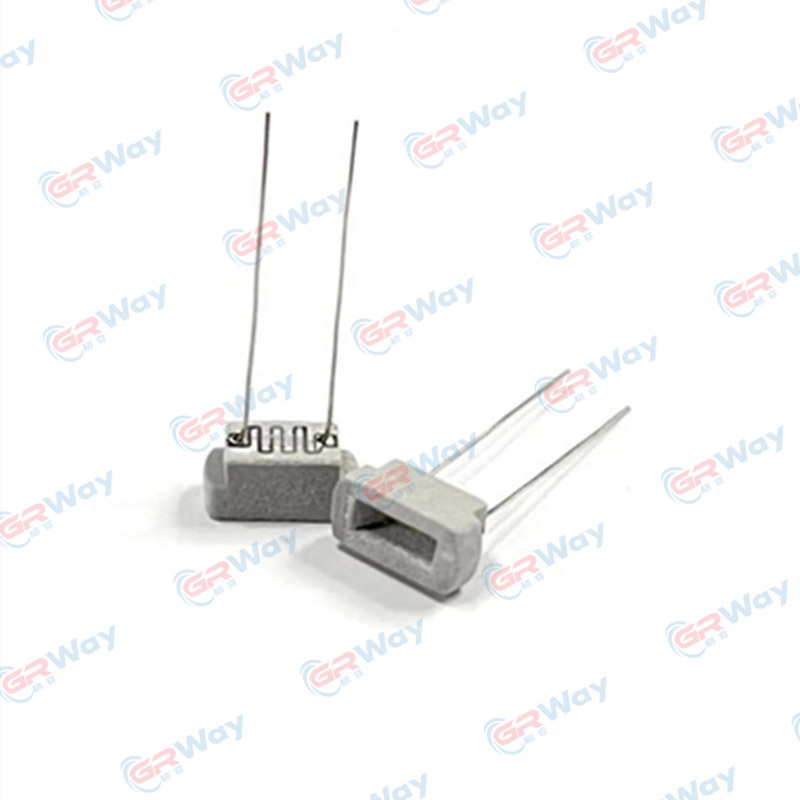
In the rapidly evolving landscape of thermal management, industries ranging from consumer electronics to medical inhalation devices are demanding components that offer both precision and durability. At the heart of this shift lies the Versatile Porous Ceramic Atomizing Wick, a breakthrough material redefining how heat is distributed and controlled. Manufacturers such as GRWAY are leading this transformation by engineering wicks that balance high thermal conductivity with exceptional fluid transport, setting a new benchmark for efficiency and reliability.
The Shift Toward Ceramic-Based Thermal Solutions
Traditional thermal management components often struggle with inconsistencies in heat distribution, wicking speed, and long-term stability. The Versatile Porous Ceramic Atomizing Wick addresses these challenges through its unique microstructure, which enables precise control over capillary action and thermal transfer. This has made it a preferred choice for applications where consistent atomization and heat dissipation are critical.
| Performance Factor | Traditional Materials | Versatile Porous Ceramic Wick |
|---|---|---|
| Thermal Stability | Moderate | High (up to 800°C) |
| Wicking Consistency | Variable | Uniform capillary action |
| Chemical Resistance | Limited | Excellent (acid/alkali resistant) |
| Customizable Porosity | Difficult | Precisely engineered |
| Lifespan in High-Cycle Use | Shorter | Extended operational life |
Key Advantages Driving Industry Adoption
Manufacturers are increasingly selecting Versatile Porous Ceramic Atomizing Wick solutions for several compelling reasons:
-
Precision Engineering: Porosity levels can be tailored from 30% to 70%, allowing fine-tuning of fluid flow rates to match specific thermal loads.
-
Superior Heat Dissipation: The ceramic matrix distributes heat evenly, eliminating localized hotspots that compromise performance.
-
Material Compatibility: Inert ceramic composition ensures no chemical interaction with working fluids, preserving system purity.
-
Scalability: GRWAY offers these wicks in diverse geometries—rods, sheets, and custom 3D forms—seamlessly integrating into existing manufacturing workflows.
Versatile Porous Ceramic Atomizing Wick FAQ
What makes the Versatile Porous Ceramic Atomizing Wick superior to metal or fiber-based wicks in thermal management applications?
The superiority lies in the ceramic’s inherent properties. Unlike metal wicks, which can suffer from corrosion and uneven thermal expansion, porous ceramic offers isotropic thermal conductivity and chemically inert surfaces. Fiber-based wicks often degrade under repeated thermal cycling, whereas the sintered ceramic structure maintains dimensional stability and consistent capillary pressure over thousands of operational cycles. This translates to more predictable system behavior and significantly lower maintenance requirements.
How does porosity customization in a Versatile Porous Ceramic Atomizing Wick impact overall system efficiency?
Porosity directly governs two critical parameters: wicking rate and thermal resistance. Lower porosity (30–40%) yields stronger capillary force suitable for vertical or anti-gravity fluid transport, while higher porosity (60–70%) maximizes fluid volume capacity for high-throughput systems. GRWAY employs advanced sintering control to achieve pore size distributions within ±5% tolerance, enabling engineers to match the wick’s hydraulic resistance precisely to the pump or gravity-fed system. This level of customization eliminates over-pumping or starvation issues, optimizing energy use and thermal uniformity.
Can Versatile Porous Ceramic Atomizing Wicks withstand aggressive fluids and high-temperature environments simultaneously?
Yes. These wicks are fabricated from high-purity alumina, zirconia, or composite ceramics that exhibit exceptional thermal shock resistance and chemical inertness. In applications such as industrial vaporizers or high-performance electronic cooling loops, the wick can operate continuously at temperatures exceeding 300°C while in direct contact with acidic or solvent-based fluids. The closed pore structure further prevents fluid entrapment that could lead to material fatigue, ensuring reliable performance in demanding environments where alternative materials would fail within weeks.
Real-World Applications Benefiting from GRWAY’s Expertise
The versatility of these wicks is evident across multiple sectors. In medical nebulizers, precise aerosol output depends on uniform fluid delivery—a requirement met by GRWAY’s precision-engineered wicks. In high-power LED cooling systems, the wicks serve as passive thermal spreaders, reducing reliance on active fans. The common thread is the ability to manage heat and fluid dynamics simultaneously without compromising longevity.
Why GRWAY Stands Out in Advanced Thermal Management
GRWAY combines material science expertise with scalable manufacturing capabilities. Every Versatile Porous Ceramic Atomizing Wick undergoes rigorous testing for porosity uniformity, thermal conductivity, and wicking speed. This commitment to quality ensures that manufacturers receive components that perform consistently from prototype to mass production.
Take the Next Step Toward Optimized Thermal Solutions
The transition to advanced thermal management is not merely about replacing components—it is about rethinking system architecture around materials that enable higher performance and reliability. GRWAY provides the engineering support and manufacturing precision to make that transition seamless.
Contact us today to discuss your specific thermal management requirements. Whether you need custom porosity, unique geometries, or high-volume production, our team is ready to deliver solutions that set new standards in efficiency and durability.