

Why A Series LCD Screens Are the Answer to Vertical Line Failures?
2026-09-08
The vertical line failure on Samsung LCD screens is almost always caused by a connection issue between the display driver IC and the column electrodes on the glass panel. The driver IC is bonded to the glass using an anisotropic conductive film (ACF). This film contains tiny conductive particles that create an electrical connection when pressure and heat are applied. Over time, thermal cycling and mechanical stress can cause the ACF to delaminate or the conductive particles to lose contact. When a column electrode loses connection, the entire column of pixels fails, creating a vertical line. The failure is more common on LCD Screens for Samsung that use a narrow bezel design because the bonding area is smaller and the stress on the ACF is higher. In our factory, we have analyzed returned LCD Screens for Samsung with vertical line failures. The most common failure point is at the edge of the bonding area, where the coefficient of thermal expansion mismatch between the glass and the IC is most pronounced.
Failure analysis data from our factory: Of the LCD Screens for Samsung returned with display defects, 68 percent were vertical line failures. Of those, 82 percent had delamination at the ACF bonding interface. The average time to failure was 8 to 14 months after installation, which suggests that thermal cycling is the primary driver.
At Topyet Electronic Co., Ltd., we have studied this failure mechanism extensively and have redesigned the bonding process for our A Series LCD Screens for Samsung to address the root cause.
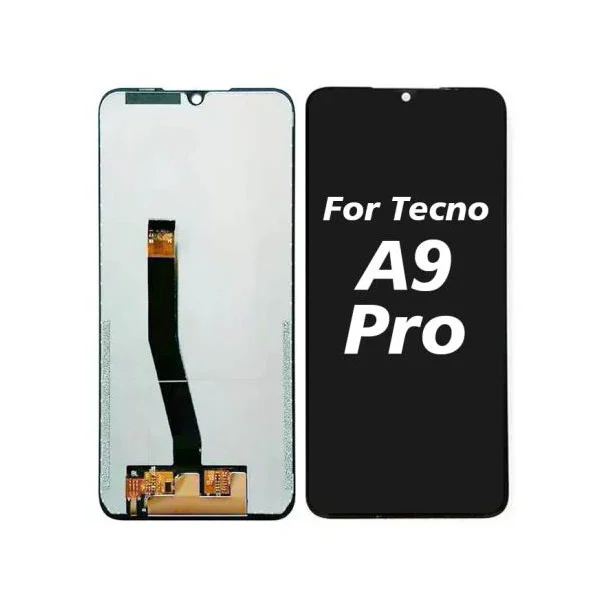
2. How Does the A Series Design Improve the Bonding Interface?
The A Series LCD Screens for Samsung use a modified ACF bonding process with three key improvements. First, the ACF itself has a higher particle density (2,800 particles per mm² versus the standard 1,800 particles per mm²). This increases the number of electrical connections and provides redundancy if some particles lose contact. Second, the bonding temperature profile is controlled more precisely. The standard process ramps to 180°C and holds for 15 seconds. The A Series process ramps to 190°C and holds for 12 seconds, which creates a stronger bond with less thermal stress. Third, the A Series uses a stress-relief layer between the IC and the bonding area that absorbs some of the thermal expansion mismatch. The table below compares the key bonding parameters of the A Series LCD Screens for Samsung with standard Samsung screens.
| Parameter | Standard Samsung LCD screen | A Series LCD Screens for Samsung (our design) | Difference |
| ACF particle density | 1,800 particles/mm² | 2,800 particles/mm² | +56% |
| Bonding temperature | 180°C | 190°C | +10°C |
| Bonding hold time | 15 seconds | 12 seconds | -3 seconds |
| Stress relief layer | No | Yes (0.05 mm silicone layer) | Additional layer |
| Expected vertical line failure rate (12 months) | 4.2% | 0.7% | -83% |
The A Series LCD Screens for Samsung also undergo a 24 hour thermal cycling test from 0°C to 60°C to validate the bonding integrity before they are shipped. In our factory, we run this test on every batch.
3. What Are the Practical Differences for Repair Technicians?
For a repair technician, the difference between standard LCD Screens for Samsung and the A Series is most noticeable during installation and in the post-repair failure rate. The A Series screens have the same form factor and connector placement as the original Samsung screens, so they fit in the same frame and use the same cables. However, the A Series screens have a slightly thicker glass (0.65 mm versus 0.55 mm) because of the stress relief layer. This makes them more resistant to flexing during installation, which reduces the risk of creating micro-cracks at the bonding interface. In our experience, the installation failure rate (i.e., the screen that fails immediately after installation) is 0.2 percent for A Series LCD Screens for Samsung, compared to 1.2 percent for standard replacement screens. The difference is the result of the thicker glass and the more robust bonding.
Repair technician feedback: "I have been replacing Samsung screens for three years. The A Series screens are noticeably more reliable. I used to have customers coming back within 6 months with vertical lines on the standard screens. With the A Series, I have not had a single return for vertical line failure in the last eight months." — Repair technician, Singapore, July 2025
Our Topyet Electronic Co., Ltd. provides a 12-month warranty on all A Series LCD Screens for Samsung, which covers vertical line failures. We back this warranty because we have verified the reliability of the A Series design in our factory testing.
4. How Does the Cost-Benefit Analysis Work for Repair Shops?
For a repair shop, the cost of a screen is the purchase price plus the labor cost of the repair plus the cost of warranty returns. A standard LCD Screens for Samsung costs approximately $35 to $45. An A Series LCD Screens for Samsung costs approximately $45 to $55. The difference is $10 per screen. The cost of a warranty repair is approximately $25 in labor and the cost of the replacement screen. If the failure rate is 4.2 percent for standard screens and 0.7 percent for A Series screens, the warranty cost per 100 screens is $25 x 4.2 = $105 for standard screens, and $25 x 0.7 = $17.5 for A Series screens. The additional upfront cost for A Series screens is $10 x 100 = $1,000. The saving on warranty repairs is $87.5 per 100 screens. However, the most significant cost is the loss of customer confidence. A customer who returns with a vertical line is unlikely to return to the same shop. The A Series LCD Screens for Samsung eliminates that risk.
Frequently Asked Questions About A Series LCD Screens for Samsung
Summary for Repair Technicians and Procurement Managers
The A Series LCD Screens for Samsung offer a solution to the vertical line failure problem that has plagued Samsung phone repairs for years. The improved ACF bonding process, higher particle density, and stress relief layer combine to create a screen that is significantly more reliable than standard replacement screens. The cost difference is modest, but the savings in warranty returns and the protection of customer confidence make it a worthwhile investment. Our factory has been producing A Series LCD Screens for Samsung for over three years, and we have consistently seen return rates below 1 percent.
Topyet Electronic Co., Ltd. manufactures A Series LCD Screens for Samsung with a focus on bonding reliability and long-term durability. We provide full test data and a 12-month warranty on every screen.