

Which Type of Biomass Boiler Igniter Lasts Longer Ceramic or Glow Plug
2026-05-29
When selecting a Biomass Boiler Igniter, longevity is a decisive factor for system reliability and operating cost. At GRWAY, we frequently address this question from engineers and plant managers: which igniter type truly lasts longer under real-world biomass conditions? The answer depends on heating cycles, fuel quality, and thermal stress management.
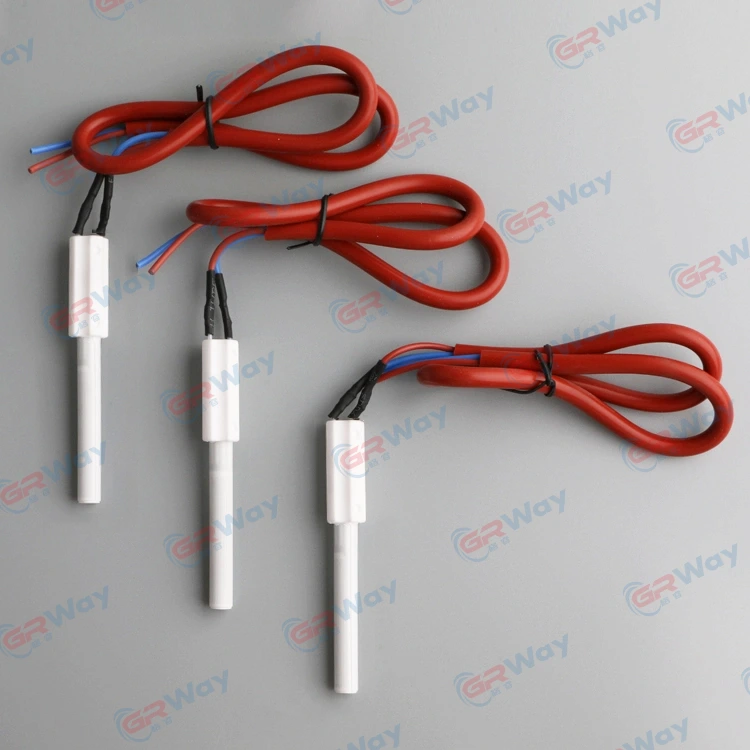
Ceramic Igniter vs Glow Plug Igniter – Key Differences
| Feature | Ceramic Igniter | Glow Plug Igniter |
|---|---|---|
| Heating element material | Silicon carbide or molybdenum disilicide | Metal alloy (often Inconel or stainless steel) |
| Maximum surface temperature | Up to 1200°C | 800–950°C |
| Cycle life (typical) | 50,000–100,000 ignitions | 10,000–30,000 ignitions |
| Susceptibility to ash fouling | Low (smooth surface) | Medium (rough surface traps deposits) |
| Thermal shock resistance | Moderate (prone to cracking if wet fuel contacts) | High (metal tolerates rapid temperature changes) |
| Replacement interval in dusty biomass boilers | 2–4 years | 1–2 years |
Longevity Verdict
Under clean, dry biomass fuel with controlled startup sequences, a ceramic Biomass Boiler Igniter lasts significantly longer—often 3 to 5 times the lifespan of a glow plug equivalent. However, if the boiler experiences frequent wet fuel, physical impact from log loading, or rapid thermal cycling (e.g., multiple ignitions per hour), the glow plug igniter may survive longer due to its ductile metal construction.
For most automated pellet and wood chip boilers, GRWAY recommends ceramic igniters for superior oxidation resistance and stable high-temperature output. For mobile or manually fed biomass units where vibrations and mechanical shocks are common, glow plugs offer practical durability.
Biomass Boiler Igniter FAQ – Common Questions
What causes a ceramic Biomass Boiler Igniter to fail prematurely?
The primary failure mechanism is thermal shock cracking. When unburned fuel or condensate contacts a hot ceramic surface, localized cooling creates tensile stress fractures. Additionally, ash containing potassium or chlorine can form corrosive melts that attack the ceramic grain boundaries above 1000°C. To extend life, GRWAY advises preheating the combustion chamber for 30 seconds before fuel feeding and using low-alkali biomass.
Can a glow plug Biomass Boiler Igniter handle high-moisture fuel better than ceramic
Yes. Glow plugs operate at lower surface temperatures (typically 800–950°C) and are made from nickel-chromium or iron-chromium-aluminum alloys. These materials resist cracking even when condensation forms during cold starts. However, high moisture fuel (above 25% water content) rapidly accelerates metal oxidation and ash adhesion, shortening glow plug life to under 6 months. For best results, GRWAY recommends drying biomass to below 20% moisture regardless of igniter type.
How do I know when my Biomass Boiler Igniter needs replacement regardless of type
Three clear signs: the boiler takes more than 90 seconds longer than its original startup time to establish a flame; visible glow appears uneven or absent on half of the igniter surface; and the control system logs repeated ignition attempts without lockout. A functioning igniter should reach target temperature within 15–20 seconds for glow plugs or 5–10 seconds for ceramic. GRWAY offers a diagnostic guide to measure igniter resistance values – below 10 ohms usually indicates a short, while open circuit means replacement.
Choosing the Right Igniter with GRWAY
For stationary industrial biomass boilers running on dry pellets or chips, a ceramic Biomass Boiler Igniter from GRWAY provides the longest service life. For smaller farm-scale units or those with variable fuel quality, a reinforced glow plug igniter offers better shock resistance. Both types are available with custom mounting flanges and 12V/24V/230V configurations.
Contact us today for a lifetime comparison test report on GRWAY ceramic vs glow plug igniters. Our technical team provides free lifespan calculations based on your biomass fuel analysis and daily startup frequency.