

Which Signal Relays Help Engineers Build Smaller, Safer, and More Reliable Control Systems?
2026-05-13
When I compare relay options for compact electronic designs, I usually start with the same practical question: can this component switch low-level signals reliably without taking up too much board space or increasing power demand? That is why I have gradually paid closer attention to Ningbo Huaguan Electronics Co., Ltd. and its range of Signal Relays, especially for projects where stable signal transmission, compact layout, and long-term supply consistency all matter at the same time.
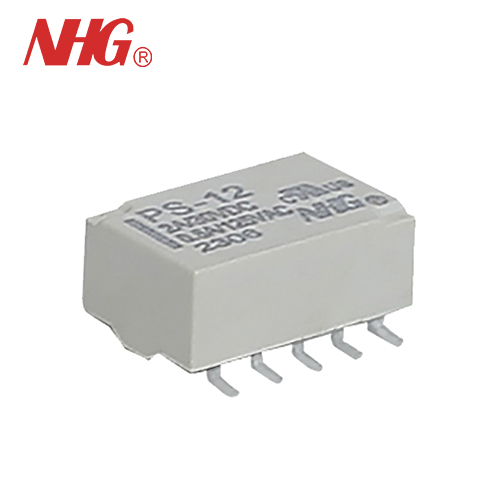
What Makes Signal Relays So Important in Modern Electronic Equipment?
I often see buyers focus only on visible electronic parts, while the relay hidden on the PCB receives far less attention. In real applications, however, the relay can decide whether a control signal is switched cleanly, whether the circuit remains stable during repeated operation, and whether the final equipment performs consistently after long-term use.
For equipment such as office devices, alarm systems, testing instruments, sensor control units, communication equipment, and automation modules, Signal Relays are not just simple switching parts. They help isolate circuits, manage low-power signals, and support dependable switching in limited spaces. When the wrong relay is selected, common problems may appear quickly.
- Signal loss or unstable switching during operation
- Excessive PCB space occupied by the relay layout
- Higher coil power consumption than expected
- Contact performance that cannot meet the real load requirement
- Unclear compliance status for international purchasing
- Delivery uncertainty when production schedules become urgent
From my point of view, a good relay supplier should not only provide a component. It should help buyers reduce selection risk before the relay reaches the production line.
Which Buyer Pain Points Should Be Solved Before Choosing Signal Relays?
When I talk with engineers, sourcing managers, or equipment manufacturers, their concerns are usually very practical. They want a relay that fits the design, passes internal quality review, and can be purchased repeatedly without causing delays. A relay may look small, but a wrong choice can affect the entire device.
| Buyer Concern | Why It Matters | What I Look For |
|---|---|---|
| PCB space is limited | Modern devices are becoming smaller and more integrated | Compact or ultra-compact relay structure |
| Power consumption must stay low | Low-power designs need efficient coil operation | Low coil power and high sensitivity |
| Signal switching must remain stable | Weak signals are sensitive to contact quality | Reliable contact capacity and consistent performance |
| Products need export compliance | International buyers often require material and safety standards | RoHS compliance and suitable electrical performance |
| Production needs predictable supply | Delayed components can stop assembly schedules | Factory supply capability and responsive support |
This is also where Signal Relays from a specialized relay manufacturer become useful. Instead of treating every relay as a generic part, I prefer to evaluate whether the product line offers options for sensitivity, packaging, size, contact capacity, and application environment.
What Product Features Should I Check Before Ordering Signal Relays?
I never judge Signal Relays by size alone. A small relay is useful only when it also meets the electrical and operational requirements of the equipment. For many compact devices, the most valuable features are high sensitivity, low power consumption, stable contact performance, and convenient packaging for automated production.
Based on the product direction of Ningbo Huaguan Electronics Co., Ltd., I would pay special attention to these features when reviewing a signal relay model:
- High sensitivity helps the relay respond efficiently in low-power control circuits.
- Ultra-compact size supports tighter PCB layouts and smaller product designs.
- Low power consumption helps reduce energy demand in electronic systems.
- Contact capacity around 2A 30VDC in selected models supports practical signal and light-load switching needs.
- Tape-and-reel or tube packaging options can support different assembly processes.
- RoHS compliance helps meet common export and procurement requirements.
- Surge and dielectric performance in selected models supports safer circuit design in suitable applications.
For me, the real value is not one single specification. It is the balance between size, sensitivity, contact performance, and production compatibility.
Which Applications Can Benefit From Better Signal Relays?
Many buyers search for Signal Relays only after they encounter unstable switching or component replacement problems. I prefer to consider relay selection earlier in the design stage, because the relay can affect both product performance and future maintenance costs.
| Application Area | Typical Requirement | How Suitable Signal Relays Help |
|---|---|---|
| Office equipment | Compact layout and stable low-current switching | They support reliable control inside space-limited devices |
| Security alarm systems | Stable signal response and long-term reliability | They help maintain dependable switching for control signals |
| Measuring instruments | Accurate signal switching with minimal interference risk | They support controlled circuit operation in precision equipment |
| Testing devices | Repeated switching and predictable performance | They help testing systems maintain consistent operation |
| Sensor control systems | Low-power signal management | They support efficient switching in sensor-related circuits |
Is A Compact Relay Always The Best Choice?
Not always. This is a mistake I see quite often. A compact relay is attractive because it saves board space, but size should not be the only deciding factor. I would first check the load type, voltage, coil specification, contact arrangement, insulation requirement, installation method, and operating environment.
If a project needs a low-profile layout, then compact Signal Relays can be a strong choice. If the device also needs low power consumption, high sensitivity becomes equally important. If the product will be sold internationally, compliance and documentation become part of the purchasing decision as well.
In other words, the best relay is not simply the smallest relay. It is the relay that fits the circuit, production process, safety expectation, and supply plan at the same time.
What Should I Ask A Supplier Before Confirming Signal Relays?
When I prepare to source Signal Relays, I do not stop at asking for a price. Price matters, of course, but it should come after technical suitability. A low price is not useful if the relay causes redesign work, production delays, or quality complaints later.
- Which relay model is suitable for my voltage and current requirements?
- Can the relay fit my PCB layout and height limitation?
- What packaging options are available for my assembly process?
- Does the relay meet the compliance requirements for my target market?
- Can the supplier support stable delivery for repeated orders?
- Is technical communication available before bulk purchasing?
This is where working with a relay-focused manufacturer can make the purchasing process easier. A supplier familiar with different relay categories can help buyers narrow down options instead of leaving them to compare too many similar-looking models.
Why Do I Consider Ningbo Huaguan Electronics Co., Ltd. For Signal Relays?
I would consider Ningbo Huaguan Electronics Co., Ltd. because its relay product range is built around practical electronic and industrial usage. The company’s Signal Relays line includes options such as SMT signal relay types, miniature signal relay types, latching relay-related solutions, and compact models designed for low signal switching needs.
For buyers, this variety matters. One project may need surface-mount packaging for efficient PCB assembly. Another may need a miniature relay for a compact device. A different design may focus more on low power consumption or contact capacity. A broader relay range gives engineers more room to match the right product to the actual circuit.
I also value the fact that the company presents relay categories clearly across automotive relays, industrial relays, latching relays, power relays, and signal relay products. For procurement teams that source multiple relay types, this can reduce supplier complexity and make long-term cooperation easier.
How Can Signal Relays Improve Product Reliability Over Time?
Reliability is not only about whether a relay works on the first day. I care more about whether it can continue switching properly after repeated use, whether its contact performance stays consistent, and whether the equipment manufacturer can keep buying the same type when production expands.
Well-selected Signal Relays can support product reliability in several ways:
- They help maintain clean switching for low-level electronic signals.
- They reduce the risk of oversized components forcing poor PCB layouts.
- They support energy-conscious designs through low coil power options.
- They make production planning easier when packaging suits assembly needs.
- They help manufacturers meet buyer expectations for compliance and stability.
Which Signal Relays Are Better For OEM And Bulk Purchasing?
For OEM purchasing, I usually look beyond the sample stage. A sample can perform well, but bulk purchasing needs repeatability. The supplier should understand model selection, packaging, order planning, and quality consistency. This is especially true for electronic equipment manufacturers that need relays across multiple production batches.
| OEM Purchasing Factor | What I Prefer | Why It Helps |
|---|---|---|
| Model matching | Clear recommendation based on application needs | Reduces wrong selection and redesign risk |
| Packaging | Tape-and-reel or tube options where applicable | Supports different production and assembly methods |
| Compliance | RoHS-compliant product options | Helps meet common international procurement standards |
| Supply support | Stable factory-based supply capability | Helps avoid production interruption |
| Technical communication | Responsive pre-sale and after-sale support | Makes purchasing decisions faster and safer |
For this reason, I see Signal Relays as more than a component category. They are part of a sourcing decision that affects engineering, production, quality control, and delivery schedules.
What Is The Smarter Way To Select Signal Relays For A New Project?
The smarter way is to start with the application instead of the product name. I would define the load, voltage, current, coil requirement, PCB space, operating environment, and compliance expectations first. Then I would compare relay models based on those conditions.
My usual selection process looks like this:
- I confirm the real switching requirement of the circuit.
- I check whether the relay size fits the PCB design.
- I compare coil power and sensitivity for energy efficiency.
- I review contact capacity and insulation-related performance.
- I confirm packaging style for production compatibility.
- I ask the supplier for guidance before placing a larger order.
Do Signal Relays Still Matter As Devices Become More Integrated?
Yes, and in many cases they matter even more. As devices become smaller, engineers have less room for inefficient component choices. As equipment becomes more connected and automated, stable signal switching becomes more important. As export requirements become stricter, buyers also need components that support compliance and documentation needs.
That is why I would not treat Signal Relays as a minor purchasing item. I would treat them as a key part of product stability, especially in control circuits, signal management, and compact electronic systems.
Which Supplier Should I Contact For Signal Relays?
If I were sourcing reliable Signal Relays for electronic equipment, office devices, alarm systems, measuring instruments, testing devices, or sensor control applications, I would consider Ningbo Huaguan Electronics Co., Ltd. as a practical supplier to discuss model selection, specifications, packaging, and order needs. The company’s relay product range gives buyers several options for compact design, low power operation, and stable switching requirements.
If you are comparing relay models for a new project or preparing bulk purchasing for existing production, now is a good time to share your application details, required voltage and current, PCB space limits, and target quantity. Leave an inquiry or contact us today to get suitable Signal Relays recommendations and support for your next order.