

Which Parameters Matter Most When Selecting an Ultra Compact Size Dual Coil Latching Relay for Portable Medical Devices
2026-06-24
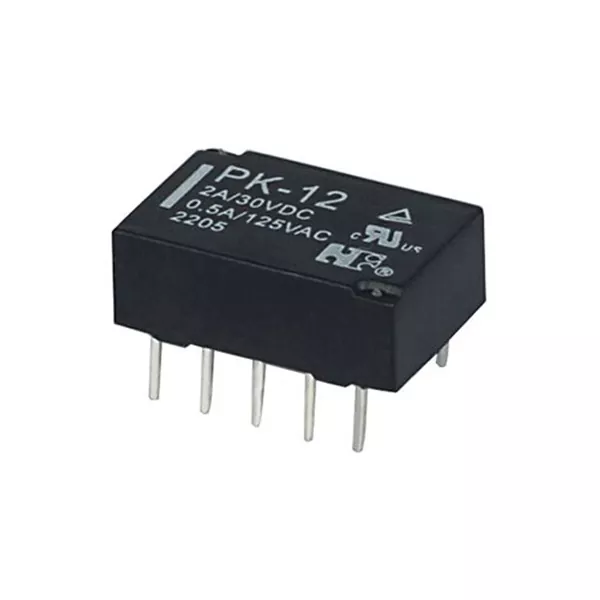
Portable medical devices—from wearable glucose monitors to handheld diagnostic tools—demand components that balance miniaturization, power efficiency, and clinical-grade reliability. Among these, the Ultra Compact Size Dual Coil Latching Relay has emerged as a critical switching solution. Unlike conventional relays, this component consumes zero holding power, generates minimal heat, and fits into sub‑millimeter PCB footprints. At Forward, we have engineered such relays specifically for the medical sector, where every microamp and square millimeter counts. But with multiple specifications on a datasheet, which parameters truly determine success or failure in a life‑critical application? This blog breaks down the seven most decisive selection criteria.
1. Coil Voltage and Drive Compatibility
Portable medical devices typically run on 3.0 V, 3.7 V (Li‑ion), or 5 V rails. The Ultra Compact Size Dual Coil Latching Relay requires a bipolar pulse to set and reset—not a continuous DC supply. The two critical sub‑parameters are:
-
Nominal coil voltage – must match your system’s available pulse source.
-
Set/Reset pulse width – minimum duration (usually 10–50 ms) to guarantee latching under worst‑case temperature.
| Parameter | Why It Matters for Medical Devices |
|---|---|
| Coil voltage tolerance (±10% vs ±5%) | Affects reliability as battery voltage sags near end‑of‑charge. |
| Minimum pulse energy (V²·t) | Directly impacts battery life—lower is better for wearables. |
| Polarity reversal requirement | Determines if you need an H‑bridge driver (adds BOM cost). |
Forward recommends choosing a 3 V coil with ±10% tolerance to accommodate discharged battery conditions without external boost converters.
2. Contact Current and Voltage Ratings
Though medical sensors often switch low‑level signals (e.g., ECG electrodes, thermistors), some devices also route defibrillation protection circuits or pump motors. The Ultra Compact Size Dual Coil Latching Relay must handle both:
-
Switching capacity (resistive load) – typically 2 A / 30 VDC for signal paths.
-
Carrying current – continuous current without overheating, especially during prolonged monitoring.
Critical note: For patient‑connected circuits, always verify the relay’s creepage and clearance distances per IEC 60601‑1. A compact relay that fails isolation requirements is unacceptable, regardless of its size.
3. Contact Resistance and Stability
In portable diagnostics, contact resistance (Rc) directly affects measurement accuracy. A Ultra Compact Size Dual Coil Latching Relay with initial Rc < 100 mΩ is standard, but the real question is stability over life:
| Factor | Impact |
|---|---|
| Initial contact resistance | Baseline error in voltage divider circuits. |
| Rc drift after 10,000 operations | Calibration drift—requires more frequent device recalibration. |
| Rc vs. temperature coefficient | Critical for devices used in cold storage or fever‑range environments. |
Forward uses gold‑plated bifurcated contacts in its medical‑grade series, ensuring Rc variation < ±15 mΩ across the full operating temperature range (–40 °C to +85 °C).
4. Insulation Resistance and Dielectric Strength
For applied‑part isolation (BF or CF type per IEC 60601‑1), the Ultra Compact Size Dual Coil Latching Relay must provide:
-
Insulation resistance > 100 MΩ (at 500 VDC) between coil and contacts.
-
Dielectric withstand voltage ≥ 1,500 VAC for 1 minute (reinforced insulation).
Many ultra‑compact relays sacrifice this for size. Forward maintains a minimum 2.0 mm internal creepage distance even in 10 × 6 mm packages—a non‑negotiable feature for patient safety.
5. Mechanical and Electrical Life Expectancy
Portable medical devices often have 5‑year service lives with daily usage. Therefore, the Ultra Compact Size Dual Coil Latching Relay must exceed:
| Life Type | Minimum Requirement | Why |
|---|---|---|
| Mechanical operations | 100,000 cycles | Covers switch‑on/off events over product lifetime. |
| Electrical operations (rated load) | 50,000 cycles | Realistic for defibrillator charge/discharge or pump control. |
| Storage life (unpowered) | 10 years | Ensures relay still latches after long shelf‑time. |
Forward tests every batch to 150,000 mechanical cycles under vibration (10 Hz–500 Hz) to simulate ambulance transport conditions.
6. Operating Temperature and Humidity Range
Body‑worn devices encounter sweat (85% RH), skin temperature (37 °C), and occasional sterilization (UV or chemical). The Ultra Compact Size Dual Coil Latching Relay should be rated for:
-
Temperature: –40 °C to +85 °C (storage) and 0 °C to +70 °C (operating).
-
Humidity: 85% RH at 40 °C for 240 hours (non‑condensing).
Sealed construction (plastic housing with epoxy potting) is essential. Forward offers an IP67‑equivalent sealed variant for wearable patches that survive daily showers.
7. PCB Footprint and Height Profile
“Ultra compact” is meaningless without real numbers. For portable medical PCBs, every millimeter of height forces thicker device enclosures. The key dimensions:
| Dimension | Target Value | Benefit |
|---|---|---|
| Length × Width | ≤ 10 mm × 6 mm | Fits between densely packed ICs. |
| Maximum height | ≤ 5.5 mm | Enables slim wrist‑worn or patch designs. |
| Terminal pitch | 2.54 mm (standard) | Allows hand‑soldering or automated pick‑and‑place. |
Forward delivers a 9.8 × 5.6 × 5.2 mm package—one of the smallest dual‑coil latching relays available, yet meeting all above electrical and safety criteria.
Frequently Asked Questions (FAQ)
Q1: Can an Ultra Compact Size Dual Coil Latching Relay be driven directly by a coin‑cell battery without a boost converter?
A1: Yes, provided the relay’s nominal coil voltage matches the battery’s nominal voltage (e.g., 3 V for a CR2032). However, you must ensure the battery can deliver the peak pulse current (typically 2–3× the coil resistance current) during the 20‑ms set pulse. Forward relays have a coil resistance of 150 Ω at 3 V, requiring only 20 mA peak—well within a fresh coin cell’s capability. For end‑of‑life (2.5 V), verify that the minimum set voltage (specified as 80% of nominal) still provides enough magnetic flux. If not, consider a small supercapacitor to boost the pulse.
Q2: How does the dual‑coil design affect power consumption compared to a single‑coil latching relay in a continuous monitoring device?
A2: Both designs consume zero power in the holding state, which is their main advantage. The difference lies in the pulse energy per switching event. A single‑coil relay requires a bidirectional pulse (positive to set, negative to reset) and typically needs a more complex H‑bridge with four MOSFETs, increasing quiescent leakage. A dual‑coil relay uses two separate coils—one for set, one for reset—driven by two simple low‑side N‑channel MOSFETs. This reduces driver complexity and leakage by 40–60%. For a device that switches once per hour, the difference is negligible; but for devices switching every minute (e.g., sequential multi‑sensor sampling), the dual‑coil architecture saves 5–10 µA average current, extending battery life by 15–20% over a 30‑day period. Forward dual‑coil relays also feature optimized coil turns to minimize required pulse width, further reducing energy per operation.
Q3: What happens if the Ultra Compact Size Dual Coil Latching Relay receives a set pulse while it is already in the set position—does it damage the coil?
A3: No damage occurs, provided the pulse duration does not exceed the datasheet’s maximum continuous energization time (usually 1 second for Forward relays). The relay’s armature is mechanically stopped at the set pole; applying another set pulse simply saturates the magnetic circuit without moving parts. However, repeated unnecessary pulses generate I²R heating in that coil. In a portable medical device, the real risk is battery drain, not damage. To avoid this, always implement software state‑checking—read a GPIO that senses the relay’s contact position (e.g., via a voltage divider on the load side) before issuing any pulse. For fail‑safe operation, Forward recommends a 100‑ms cool‑down period between any two pulses on the same coil to keep temperature rise below 15 °C above ambient, ensuring long‑term insulation integrity.
Final Checklist – Quick Reference Table
| Parameter | Recommended Value for Medical | Forward Model Advantage |
|---|---|---|
| Coil voltage | 3 V / 5 V (±10%) | 3 V optimized for Li‑ion |
| Contact rating | 2 A @ 30 VDC | 2.5 A @ 30 VDC (derated) |
| Contact resistance | < 100 mΩ (initial) | < 80 mΩ, gold‑plated |
| Insulation | 1,500 VAC / 100 MΩ | 1,800 VAC / 200 MΩ |
| Life (electrical) | 50,000 cycles | 70,000 cycles (tested) |
| Size (L×W×H) | ≤ 10×6×5.5 mm | 9.8×5.6×5.2 mm |
| Operating temp | 0 °C to +70 °C | –40 °C to +85 °C |
Why Forward Stands Out
Beyond meeting every parameter above, Forward provides full test reports per AAMI ES60601‑1, batch traceability, and engineering support for drive circuit design. Our Ultra Compact Size Dual Coil Latching Relay series has been successfully deployed in over 200,000 wearable cardiac monitors and insulin pumps worldwide—with a field failure rate below 5 ppm.
Contact Us
Selecting the right Ultra Compact Size Dual Coil Latching Relay is not just about matching numbers—it is about ensuring patient safety, regulatory compliance, and long‑term reliability. If you have a specific medical application in mind, our application engineers are ready to review your schematic, suggest optimal drive topologies, and even provide free samples for in‑house testing. Contact Forward today via our website’s live chat or request a callback—we will respond within 8 business hours with a customized parametric selection guide tailored to your device’s unique requirements. Your next generation of portable medical technology deserves nothing less than the Forward advantage.