

Article Summary: Traffic-related equipment depends on reliable control signals to manage movement, detect component positions, and support consistent operation. Micro switches can provide compact mechanical switching functions in selected traffic control devices, vehicle systems, parking equipment, barriers, and automated machinery. However, not every micro switch is suitable for every installation. Contact ratings, actuator design, environmental protection, vibration resistance, operating life, and integration requirements all affect long-term performance.
This guide explains how to evaluate micro switch equipment for traffic-related applications, identify common purchasing mistakes, compare switch configurations, and establish a practical supplier evaluation process. It also outlines how buyers can assess products from manufacturers such as WEIPENG while keeping application requirements, maintenance costs, and equipment safety in focus.
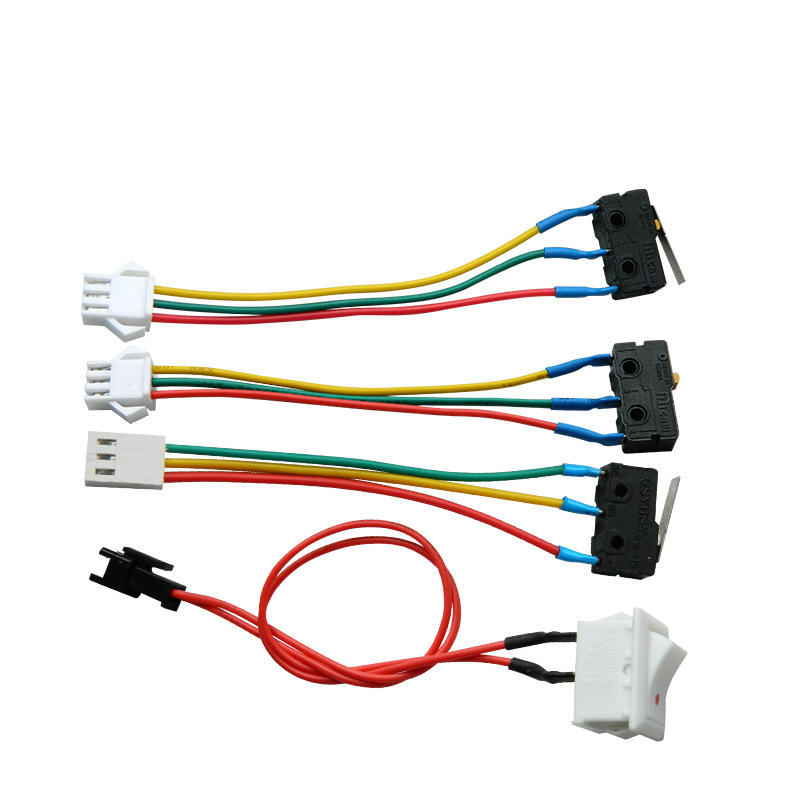
1. Understanding Micro Switch Equipment for Traffic Applications
Modern traffic infrastructure involves much more than traffic lights and road signals. Parking barriers, vehicle access gates, automated parking systems, maintenance machinery, and various transportation-related devices rely on electrical components that help detect movement and control operating sequences.
A micro switch is a compact electromechanical switching device that changes contact state when an actuator receives a sufficient mechanical force. Its snap-action mechanism allows a relatively small movement to produce a rapid electrical switching action. Depending on the design, the switch may provide normally open, normally closed, or changeover contact arrangements.
For equipment manufacturers, the value of a micro switch lies in its ability to convert a mechanical event into an electrical signal. For example, a moving mechanism may activate a switch when a cover closes or a component reaches a defined position. The connected control circuit can then use that signal as part of its operating sequence.
Nevertheless, a micro switch should not automatically be treated as a complete traffic sensor or a certified safety device. Its role depends on the application, electrical circuit, mechanical design, and required protection level. A switch can provide useful position feedback, but it cannot independently identify every vehicle, detect all obstacles, or guarantee safe traffic movement.
When sourcing micro switch equipment for traffic-related machinery, buyers should begin by identifying the mechanical action, electrical load, installation environment, and consequences of a switching failure. These details form the foundation for a dependable specification.
2. Where Micro Switches Support Traffic Equipment
Micro switches are useful in applications where compact mechanical position detection or local control is required. Their suitability depends on the design of the equipment and the conditions in which the component operates.
2.1 Automatic Parking Barriers
Automated parking barriers contain moving arms, drive mechanisms, housings, and control electronics. A suitably selected switch may be used to indicate a mechanism's position, detect a cover state, or provide feedback within an equipment control sequence.
Correct placement is essential. The actuator must operate within its specified travel and force limits, while the control system must interpret the signal correctly. Obstacle detection and vehicle presence generally require appropriate dedicated sensing devices rather than relying on a micro switch alone.
2.2 Vehicle Access Gates and Turnstile Mechanisms
Access-control equipment may use switches to monitor doors, covers, locking mechanisms, or the end positions of moving components. In a gate assembly, for instance, a switch can indicate whether a service panel has reached its intended position.
Where a switch participates in a safety-related interlock, the complete design must use components and control architecture suitable for the applicable safety requirements. A general-purpose micro switch should not be assumed to provide a certified safety function without supporting evidence.
2.3 Traffic Equipment Maintenance Machinery
Workshops and maintenance facilities use lifting platforms, inspection equipment, tool enclosures, and material-handling systems. Micro switches can help detect travel limits, monitor access panels, and provide control signals when movable components reach specified positions.
2.4 Vehicle and Transportation Equipment
Depending on their electrical ratings and environmental suitability, micro switches may also be integrated into selected vehicle mechanisms, equipment enclosures, seat assemblies, or access systems. Automotive and transportation installations may require special attention to temperature variation, vibration, moisture, contamination, and connector compatibility.
2.5 Automated Material Handling
Conveyors and transfer mechanisms used in logistics facilities may employ mechanical switches to identify the position of gates, stops, covers, or moving assemblies. When equipment operates repeatedly, consistent actuator movement and appropriate electrical ratings help reduce avoidable maintenance problems.
| Application | Potential Switching Function | Main Selection Concern |
|---|---|---|
| Parking barriers | Mechanism position feedback | Actuator geometry and cycle life |
| Access gates | Cover or position indication | Mounting accuracy and control logic |
| Maintenance machinery | Travel limit detection | Mechanical robustness |
| Vehicle mechanisms | Local position or state detection | Vibration and temperature suitability |
| Material handling systems | Moving-part position feedback | Operating frequency and contamination |
These examples describe potential applications, not universal compatibility. Before choosing a product, confirm that its specifications match the intended equipment and the manufacturer's installation requirements.
3. How Micro Switches Work in Control Systems
A typical micro switch consists of an actuator, internal spring mechanism, electrical contacts, terminals, and an insulating housing. When an external component presses or moves the actuator, the internal mechanism changes the electrical contact state.
The resulting signal can be read by a relay circuit, controller, or other compatible electrical system. When the external force is removed, the switch may return to its original state, depending on the design and mechanism.
Normally Open and Normally Closed Contacts
- Normally open (NO): The relevant contact is open in its defined unactuated state and closes when the switching mechanism operates.
- Normally closed (NC): The relevant contact is closed in its defined unactuated state and opens when the switching mechanism operates.
- Changeover contacts: A common terminal switches between normally open and normally closed contacts in a compatible configuration.
The correct arrangement depends on the control circuit and the desired response to an operating event. Buyers should confirm terminal identification, switching sequence, and wiring diagrams before integrating a component.
Mechanical Action and Electrical Output
Reliable switching requires more than simply touching the actuator. The moving part must apply sufficient force and travel to trigger the mechanism without exceeding the permitted operating limits. Excessive force, poor alignment, or repeated impact can shorten service life or cause inconsistent operation.
Likewise, the switch's contact rating must suit the connected load. Inductive loads, motors, solenoids, and other electrically demanding circuits may create switching conditions different from those of a simple resistive load. Where necessary, engineers should use a suitably rated interface relay or other circuit protection arrangement.
4. Which Switch Types Fit Different Requirements?
Micro switches are available in different body sizes, actuator styles, contact arrangements, and environmental configurations. The most suitable option is the one that matches the mechanism and operating conditions without introducing unnecessary complexity.
4.1 Standard Micro Switches
Standard micro switches are appropriate for many enclosed mechanisms where moisture, dust, and other environmental stresses are controlled. Their compact dimensions can help equipment designers fit switching functions into limited spaces.
4.2 Lever-Actuated Micro Switches
Lever designs provide an extended contact surface that may make it easier for a moving part to operate the switch. Different lever shapes and lengths can accommodate different movement paths. However, the lever must be used within the manufacturer's specified force and travel limits.
4.3 Roller-Lever Switches
A roller lever can reduce sliding friction when the actuator follows a moving surface. This configuration may be useful for selected mechanisms with repeated lateral movement. Buyers should check roller material, actuator geometry, alignment tolerance, and the expected operating frequency.
4.4 Waterproof and Dust-Resistant Micro Switches
Sealed micro switches may be suitable for installations exposed to moisture, dust, or splashing, provided their documented protection level matches the actual exposure. Cable entries, connectors, mounting interfaces, and installation orientation can influence the protection of the complete assembly.
4.5 Customized Switch Assemblies
Some equipment designs require specific terminals, wire lengths, actuator shapes, mounting dimensions, or operating forces. A customized switch may reduce integration work when the design requirements are clearly documented and the proposed configuration has been validated.
| Switch Configuration | Potential Benefit | What to Verify |
|---|---|---|
| Standard actuator | Compact and straightforward integration | Mounting dimensions and force |
| Lever actuator | Flexible contact geometry | Permitted travel and leverage |
| Roller lever | Reduced sliding friction in suitable mechanisms | Roller wear and alignment |
| Sealed switch | Improved resistance to specified contaminants | Documented ingress protection |
| Customized assembly | Closer fit to the equipment design | Validation, lead time, and consistency |
5. Seven Factors to Check Before Purchasing
For B2B buyers, selecting micro switch equipment is a technical and commercial decision. A low unit price has limited value if the component requires extensive redesign, fails prematurely, or cannot be supplied consistently.
Factor 1: Electrical Rating
Confirm the rated voltage, current, load type, and switching conditions. Check whether the published rating applies to resistive or inductive loads, and review any restrictions on DC switching. Do not assume that two switches with the same nominal current rating are interchangeable under every load condition.
Factor 2: Operating Force and Travel
Determine the force required to operate the switch, the position at which it changes state, and the permitted total travel. The host mechanism must reliably activate the switch while avoiding excessive actuator stress.
Factor 3: Mechanical and Electrical Life
Request endurance information that reflects relevant test conditions. A service-life figure measured without an electrical load may not predict performance in a real installation with switching current, vibration, or contamination.
Factor 4: Environmental Suitability
Assess temperature range, humidity, dust, water exposure, vibration, and any relevant chemical contaminants. For outdoor equipment, consider the entire assembly, including connectors and wiring, rather than focusing only on the switch housing.
Factor 5: Size and Mounting Compatibility
Compare the product drawing with the available installation space. Verify mounting-hole positions, terminal clearance, actuator reach, wire routing, and maintenance access. Small dimensional differences can create costly assembly problems in high-volume production.
Factor 6: Documentation and Approvals
Ask for applicable product datasheets, drawings, wiring information, test reports, and certification documents where required. Verify that any claimed approval applies to the exact model and intended use. Component approval does not automatically certify the finished traffic equipment.
Factor 7: Supply Consistency
Evaluate manufacturing capability, quality controls, traceability, packaging, lead times, and change-notification procedures. For repeat orders, confirm how the supplier controls revisions and whether replacement parts will retain the approved configuration.
6. Environmental Protection and Operating Reliability
Traffic-related equipment may operate in locations where weather, dust, vibration, temperature changes, and frequent use place additional stress on electrical components. The correct switch specification should reflect the real installation rather than an ideal laboratory environment.
Protection Against Water and Dust
Ingress protection ratings, where documented, help buyers understand resistance to specified solid particles and water exposure under defined test conditions. An IP rating should be verified against the applicable standard and the exact product configuration.
For example, an IP67 claim generally addresses dust protection and temporary immersion under specified test conditions. It does not mean that every installation is suitable for continuous underwater operation, high-pressure cleaning, or every outdoor exposure.
Vibration and Mechanical Shock
Repeated vibration may loosen mounting hardware, affect connections, or cause unintended actuator movement. Use suitable mounting methods and confirm whether the switch has been tested under conditions representative of the equipment.
Temperature and Material Compatibility
Operating temperature can influence housing materials, seals, springs, lubricants, and electrical contact performance. Check the specified range and consider both normal operation and realistic temperature extremes. If a device is mounted near a motor or other heat source, local temperatures may differ from ambient conditions.
Electrical Noise and Load Switching
Contact arcing, inductive transients, and poorly designed wiring can affect switching reliability. Suitable suppression, circuit protection, grounding, and control-system design may be necessary depending on the load and operating environment.
These measures should be determined by qualified engineers. No single switch specification can compensate for an unsuitable circuit, incorrect installation, or a control system that does not meet the application's safety requirements.
7. Installation and Maintenance Best Practices
Even a correctly specified micro switch can perform poorly if installed incorrectly. A repeatable installation procedure helps equipment manufacturers control variation and makes later troubleshooting easier.
Before Installation
- Check the model number against the approved bill of materials.
- Inspect the housing, actuator, terminals, and wires for visible damage.
- Compare mounting dimensions with the latest product drawing.
- Verify the wiring diagram and contact arrangement.
- Confirm that the switch is suitable for the intended load and environment.
During Installation
- Mount the switch on a suitable surface using the specified fixing method.
- Align the moving component with the intended actuator contact point.
- Avoid side loads, excessive impact, and travel beyond specified limits.
- Route wires to prevent abrasion, pinching, and interference with moving parts.
- Apply the manufacturer's specified terminal and mounting torque values.
During Commissioning
Test the complete mechanism under representative operating conditions. Confirm the switching point, contact-state change, return action where applicable, and controller response. Repeat the test over multiple operating cycles to identify inconsistent activation or mechanical interference.
For safety-related applications, commissioning should follow the system's approved verification procedures. Do not bypass safety interlocks or test hazardous machinery without the required isolation and safeguards.
During Routine Maintenance
Inspection intervals should be based on the equipment manufacturer's guidance, operating frequency, environmental conditions, and failure history. Look for loose fixings, damaged wiring, contamination, worn actuators, and signs of overheating. Replace switches that fail inspection or do not meet the approved operating requirements.
8. How to Evaluate Total Ownership Cost
Unit price is an important purchasing factor, but it does not tell the whole story. Buyers should also consider installation effort, qualification costs, maintenance labor, replacement availability, downtime, and the consequences of a component failure.
A useful comparison includes the following cost categories:
- Purchase cost: The quoted price at the intended order quantity.
- Integration cost: Engineering, mounting changes, wiring, and validation.
- Maintenance cost: Inspection, troubleshooting, and replacement labor.
- Downtime exposure: The business impact of equipment being unavailable.
- Supply risk: The cost of long lead times, inconsistent revisions, or unavailable replacements.
For example, a switch with a lower purchase price may require a special bracket or additional sealing measures. Another model may fit the assembly directly but cost more per unit. The better option depends on the total cost of the finished system and the expected service conditions.
Buyers should avoid comparing endurance claims without reviewing the underlying test conditions. Different loads, actuation speeds, temperatures, and definitions of failure can produce results that are not directly comparable.
For volume orders, request quotations at realistic quantities and clarify tooling charges, sample costs, minimum order quantities, packaging requirements, production lead times, and the treatment of engineering changes. These details make supplier quotations more useful for long-term planning.
9. Choosing a Reliable Micro Switch Supplier
Finding a supplier involves more than locating a catalog product with a matching description. B2B buyers need to know whether a manufacturer can provide suitable technical documentation, maintain consistent specifications, support samples, and respond to issues during production.
Review Product Range and Application Fit
A supplier offering standard micro switches, sealed switches, lever-operated models, and customized configurations may provide more flexibility when an equipment design has several switching requirements. However, a broad catalog does not replace verification of the specific model.
WEIPENG provides a range of micro switches, waterproof micro switches, limit switches, and customized switch products. Buyers can review the available product information through the WEIPENG micro switch product range and compare relevant models against their own technical specifications.
Ask for Evidence, Not Just General Claims
Before approving a supplier, request the exact product datasheet, dimensional drawing, terminal arrangement, rated electrical conditions, operating temperature range, and applicable test or certification documents. Where environmental protection is important, confirm the tested configuration and installation limitations.
If a product will be used in a safety-related system, identify the applicable system-level requirements early. A supplier's general statement about product reliability is not a substitute for documented compliance with the required standards.
Evaluate Sample and Production Consistency
Samples allow engineers to check physical fit, actuation behavior, wiring compatibility, and performance in a representative assembly. Before moving to volume production, define the approved model and revision, acceptance criteria, and process for handling any proposed substitutions.
Clarify Communication and Delivery
Reliable B2B cooperation depends on clear answers to technical questions, realistic delivery commitments, suitable packaging, and a defined process for handling nonconforming products. Buyers should also ask how specification changes are communicated and how repeat orders are matched to the approved sample.
These checks help procurement teams compare manufacturers on measurable factors instead of relying solely on marketing descriptions or the lowest initial quotation.
10. Purchasing Checklist for B2B Buyers
Before sending an inquiry for micro switch equipment used in traffic-related machinery, prepare a concise technical brief. The more accurately the application is described, the easier it is for a supplier to identify a suitable product or recommend a configuration for evaluation.
- Application: Identify the equipment, mechanism, and intended switching function.
- Electrical parameters: Provide voltage, current, load type, and switching frequency.
- Contact arrangement: Specify NO, NC, or changeover requirements.
- Actuator: Describe the required pin, lever, roller, or other configuration.
- Mechanical dimensions: Supply the available mounting space and relevant drawings.
- Environment: State temperature, moisture, dust, vibration, and cleaning exposure.
- Durability: Define the expected cycle count and available test conditions.
- Compliance: List applicable product approvals and system requirements.
- Quantity: Separate prototype, sample, initial production, and recurring order quantities.
- Commercial terms: Confirm lead time, packaging, delivery arrangements, and payment terms.
- Quality control: Ask about inspection records, traceability, and change management.
If you are replacing an existing component, provide its model number, photographs, wiring details, and dimensional drawing where possible. A similar appearance does not guarantee identical operating force, terminal arrangement, electrical rating, or mounting compatibility.
For new designs, sharing a mechanical drawing and a description of the control sequence can help the supplier understand the application before recommending a switch. Final selection should still be confirmed through technical review and appropriate validation.
11. Frequently Asked Questions
Q1. What is a micro switch used for in traffic equipment?
A micro switch can detect the position or state of a moving mechanical component and provide an electrical signal to a compatible control circuit. Potential applications include barrier mechanisms, access equipment, covers, and maintenance machinery. Its suitability depends on the actual switching function and operating environment.
Q2. Can a micro switch detect vehicles or pedestrians directly?
A conventional micro switch responds to mechanical actuation. It is not a general-purpose vehicle or pedestrian detection sensor. Applications requiring presence detection, obstacle detection, or traffic monitoring usually need appropriate dedicated sensing technology and a compatible control system.
Q3. Are waterproof micro switches suitable for outdoor installations?
They may be suitable when the documented protection level, temperature range, materials, wiring, and mounting arrangements match the installation. Outdoor suitability should be verified for the complete assembly rather than inferred from the term waterproof alone.
Q4. How do I choose the correct current rating?
Start with the circuit voltage, steady-state current, load type, switching frequency, and any startup or transient current. Check the manufacturer's rating conditions and consult a qualified electrical engineer when the load or switching duty is demanding.
Q5. Is a higher mechanical life rating always better?
Not necessarily. The stated endurance must be interpreted alongside electrical load, actuator force, operating speed, environmental conditions, and test method. A product with a lower published cycle count under a more demanding test may not be directly comparable with one tested under lighter conditions.
Q6. Can I replace an existing switch with a similar-looking model?
Appearance alone is insufficient. Compare dimensions, mounting holes, contact arrangement, terminal layout, operating force, travel, electrical ratings, temperature range, and environmental protection. Test the replacement in the intended assembly before approving production use.
Q7. What documents should I request from a manufacturer?
Request the current datasheet, dimensional drawing, wiring diagram, relevant electrical and mechanical specifications, environmental ratings, and applicable test or certification documents. For production programs, clarify quality controls, traceability, revision management, and change notification.
Q8. Can WEIPENG provide micro switches for customized equipment?
WEIPENG lists standard and customized switch products. Buyers with special requirements should submit the application details, target dimensions, actuator configuration, electrical ratings, environmental conditions, and estimated order quantity to confirm whether a suitable configuration is available.
Q9. How can buyers reduce maintenance costs?
Use a switch matched to the actual load and environment, install it within specified mechanical limits, validate the assembly before production, and establish inspection procedures based on operating conditions. Maintaining clear model and replacement records also helps identify recurring problems.
Q10. Should a micro switch be the only safety device in a traffic control system?
No general-purpose micro switch should be assumed to provide complete system safety on its own. Safety functions require an appropriately designed and validated system that meets the relevant application standards. Additional sensors, interlocks, controllers, and protective measures may be necessary.
12. Conclusion: Specify the Right Switch for Dependable Operation
Choosing micro switch equipment for traffic-related applications requires a clear understanding of the mechanical function, electrical load, operating environment, installation constraints, and expected service life. Standard, lever-operated, roller-lever, sealed, and customized switches each serve different requirements, so the final choice should be based on documented specifications and application testing.
For equipment manufacturers, distributors, and purchasing teams, a structured selection process can reduce compatibility problems, simplify assembly, improve maintenance planning, and make supplier comparisons more meaningful. Prioritize reliable technical information, consistent production quality, appropriate environmental protection, and clear communication throughout the procurement process.
Explore the micro switch range from WEIPENG to identify potential products for your equipment design. Share your technical requirements and project details to help determine the most suitable solution.
Looking for a Micro Switch Supplier for Your Next Project?
Whether you are developing parking equipment, access-control machinery, transportation components, or industrial automation systems, choosing the right switch starts with understanding your application.
Visit WEIPENG's official website to explore available switch products. For model recommendations, customization inquiries, or bulk purchasing discussions, contact us with your specifications and project requirements.