

Which Lithium Ion Battery Features Matter Most for Modern Energy Applications?
2026-09-30
A Lithium Ion Battery has become an important energy-storage solution for portable electronics, electric mobility, backup power, industrial equipment, and renewable-energy systems. Its combination of high energy density, rechargeable performance, relatively low maintenance, and flexible configurations makes it suitable for applications where reliable power and compact design are important. For buyers, however, selecting the right battery involves more than comparing capacity. Chemistry, cycle life, charging performance, thermal management, battery management systems, and application requirements all influence the final result. With battery technology continuing to develop, companies such as VCELL POWER CO., LIMITED can help businesses identify lithium battery solutions that better match their equipment and operating conditions.
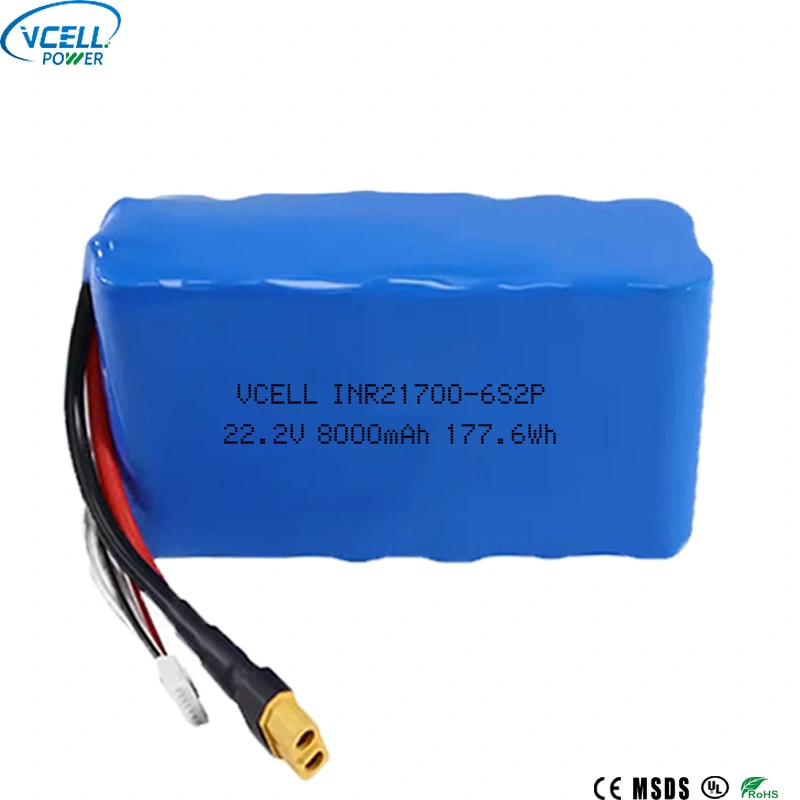
What Makes a Lithium Ion Battery Different?
A Lithium Ion Battery stores and releases energy through the movement of lithium ions between the cathode and anode. During discharge, lithium ions move through the electrolyte while electrons travel through the external circuit to provide electrical power. During charging, the process is reversed. A typical cell contains a cathode, anode, electrolyte, separator, and current collectors.
This operating principle provides several practical benefits:
- High energy density for storing more energy in a relatively compact package
- Rechargeable operation for repeated charging and discharging
- Low self-discharge compared with many traditional rechargeable technologies
- Flexible battery configurations for different voltage and capacity requirements
- High power capability for equipment requiring short bursts of energy
- Low maintenance requirements in many applications
These characteristics make lithium-ion technology particularly valuable when space, weight, operating efficiency, and usable energy are important considerations.
How Does Battery Chemistry Affect Performance?
Not every Lithium Ion Battery is designed for the same purpose. Different cathode chemistries can create different balances between energy density, power output, durability, cost, and safety.
| Battery Chemistry | Typical Characteristics | Common Application Areas |
|---|---|---|
| LFP | Long cycle life and strong thermal stability | Energy storage, EVs, industrial equipment |
| NMC | Balanced energy and power performance | EVs, power tools, portable equipment |
| LCO | High energy density | Consumer electronics |
| LTO | Fast charging and strong cycle performance | Specialized industrial applications |
For example, lithium iron phosphate (LFP) is widely recognized for its long cycle life and favorable safety characteristics, while NMC chemistry can provide a useful balance between energy and power. The appropriate choice depends on the equipment, operating environment, required runtime, and expected charging pattern.
Why Is a Battery Management System Important?
Battery performance cannot be separated from battery management. A modern Lithium Ion Battery system commonly incorporates a Battery Management System (BMS) to monitor and control important operating parameters.
A BMS can monitor:
- Cell and pack voltage
- Charging and discharging current
- Battery temperature
- State of charge
- Cell balance
- Abnormal operating conditions
Proper management helps keep cells within appropriate voltage, current, and temperature ranges while supporting battery safety, usable capacity, and service life.
For commercial buyers, this means that evaluating a battery solely by its rated capacity may not provide a complete picture. Cell quality, BMS design, thermal management, protection mechanisms, and system integration can all affect real-world performance.
Where Does a Lithium Ion Battery Deliver the Most Value?
Lithium-ion technology is already used across a broad range of industries. Applications include smartphones and laptops, electric vehicles, material-handling equipment, backup power systems, data centers, outdoor power equipment, and renewable-energy storage.
Electric Mobility
Electric vehicles require batteries capable of delivering substantial energy and power within a limited weight and volume. Lithium-ion technology provides the energy-storage characteristics needed for vehicle propulsion and regenerative energy systems.
Energy Storage
For solar and other renewable-energy systems, batteries can store electricity when generation exceeds immediate demand and provide energy when generation falls. This makes Lithium Ion Battery systems useful for residential, commercial, and industrial energy-storage applications.
Backup and Industrial Power
UPS systems, industrial machinery, communication equipment, and other critical loads require dependable backup power. Battery capacity, response time, cycle life, and monitoring capability become especially important in these applications.
Portable Equipment
Compact battery packs can provide substantial energy without adding excessive weight, making lithium-ion technology suitable for portable tools, electronic devices, and mobile equipment.
What Performance Benefits Can Businesses Expect?
When correctly specified and integrated, a Lithium Ion Battery can improve the practical performance of an energy system in several ways.
Longer usable operation: High energy density allows manufacturers to design compact battery packs with substantial stored energy.
Reduced downtime: Rechargeable operation and suitable fast-charging characteristics can help equipment return to service more quickly.
Flexible system design: Cells can be assembled into modules and packs with different voltage and capacity configurations to meet application requirements.
Lower maintenance demand: Lithium-ion systems generally require less routine maintenance than some traditional battery technologies.
However, performance depends heavily on operating conditions. Temperature, charge rate, discharge depth, mechanical conditions, and battery design can influence degradation and service life. Recent research also continues to focus on safety, degradation, recycling, and improved electrode materials.
How Can Buyers Choose the Right Lithium Ion Battery?
For OEMs, distributors, system integrators, and industrial users, the selection process should begin with the actual application rather than simply choosing the largest capacity.
Consider these factors:
- Required voltage and capacity
- Peak and continuous power demand
- Desired operating time
- Charging frequency and charging speed
- Operating temperature
- Available installation space
- Expected cycle life
- Battery chemistry
- BMS and protection functions
- Communication and monitoring requirements
- Certification and transportation requirements
A properly matched battery can provide more predictable performance and help avoid unnecessary oversizing or unsuitable configurations.
Why Choose VCELL POWER CO., LIMITED for Lithium Ion Battery Solutions?
For businesses sourcing lithium battery products, VCELL POWER CO., LIMITED can position its Lithium Ion Battery solutions around application requirements rather than a one-size-fits-all approach. For OEM and project-based buyers, professional battery selection should consider capacity, voltage, chemistry, enclosure design, BMS functions, charging requirements, and the working environment together.
This application-oriented approach can be especially valuable when standard battery packs do not fully satisfy equipment requirements. By connecting battery configuration with the actual power demand of the end product, buyers can work toward a solution that balances performance, reliability, space utilization, and overall system requirements.
Conclusion
A Lithium Ion Battery is more than a rechargeable power source. It is a complete energy-storage system in which cell chemistry, electrical design, thermal control, BMS technology, charging strategy, and application conditions work together. High energy density, rechargeable performance, flexible configurations, and broad application potential have made lithium-ion technology an important choice for modern energy systems.
For OEMs, equipment manufacturers, distributors, and project developers looking for a suitable battery configuration, VCELL POWER CO., LIMITED can provide professional support for identifying lithium battery solutions according to specific power, capacity, size, and application requirements. Contact us to discuss your Lithium Ion Battery requirements and explore a battery solution designed around your application.