

Which Controlled Socket AU Remote Control Socket Best Meets Modern Home Power Control Needs?
2026-11-19
Article Summary
Controlling household appliances conveniently and safely is an important part of modern home and office management. A Controlled Socket AU Remote Control Socket provides a simple wireless solution that allows users to switch connected electrical appliances on or off without physically reaching the power outlet. Designed for Australian-style power connections, this type of remote control socket combines practical functionality, straightforward installation, and convenient everyday operation.
For electrical product distributors, importers, wholesalers, and smart home accessory suppliers, understanding the differences between remote control socket models is essential. This guide explores how controlled sockets work, their major features, practical applications, Australian plug compatibility, safety considerations, and important purchasing factors. It also explains how Ningbo Aipulan Lighting Technology Co., Ltd. supports customers looking for remote control socket products for different markets.
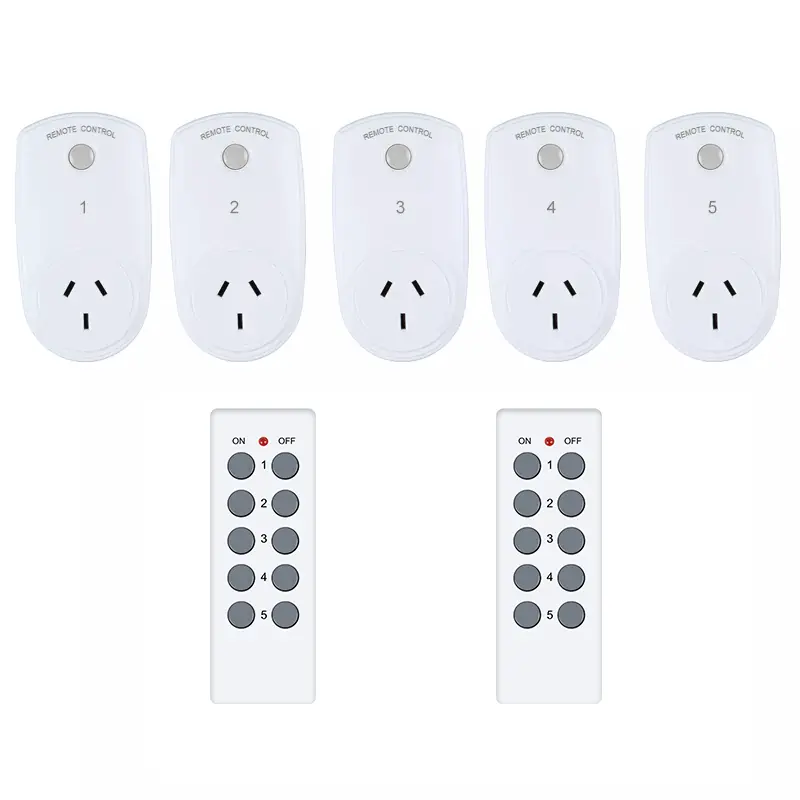
1. What Is a Controlled Socket AU Remote Control Socket?
A Controlled Socket AU Remote Control Socket is a wireless electrical accessory designed to control the power supply of connected appliances through a handheld remote transmitter. Instead of manually switching a wall outlet or unplugging an appliance, users can operate the socket remotely with a simple button press.
The AU designation indicates that the product is designed for Australian-style plug and socket connections. This makes it relevant to households, offices, retailers, and electrical accessory distributors serving the Australian market.
Unlike conventional power sockets, which require users to access the outlet directly, a remote control socket introduces wireless switching functionality. The receiver is plugged into a compatible wall outlet, while the electrical appliance connects to the receiver.
When the user presses the corresponding remote control button, a wireless signal is transmitted to the socket receiver. The receiver then switches the connected appliance's power supply on or off.
Understanding the Main Product Characteristics
- Australian-style connection: Designed around the applicable Australian plug configuration.
- Wireless operation: Allows users to control connected appliances without physically reaching the socket.
- Remote transmitter: Provides convenient manual switching from a distance.
- Plug-and-play installation: Does not normally require fixed electrical wiring or professional installation when used as intended.
- Independent power control: Allows compatible appliances to be switched on or off through the receiver.
For buyers seeking a straightforward alternative to manual socket operation, this type of product provides a practical balance between functionality and ease of use.
2. How Does an AU Remote Control Socket Work?
The working principle of a remote control socket is based on wireless communication between a transmitter and a receiver. The remote control sends a command, and the receiver responds by switching the connected electrical circuit.
Step 1: Connect the Socket Receiver
Plug the AU remote control socket receiver into a compatible Australian wall outlet. Ensure that the power connection is secure and that the electrical supply matches the product specifications.
Step 2: Prepare the Remote Control
Check the remote transmitter and install its battery if required. Some models are supplied with the remote control and receiver already paired, allowing users to begin operation without a complicated setup process.
Step 3: Send a Wireless Command
When a user presses the ON or OFF button, the transmitter sends a wireless signal to the receiver. Depending on the model, the system may use RF communication such as 433.92 MHz.
Step 4: The Receiver Switches the Power
After receiving a valid command, the internal switching mechanism changes the power state of the connected appliance. The appliance can then operate or stop depending on the selected command.
Step 5: Repeat the Operation When Needed
Users can repeat the switching process whenever necessary, making it convenient to manage appliances throughout the day.
What Is RF433 Wireless Technology?
RF433 generally refers to radio-frequency communication around the 433 MHz band. It is commonly used in wireless remote control products because it supports simple, low-complexity communication between transmitters and receivers.
For example, Aipulan's AU remote control socket product range includes RF433 wireless control solutions. The actual communication frequency and operating characteristics should always be confirmed for the specific model being purchased.
Unlike Wi-Fi products, an RF remote control socket does not inherently depend on a home router or internet connection. This makes it suitable for users who prefer direct local control without configuring a smart home network.
3. Why Is Wireless Power Control Useful?
Traditional electrical outlets are not always located in convenient positions. Some are installed behind sofas, cabinets, desks, entertainment units, or other furniture. This can make everyday appliance management inconvenient.
A remote control socket addresses this problem by allowing users to control electrical appliances from a more accessible location.
Reduced Physical Effort
Users do not need to repeatedly bend down or move furniture to access a power outlet. A handheld transmitter provides a convenient alternative for routine switching operations.
More Convenient Appliance Management
Lights, fans, and other compatible electrical devices can be controlled remotely, helping users manage their everyday electrical equipment more efficiently.
Reduced Unnecessary Standby Consumption
Some appliances continue consuming standby electricity even when they are not actively being used. Switching off the power supply to a compatible appliance can help eliminate standby consumption while the socket is switched off.
However, actual energy savings depend on the appliance, its standby power consumption, and how frequently the socket is switched off. A basic remote control socket does not necessarily measure electricity usage or provide automatic energy reports.
Useful for Different User Groups
Wireless socket control can be particularly convenient for older adults, people with limited mobility, and users who need to operate outlets in difficult-to-reach locations.
Operate connected appliances without directly accessing the wall outlet.
Use dedicated remote buttons instead of navigating complicated application settings.
Useful for sockets positioned behind furniture or in less accessible areas.
Switch compatible appliances off when they are not required.
4. Key Features and Product Advantages
When evaluating a Controlled Socket AU Remote Control Socket, buyers should consider its wireless performance, electrical rating, ease of installation, and practical operating features.
4.1 Australian Plug Compatibility
The AU version is designed for Australian-style electrical connections. This is important for distributors and retailers who need products that match the plug configuration used in their target market.
4.2 Convenient Wireless Remote Control
A handheld remote transmitter allows users to switch connected appliances without walking directly to the power outlet. Depending on the product configuration, one transmitter may be paired with multiple compatible receivers.
4.3 Simple Plug-and-Play Design
Unlike permanently installed electrical control systems, a plug-in remote control socket can normally be set up by connecting it to a compatible wall outlet and following the supplied instructions.
4.4 Independent ON/OFF Switching
Dedicated switching commands allow users to control the power state of connected appliances. This is especially useful for lamps, fans, and other equipment that benefits from convenient manual power management.
4.5 No Internet Dependency
RF-based remote control sockets can operate locally without depending on a Wi-Fi router or internet service. This avoids common smart home setup problems such as network configuration and application compatibility.
4.6 Compact and Practical Design
A compact receiver helps users integrate the product into ordinary home and office environments. Buyers should also consider the physical size of the receiver and whether it may obstruct adjacent wall outlets.
5. Common Applications in Homes and Offices
A Controlled Socket AU Remote Control Socket can be used in different residential and commercial environments. The most suitable application depends on the connected appliance's electrical requirements and the socket's approved operating limits.
5.1 Living Room Lighting
Living room lamps and decorative lighting are common applications. Users can switch lights on or off from a sofa or another convenient position without reaching behind furniture.
5.2 Bedroom Appliances
Bedside lamps and compatible small appliances can be controlled remotely. This is useful when users want to turn off a connected light without getting out of bed.
5.3 Office Equipment
Desk lamps, selected office accessories, and other compatible electrical devices can benefit from wireless switching. It can also simplify power management for outlets positioned under desks.
5.4 Fans and Small Household Appliances
Compatible fans and other small household appliances can be operated through a remote control socket, provided their electrical ratings and startup characteristics are within the product's approved limits.
5.5 Hard-to-Reach Electrical Outlets
Power outlets behind cabinets, entertainment systems, and other furniture can be inconvenient to access. A wireless receiver allows users to control connected equipment without repeatedly moving objects.
5.6 Commercial and Retail Environments
Retail stores, small offices, display areas, and other commercial spaces may use remote control sockets for compatible lighting and equipment. This can simplify routine switching tasks for staff.
6. Remote Control Socket vs. Wi-Fi Smart Socket
Remote control sockets and Wi-Fi smart sockets both provide alternatives to traditional manual power outlets. However, they use different control methods and are designed for different user requirements.
Understanding these differences helps distributors recommend the right product to their customers.
| Comparison | RF Remote Control Socket | Wi-Fi Smart Socket |
|---|---|---|
| Control Method | Dedicated wireless transmitter | Mobile application and network connection |
| Internet Required | Normally not required | Usually required for remote cloud-based control |
| Initial Setup | Simple receiver and remote pairing | Network configuration and application setup |
| Remote Operation | Within the effective RF control range | Potentially from different locations through an internet connection |
| Smartphone Control | Not normally available | Commonly supported |
| Energy Monitoring | Not normally included | Available on selected models |
| Typical Users | Users seeking straightforward wireless switching | Users seeking connected smart home functions |
Which Technology Fits Different Customers?
An RF remote control socket is suitable for customers who want simple, direct switching without depending on network connectivity. It can also be an attractive option for users who prefer a physical remote rather than a mobile application.
A Wi-Fi smart socket is more appropriate when customers need smartphone control, scheduling, voice assistant integration, or other connected functions supported by the specific model.
For distributors, offering both product categories can help serve different customer preferences and price segments.
7. How to Choose the Right AU Remote Control Socket
Selecting a remote control socket requires more than checking whether the product has an Australian-style plug. Buyers should evaluate its electrical performance, wireless characteristics, physical dimensions, and suitability for the intended appliance.
7.1 Confirm the Electrical Rating
Check the rated voltage, maximum current, and maximum power. For example, an AU socket rated at 10A and 230V has a nominal resistive-load power calculation of 2,300W. This does not mean every 2,300W appliance is automatically suitable.
Motor loads, heating equipment, and appliances with high startup currents may require additional evaluation.
7.2 Check Wireless Control Distance
Control distance affects the convenience of daily operation. Some Aipulan AU remote control socket product descriptions specify an effective control distance of up to 30 meters under open, unobstructed conditions.
Indoor walls, furniture, electrical interference, and receiver placement can reduce the actual operating range. Buyers should confirm the applicable test conditions for the selected model.
7.3 Evaluate the Remote Control Configuration
Check whether the remote is supplied with the receiver, whether the products are pre-paired, and whether additional transmitters or receivers can be paired when required.
7.4 Consider Receiver Dimensions
The physical dimensions of the plug-in receiver can affect installation convenience. A compact design is particularly useful when users have limited wall outlet space or multiple adjacent sockets.
7.5 Verify Safety and Certification Documentation
For the Australian market, buyers should request applicable electrical compliance documentation and verify that the exact product model is approved for the intended market and use. Do not assume that an overseas radio certification automatically establishes Australian electrical compliance.
7.6 Check Battery and Replacement Requirements
Remote transmitters may use replaceable batteries. Confirm the battery type, whether batteries are included, and how users can replace them safely.
| Selection Factor | What to Confirm | Why It Matters |
|---|---|---|
| Plug Standard | Australian-style plug configuration | Ensures compatibility with local outlets. |
| Voltage and Current | Rated voltage and maximum current | Helps prevent electrical overload. |
| Maximum Load | Rated power and load category | Determines compatible appliance types. |
| Control Range | Wireless distance and test conditions | Supports practical remote operation. |
| Remote Configuration | Pairing method and transmitter quantity | Improves setup convenience. |
| Compliance | Applicable Australian approvals and documents | Supports market access and safe use. |
| Packaging | Retail packaging and user instructions | Supports distribution and customer experience. |
8. Australian Plug Compatibility and Electrical Safety
Electrical compatibility is one of the most important considerations when importing or distributing remote control sockets in Australia.
Understanding Australian Plug Connections
Australia commonly uses Type I plug configurations, which feature two angled flat pins for active and neutral connections and a vertical earth pin on earthed versions.
An AU remote control socket must be designed for the appropriate local plug and outlet configuration. Buyers should confirm the product's exact plug design, earthing arrangement, rated voltage, and current before ordering.
Check Electrical Ratings Before Connecting Appliances
Every appliance connected through the socket must operate within the receiver's specified electrical limits. Exceeding the rated current or power can cause overheating, damage, or other electrical hazards.
Consider Appliance Load Characteristics
Different appliances place different demands on a switching device:
- Lighting: Confirm compatibility with the lighting technology and switching load.
- Fans: Check motor load and starting current.
- Heating appliances: Confirm the rated power and continuous operating requirements.
- Electronic equipment: Consider power supply characteristics and any manufacturer restrictions.
Australian Compliance Considerations
Products intended for the Australian market may be subject to applicable electrical equipment safety requirements and electromagnetic compatibility requirements. Depending on product classification, the supplier and importer may need to verify relevant approvals, test reports, registration, and labeling obligations.
Buyers should check the exact model and its intended use rather than relying on a generic statement that a product is suitable for Australia. Relevant Australian requirements may include applicable AS/NZS standards and Electrical Equipment Safety System obligations where applicable.
9. Installation and Daily Operation Guide
One advantage of a plug-in remote control socket is its straightforward installation. Most users can complete the basic setup without changing fixed household wiring, provided the product is used according to its instructions.
Step 1: Inspect the Product
Check the socket receiver, remote transmitter, packaging, and user manual. Do not use products with cracked housings, damaged pins, or other visible defects.
Step 2: Prepare the Remote Control
Check whether the remote control battery is already installed. If not, install the specified battery according to the polarity markings inside the battery compartment.
Step 3: Connect the Receiver
Plug the receiver into a compatible Australian wall outlet. Make sure it is firmly connected and that the outlet is in good condition.
Step 4: Pair the Remote if Required
Some models are pre-paired before delivery. Other models may require a pairing procedure. Follow the product-specific manual rather than assuming that every model uses the same programming steps.
Step 5: Connect a Compatible Appliance
Connect an appliance that falls within the socket's rated electrical specifications. Confirm that the plug is fully inserted.
Step 6: Test ON/OFF Functions
Use the remote control to switch the connected appliance on and off. Confirm that the receiver responds consistently and that the appliance operates normally.
Step 7: Keep the Instructions for Future Use
Store the user manual and pairing information in a convenient location. This makes it easier to replace batteries, add compatible remote controls, or troubleshoot the product later.
10. Common Problems and Troubleshooting
Although remote control sockets are designed for simple operation, users may occasionally encounter pairing, signal, or switching problems. A systematic check can often identify the cause.
| Problem | Possible Cause | Recommended Solution |
|---|---|---|
| Remote Does Not Respond | Weak battery, incorrect battery installation, or pairing issue. | Check battery polarity, replace the battery, and follow the pairing instructions. |
| Socket Does Not Switch On | No mains power, poor connection, or receiver malfunction. | Check the wall outlet and receiver connection. Stop use if damage is suspected. |
| Short Control Distance | Walls, furniture, interference, or poor transmitter placement. | Move closer to the receiver and test with fewer obstructions. |
| Intermittent Operation | Weak battery or wireless interference. | Replace the battery and test the remote in a different position. |
| Appliance Does Not Operate | Appliance fault, incorrect connection, or incompatible load. | Check the appliance independently and verify electrical compatibility. |
| Remote Control Is Lost | Transmitter misplaced or damaged. | Check whether a compatible replacement transmitter can be paired. |
| Socket Becomes Hot | Overload, poor contact, or product damage. | Disconnect safely and stop using the product until it has been inspected. |
Why Is Proper Pairing Important?
Wireless pairing ensures that the receiver responds to the intended transmitter. For models that support multiple remote controls or multiple receivers, correct programming is particularly important.
When purchasing products in bulk, distributors should request the manufacturer's pairing instructions and confirm whether the remote and receiver are pre-configured before shipment.
11. What Should Wholesale Buyers Consider?
For importers, electrical accessory wholesalers, retailers, and smart home product distributors, selecting a reliable remote control socket supplier is essential for maintaining product consistency and customer satisfaction.
11.1 Product Specifications and Market Compatibility
Confirm that the product is specifically configured for the Australian market. Review the plug design, electrical ratings, wireless frequency, remote control functions, and applicable compliance documentation.
11.2 Manufacturing and Quality Control
Electrical accessories contain several important components, including switching elements, circuit boards, plug contacts, plastic housings, and wireless control modules. Consistent component quality and assembly procedures help reduce product defects.
Ask the supplier about inspection procedures, electrical testing, aging tests where applicable, and production quality management.
11.3 OEM and ODM Customization
Different distributors may require specific product appearances, logos, packaging designs, remote control configurations, or product combinations.
Before placing a bulk order, discuss available customization options, sample approval procedures, minimum order quantities, and production lead times.
11.4 Packaging and Export Requirements
Remote control sockets are often sold through retail channels. Packaging should protect the receiver and transmitter during transportation while providing clear product information and user instructions.
International buyers should also confirm carton quantities, labeling requirements, export documents, and delivery arrangements.
11.5 Supplier Communication and Technical Support
A capable supplier should be able to answer questions about product specifications, wireless pairing, electrical ratings, packaging, and applicable documentation.
Ningbo Aipulan Lighting Technology Co., Ltd. specializes in wireless remote control sockets, Wi-Fi sockets, lamp holders, motion sensor sockets, surge protector sockets, and other electrical accessories.
With manufacturing, research and development, and sales capabilities, the company provides product solutions for different international markets. Its AU Remote Control Socket range includes basic wireless remote control models as well as upgraded smart outlet products for customers with different functional requirements.
Wholesale Purchasing Checklist
- Confirm the exact AU remote control socket model.
- Verify plug configuration and electrical ratings.
- Check wireless frequency and effective control distance.
- Confirm whether remote controls and receivers are pre-paired.
- Request applicable Australian compliance documentation.
- Evaluate product samples before mass production.
- Discuss OEM branding and customized packaging.
- Confirm MOQ, pricing, lead time, and delivery terms.
12. Frequently Asked Questions
Q1. What is a Controlled Socket AU Remote Control Socket?
It is a plug-in wireless power control device designed for Australian-style electrical outlets. It allows users to switch compatible connected appliances on or off using a dedicated remote transmitter.
Q2. How far can an AU remote control socket operate?
The effective distance depends on the model and surrounding environment. Certain Aipulan AU remote control socket product descriptions specify up to 30 meters in open, unobstructed conditions. Walls, furniture, and interference may reduce the actual range.
Q3. Does a remote control socket require Wi-Fi?
No. RF-based remote control sockets use direct wireless communication between the remote transmitter and socket receiver. They generally do not require Wi-Fi, internet access, or a smartphone application.
Q4. Can one remote control operate multiple sockets?
Some models support pairing one transmitter with multiple compatible receivers. The exact number and pairing procedure depend on the product design. Buyers should confirm this capability with the manufacturer.
Q5. Can an AU remote control socket be used with a heater?
It may be used with a compatible heater if the appliance's rated current, power, and load characteristics are within the socket's approved limits. Always check the heater's electrical rating and the manufacturer's instructions before use.
Q6. Does a remote control socket save electricity?
It can help reduce unnecessary standby power consumption by disconnecting compatible appliances from the power supply when they are not needed. Actual savings depend on the connected appliance and usage habits. A basic model does not necessarily provide energy monitoring.
Q7. What happens if the remote control battery runs out?
The wireless transmitter may stop sending commands when its battery is depleted. Replace it with the specified battery. Depending on the receiver model, a manual ON/OFF button may also be available.
Q8. Is an AU remote control socket easy to install?
Yes. Most plug-in models are designed for straightforward installation. Users normally connect the receiver to a compatible wall outlet, prepare the remote control, and follow the supplied pairing instructions if required.
Q9. What should Australian importers check before purchasing?
Importers should verify the plug configuration, voltage, current, maximum load, wireless specifications, product dimensions, and applicable Australian compliance documentation. Samples and technical documents should be reviewed before bulk purchasing.
Q10. Does Ningbo Aipulan Lighting Technology Co., Ltd. provide OEM and ODM services?
Ningbo Aipulan Lighting Technology Co., Ltd. provides OEM/ODM-oriented manufacturing services for electrical accessories. Buyers can discuss product specifications, customization, packaging, samples, and production requirements with the company.
Conclusion: A Practical Way to Make Everyday Power Control Easier
A Controlled Socket AU Remote Control Socket offers a straightforward solution for users who want more convenient control over household and office appliances. With a compatible Australian plug configuration, wireless remote operation, and simple installation, it can help reduce the inconvenience of manually accessing difficult-to-reach power outlets.
For residential users, the main benefits include convenient switching, flexible appliance management, and reduced unnecessary standby power consumption when compatible devices are switched off. For distributors and wholesalers, the product provides an accessible wireless power control option for customers who do not need the additional complexity of a Wi-Fi smart home system.
However, choosing the right product requires careful attention to electrical ratings, wireless performance, plug compatibility, and applicable market requirements. Working with an experienced manufacturer can also make it easier to confirm product specifications, evaluate samples, and arrange customized orders.
As a supplier of wireless remote control sockets and other electrical accessories, Ningbo Aipulan Lighting Technology Co., Ltd. provides product options for international customers seeking practical power control solutions.
Looking for a Reliable AU Remote Control Socket Supplier?
Ningbo Aipulan Lighting Technology Co., Ltd. specializes in wireless remote control sockets and smart electrical accessories for international markets.
Whether you are an importer, wholesaler, retailer, or electrical product distributor, we can help you explore suitable AU remote control socket solutions for your product range.
Need product specifications, samples, bulk pricing, or OEM/ODM customization? Contact us today to discuss your requirements and find the right electrical accessory solutions for your business.
Contact Us