

Which AU Motion Sensor Socket Delivers Smarter and More Efficient Lighting Control?
2026-11-17
Automatic lighting control is becoming an increasingly practical solution for modern homes, commercial buildings, and property management applications. An AU Motion Sensor Socket helps simplify lighting operation by detecting human movement and automatically controlling connected lighting equipment. It reduces the need for manual switching, improves convenience in dark areas, and helps prevent unnecessary electricity consumption when lights are left on.
However, choosing the right motion sensor socket involves more than simply checking whether it can detect movement. Buyers need to consider Australian electrical compatibility, PIR sensing performance, installation requirements, lighting compatibility, adjustable operating settings, material quality, and product reliability. This guide explores how an AU Motion Sensor Socket works, where it can be used, what features matter most, and how distributors and importers can evaluate a reliable manufacturing partner. It also introduces the product solutions and customization capabilities of Ningbo Aipulan Lighting Technology Co., Ltd.
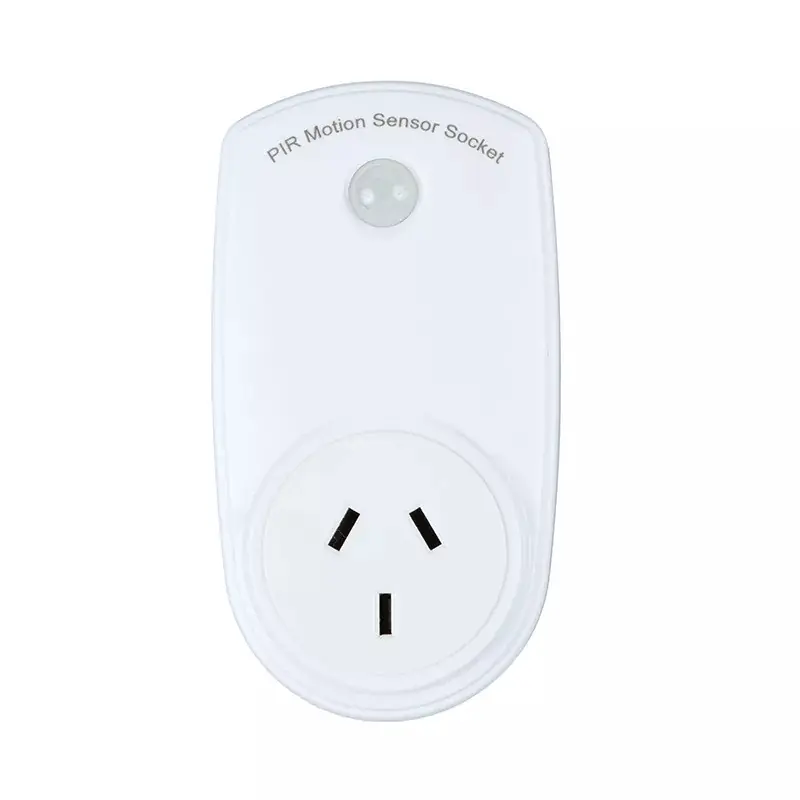
1. What Is an AU Motion Sensor Socket?
An AU Motion Sensor Socket is a region-specific motion-sensing electrical accessory designed for compatible Australian-market applications. It uses automatic detection technology to control connected lighting equipment when movement is detected, helping make everyday lighting more convenient and efficient.
Unlike conventional lighting arrangements that depend entirely on manual switches, a motion sensor socket responds automatically to activity within its sensing area. When a person enters the detection range, the sensor activates the connected lighting device. After movement is no longer detected for the configured delay period, the device switches the lighting off automatically.
This functionality is particularly useful in areas where people frequently enter and leave without wanting to operate a wall switch every time. Examples include hallways, staircases, storage spaces, garages, and entrance areas.
What Makes the AU Version Different?
Electrical accessories intended for different international markets cannot always share the same physical and electrical specifications. Australia has its own electrical supply characteristics, socket configurations, and product compliance requirements.
An AU-specific motion sensor socket is developed with the intended Australian market in mind. Its electrical design, connection arrangement, and safety requirements should be verified against the applicable product documentation before purchasing or installation.
Who Can Benefit from This Product?
- Homeowners looking for convenient automatic lighting.
- Electrical product wholesalers and distributors.
- Lighting equipment retailers and importers.
- Property maintenance and facility management companies.
- OEM and private-label lighting brands.
- Commercial lighting solution providers.
2. How Does a Motion Sensor Socket Work?
Most human-body motion sensor sockets use Passive Infrared (PIR) technology. PIR sensors detect changes in infrared radiation within their field of view. Since people naturally emit heat, movement across the sensing area creates changing infrared patterns that the sensor can recognize.
When the device identifies movement that meets its detection conditions, its internal control circuit activates the connected lighting equipment. Once activity stops, a built-in timing function allows the light to remain on for a predetermined period before switching it off.
The Automatic Operating Process
- Standby Mode: The sensor remains ready to monitor its surrounding detection area.
- Movement Detection: A person enters the sensing range, producing changes in the infrared pattern.
- Signal Processing: The internal control circuit evaluates the sensor signal.
- Automatic Activation: The connected light is switched on when the detection conditions are satisfied.
- Delay Timing: The light remains on while movement continues or during the configured delay period.
- Automatic Shutdown: When no further movement is detected and the delay expires, the light switches off.
Why Is the Delay Function Useful?
Without a delay function, lighting could switch off immediately when a person stops moving. This would be inconvenient in spaces where someone may spend several minutes standing still, such as a storage room or a hallway where people pause to organize their belongings.
An appropriate delay setting allows lighting to remain available for a practical period without staying on indefinitely. The ideal duration depends on how frequently the area is used and how long people typically remain there.
What Is the Role of Ambient Light Detection?
Some motion sensor sockets include a brightness threshold or ambient-light adjustment. This feature determines whether the device should activate the connected light based on surrounding brightness.
For example, a lighting installation may only need automatic activation when the environment is relatively dark. A suitable brightness setting can help avoid unnecessary operation during daylight hours.
3. Why Is Automatic Motion Detection Important?
Manual lighting control seems simple, but it can create inconvenience and unnecessary electricity consumption in frequently used spaces. People may forget to switch off lights after leaving a room, especially in shared buildings, corridors, and storage areas.
Automatic motion detection addresses this everyday problem by making lighting respond to actual activity instead of relying entirely on user behavior.
Lighting activates automatically when movement is detected, eliminating the need to search for a switch in dark areas.
Automatic shutdown helps prevent lights from remaining on unnecessarily after people leave.
Automatically activated lighting can make dark entrances, corridors, and stairways easier to navigate.
Users do not need to remember to manually switch lighting on and off during every visit.
Suitable configurations can support different residential and small commercial lighting requirements.
Automatic control can reduce repetitive switching tasks in shared spaces and frequently accessed areas.
How Much Energy Can Automatic Lighting Save?
The actual energy savings depend on the connected lamp's power consumption, daily operating hours, occupancy patterns, and sensor settings. A motion sensor does not automatically guarantee a fixed percentage of energy savings.
For example, consider a 10W LED light that would otherwise remain switched on for five unnecessary hours every day. The potential energy waste can be estimated as follows:
10W × 5 hours = 50Wh per day.
Over 30 days, this equals approximately 1.5kWh of electricity.
This simple example illustrates why automatic shutdown can be useful in spaces where lights are frequently forgotten. Actual savings depend on real usage conditions.
4. Key Features of an AU Motion Sensor Socket
When evaluating an AU Motion Sensor Socket, buyers should focus on practical functions that directly affect user experience, electrical compatibility, and long-term product performance.
4.1 PIR Infrared Motion Detection
PIR technology provides automatic human-movement detection without requiring users to operate a separate switch. It is suitable for intermittent lighting applications where people enter and leave a defined area.
Detection performance depends on sensor sensitivity, mounting position, distance, movement direction, and surrounding environmental conditions.
4.2 Automatic On and Off Control
The automatic switching function helps simplify daily lighting operation. When qualifying movement is detected, the connected light activates. After the configured delay without further movement, it switches off.
This is particularly useful for corridors, entrances, garages, and storage spaces where continuous illumination may not be necessary.
4.3 Adjustable Operating Parameters
Depending on the model, users may be able to adjust lighting duration and ambient brightness thresholds. These settings allow the product to better match different room layouts and lighting requirements.
4.4 Convenient Installation
Plug-in or compatible lamp-holder-style designs can reduce installation complexity compared with permanently rewiring an existing lighting circuit. The exact installation method depends on the AU model's physical design.
4.5 Flame-Retardant Housing
Housing material is an important consideration for electrical accessories. Flame-retardant engineering plastics can contribute to product safety when correctly selected and tested as part of the complete electrical design.
4.6 Regional Product Compatibility
Regional product versions help distributors serve different electrical markets. An Australian-market version should be evaluated using its own technical specifications rather than assuming that a European or other international model will fit the same application.
| Feature | Practical Function | Buyer Benefit |
|---|---|---|
| PIR Motion Detection | Recognizes changes in infrared patterns caused by movement. | Automatic lighting activation. |
| Delay Switching | Keeps the light on for a configured period. | More convenient lighting control. |
| Brightness Adjustment | Controls activation according to ambient light conditions. | Helps avoid unnecessary daytime operation. |
| Flame-Retardant Housing | Uses suitable engineering plastic materials. | Supports electrical product safety. |
| Regional Design | Designed for the intended market configuration. | Improved market compatibility. |
| OEM/ODM Customization | Supports selected product and packaging modifications. | More flexible brand development. |
5. Where Can Motion Sensor Sockets Be Used?
Motion sensor sockets are especially practical in locations where lighting is required intermittently rather than continuously. Their automatic operation makes them suitable for both residential and selected commercial environments.
5.1 Residential Hallways and Staircases
Hallways and staircases are among the most common applications for automatic lighting. Residents may need to move through these areas during the night without wanting to search for a wall switch.
A properly positioned motion sensor can activate lighting as someone approaches, helping improve visibility and everyday convenience.
5.2 Entrance Areas and Doorways
Entrance areas often require temporary lighting when residents arrive home or visitors approach the door. Automatic activation can provide illumination without requiring manual operation.
For outdoor entrances, buyers must verify the product's environmental protection rating and suitability for the actual installation location. An indoor-rated product should not be assumed to be waterproof or weather-resistant.
5.3 Garages and Storage Rooms
Garages, storage spaces, and utility rooms often contain equipment or belongings that require both hands to access. Automatic lighting helps users avoid searching for switches while carrying items.
5.4 Wardrobes and Cabinets
Dark storage spaces can make it difficult to locate clothing, tools, and other belongings. A compatible sensor-controlled lighting arrangement can provide illumination when someone opens or approaches an accessible area.
Buyers should check the sensing direction and installation geometry to ensure that movement can actually be detected in the intended position.
5.5 Offices and Small Commercial Buildings
Small offices, shop passages, utility areas, and staff rooms may benefit from automatic lighting where occupancy is intermittent. Motion-controlled lights can reduce unnecessary manual switching and support more convenient facility operation.
5.6 Outdoor Corridors and Courtyards
For suitable outdoor-rated configurations, motion-controlled lighting can provide temporary illumination in courtyards, covered passages, and access routes.
Before installation, verify the IP rating, permitted operating temperature, moisture exposure limits, and electrical safety requirements. The presence of a motion sensor alone does not make a product suitable for outdoor weather exposure.
6. How to Choose the Right AU Motion Sensor Socket
Choosing a suitable product requires evaluating the electrical installation, sensing requirements, connected lighting load, and intended application. For importers and distributors, these factors are also essential when comparing manufacturers and preparing product specifications for the Australian market.
6.1 Verify Australian Electrical Compatibility
This should be the first consideration when purchasing an AU Motion Sensor Socket. Confirm that the product is designed for the intended Australian electrical installation and that its voltage, frequency, current rating, connection arrangement, and applicable compliance documentation meet the requirements of the target application.
Do not assume that an AU product automatically has the same ratings as an EU, UK, or US version.
6.2 Check the Connected Load
The maximum supported electrical load determines which lighting devices can be connected safely. Buyers should verify the rated voltage, current, and permitted load type.
LED lighting can have different electrical characteristics from incandescent lamps, including driver inrush current. Therefore, compatibility should be confirmed using the manufacturer's load specifications rather than relying only on the lamp's nominal wattage.
6.3 Evaluate Detection Coverage
Detection angle and sensing distance determine how effectively the product monitors its surroundings. A wider sensing angle may be useful in open areas, while a narrower coverage pattern may be more appropriate for specific passageways.
Actual detection performance is influenced by the mounting position, movement direction, temperature differences, and obstacles within the sensing area.
6.4 Consider the Delay Time
A short delay can help reduce unnecessary lighting operation in passageways. A longer delay may be more convenient in garages, storage areas, and rooms where people frequently pause.
Choose a model with suitable adjustment options if the product will be sold to customers with different application requirements.
6.5 Check Ambient Light Settings
A brightness threshold can help determine whether the sensor should activate lighting during daylight or only under darker conditions. This function can be particularly useful in areas receiving natural light during the day.
6.6 Review Housing and Product Construction
Housing materials, internal components, insulation design, assembly quality, and durability testing all influence product reliability. Buyers should request relevant technical documents and test information before committing to large-volume orders.
| Application | Main Requirement | Practical Advantage |
|---|---|---|
| Hallways | Reliable movement detection | Convenient automatic lighting. |
| Staircases | Appropriate sensor positioning | Improved visibility when moving between floors. |
| Garages | Suitable detection coverage | Hands-free operation. |
| Storage Rooms | Appropriate delay settings | Lighting without repeated manual switching. |
| Commercial Passages | Suitable load and operating specifications | Reduced unnecessary lighting operation. |
| Outdoor Areas | Verified environmental protection | Automatic illumination where installation conditions permit. |
| Selection Factor | What to Verify | Why It Matters |
|---|---|---|
| Electrical Rating | Voltage, frequency, current, and load limits | Ensures suitability for the intended installation. |
| Regional Compatibility | Australian configuration and applicable approvals | Supports market compliance. |
| Detection Range | Angle, distance, and sensitivity | Determines coverage performance. |
| Delay Setting | Available timing adjustment | Matches different usage patterns. |
| Brightness Threshold | Ambient-light operating conditions | Helps control when the light activates. |
| Housing Material | Insulation and flame-retardant properties | Supports safe and reliable construction. |
| Supplier Support | Technical documents, samples, and customization | Reduces purchasing and development risks. |
7. PIR Technology and Sensing Performance
Although PIR motion detection is widely used in automatic lighting products, its performance depends on more than the sensor component itself. Product design, signal processing, installation position, and surrounding environmental conditions all contribute to reliable operation.
What Affects PIR Detection Accuracy?
- Movement Direction: PIR sensors generally respond more effectively to movement across different detection zones than to movement directly toward the sensor.
- Detection Distance: The ability to recognize movement decreases as a person moves farther away, depending on the sensor design.
- Mounting Height: Incorrect installation height can reduce effective coverage.
- Obstacles: Walls, furniture, and other objects may block the infrared sensing path.
- Environmental Temperature: A small temperature difference between a person and the surrounding environment may influence detection performance.
- Sensor Orientation: The sensing element must be positioned toward the intended monitoring area.
Why Can a Motion Sensor Fail to Detect Someone?
One common misunderstanding is that a PIR sensor detects a person's presence continuously. In reality, PIR technology responds to changes in infrared radiation rather than identifying human beings or measuring their exact location.
If someone remains relatively still, the sensor may not continue receiving sufficient movement signals. This is why the delay setting and application layout are important.
Glass and certain other materials can also block the infrared changes required for detection. A sensor should not be expected to reliably detect movement through an ordinary window or an opaque barrier.
How Can Detection Performance Be Improved?
- Position the sensor toward the main movement path.
- Avoid placing obstacles directly in front of the sensing area.
- Use the recommended installation height and orientation.
- Test detection performance under actual operating conditions.
- Adjust sensitivity and delay settings where the model supports them.
8. Installation and Daily Use Considerations
Correct installation is essential for reliable operation. Even a well-designed motion sensor socket may produce inconsistent results if it is installed in an unsuitable position or connected to an incompatible electrical load.
Before Installation
- Confirm that the product is the correct Australian-market model.
- Check the electrical rating and connected lighting load.
- Read the manufacturer's installation instructions.
- Verify that the installation environment is suitable for the product's protection rating.
- Ensure that the sensor has a clear view of the intended detection area.
- Check that the connected lamp is compatible with the sensor's switching circuit.
During Installation
For plug-in or lamp-holder-style models, installation should follow the specific connection and fitting instructions supplied with the product. Users should never force an incompatible connector or modify electrical components to make a product fit.
Any work involving fixed wiring or electrical modifications in Australia should be carried out by an appropriately licensed electrical professional in accordance with applicable local requirements.
After Installation
- Restore the power according to the product instructions.
- Allow any required sensor initialization period.
- Walk through the intended detection area to test activation.
- Check whether the connected light switches off after the configured delay.
- Adjust brightness or timing settings if supported.
- Observe the device under normal operating conditions.
9. Common Problems and Troubleshooting
Understanding typical motion sensor problems can help end users and distributors identify installation issues, compatibility concerns, and potential product faults.
| Problem | Possible Cause | Recommended Action |
|---|---|---|
| Light Does Not Turn On | Incorrect connection, no power, unsuitable load, or poor sensor positioning. | Check the power supply, product compatibility, and installation instructions. |
| Light Turns On Too Frequently | Repeated movement, unsuitable sensitivity, or environmental interference. | Review sensor positioning and available sensitivity settings. |
| Light Switches Off Too Quickly | Delay setting is too short or movement is not being detected continuously. | Adjust the timing and check the sensing coverage. |
| Light Remains On | Continuous movement, incorrect settings, or a control circuit problem. | Check the detection area and follow the manufacturer's troubleshooting procedure. |
| Detection Range Is Limited | Obstacles, unsuitable mounting position, or environmental conditions. | Reposition the device within the permitted installation conditions. |
| LED Light Flickers | Load incompatibility, driver characteristics, or switching circuit issues. | Confirm lamp compatibility and consult the manufacturer. |
Why Is LED Compatibility Important?
Some LED drivers have electronic characteristics that differ from conventional incandescent lamps. These differences can influence switching behavior, especially when the connected load is very small or the sensor uses a particular electronic switching design.
Distributors should confirm the supported LED load range and minimum load requirements before recommending a product for specific lighting installations.
10. Motion Sensor Socket vs. Traditional Lighting Control
Traditional lighting systems depend on manual operation, while motion sensor sockets automate switching based on detected movement. Each method has advantages, but their suitability depends on the application.
| Comparison | Traditional Lighting | Motion Sensor Socket |
|---|---|---|
| Switching Method | Manual operation | Automatic movement detection |
| User Interaction | Requires a person to operate the switch | Can operate without repeated manual switching |
| Automatic Shutdown | Depends on the user | Available through delay-based control |
| Energy Management | Lights may remain on when forgotten | Helps reduce unnecessary lighting operation |
| Installation | Depends on existing wiring and switches | Depends on the product's compatible fitting design |
| Best Applications | Spaces requiring direct user control | Frequently accessed areas with intermittent occupancy |
A motion sensor socket does not need to replace every conventional switch. In many buildings, both types of control can serve different purposes. Manual switching remains useful where users need immediate and predictable control, while automatic sensing is valuable in areas where lighting is frequently used for short periods.
11. What Should B2B Buyers Look for in a Manufacturer?
For wholesalers, distributors, importers, and private-label brands, product selection is only one part of the purchasing process. The manufacturing partner also influences product consistency, customization flexibility, documentation quality, and supply reliability.
11.1 Experience in Motion Sensor Products
A manufacturer with relevant experience in motion sensor sockets and intelligent electrical accessories is better positioned to understand product structure, PIR sensing requirements, and application-specific design considerations.
Buyers should review the supplier's product range, technical documentation, manufacturing processes, and experience serving different regional markets.
11.2 Quality Control and Product Testing
Electrical accessories require consistent manufacturing quality. Buyers should ask about raw material inspection, assembly checks, functional testing, aging tests, and finished-product inspection procedures.
For Australian-market products, it is also important to verify the applicable electrical compliance documents and whether the exact product model is covered by the required approvals.
11.3 OEM and ODM Customization
Distributors and brand owners may need products with customized logos, packaging, colors, or selected operating parameters. A manufacturer with OEM/ODM capabilities can help customers develop products that better match their target markets.
11.4 Sample Evaluation Before Bulk Purchasing
Samples allow buyers to verify the product's physical design, sensing response, connection compatibility, switching performance, and packaging before committing to a larger order.
Sample testing is particularly valuable when developing a new private-label product or introducing an AU-specific model to a distribution network.
11.5 Spare Parts and After-Sales Support
Clear technical communication and responsive after-sales support help reduce uncertainty during product introduction and subsequent sales. Buyers should confirm available documentation, installation guidance, warranty conditions, and procedures for handling product quality issues.
Why Work with Ningbo Aipulan Lighting Technology Co., Ltd.?
Ningbo Aipulan Lighting Technology Co., Ltd. focuses on the development and manufacturing of intelligent electrical accessories, including motion sensor sockets for different regional markets.
The company's motion sensor socket product range includes AU, FR, and ITA versions, designed to address different regional electrical requirements and application needs.
Its published manufacturing capabilities include injection molding, electronic component assembly, program debugging, finished-product assembly, and product testing. The company also provides OEM/ODM services covering selected product parameters, appearance, logos, and packaging.
For international buyers, this product range and customization approach can provide a starting point for evaluating motion-sensing electrical accessories for residential and commercial distribution.
Information to Prepare Before Requesting a Quotation
- Target sales market: Australia or another region.
- Required product model and connection configuration.
- Voltage, frequency, current, and supported load.
- Required PIR detection angle and distance.
- Preferred delay time and brightness adjustment functions.
- Housing material and appearance requirements.
- Applicable certification and compliance documents.
- Logo printing and customized packaging requirements.
- Sample quantity and estimated bulk order quantity.
- Expected delivery schedule and shipping destination.
12. Frequently Asked Questions
Q1. What is an AU Motion Sensor Socket?
An AU Motion Sensor Socket is a motion-detection electrical accessory designed for compatible Australian-market applications. It uses movement sensing to automatically control connected lighting equipment, helping improve convenience and reduce unnecessary lighting operation.
Q2. How does an AU Motion Sensor Socket detect people?
Most models use Passive Infrared (PIR) technology. The sensor detects changes in infrared radiation caused by movement within its detection area and sends a signal to the internal control circuit to activate the connected light.
Q3. Can a motion sensor socket help reduce electricity consumption?
Yes. Automatic switching can help prevent lights from remaining on when an area is unoccupied. The actual energy savings depend on lamp wattage, operating hours, occupancy patterns, and sensor settings.
Q4. Is an AU Motion Sensor Socket suitable for LED lights?
Some models are compatible with LED lighting, but compatibility depends on the switching circuit, LED driver characteristics, supported load range, and minimum load requirements. Buyers should confirm the exact specifications before connecting LED lamps.
Q5. Can the sensing distance and lighting duration be adjusted?
Adjustment functions depend on the specific model. Certain motion sensor sockets support customized delay timing and ambient brightness thresholds. Confirm the available settings with the manufacturer before purchasing.
Q6. Where is an AU Motion Sensor Socket commonly used?
Typical applications include hallways, entrances, staircases, garages, storage rooms, wardrobes, and selected commercial passages. Outdoor use requires a product specifically rated for the relevant environmental conditions.
Q7. Can a PIR sensor detect movement through glass?
Generally, ordinary glass blocks much of the infrared radiation required for conventional PIR detection. A sensor should be installed with a clear view of the intended detection area rather than relying on detection through windows or opaque barriers.
Q8. What should Australian buyers check before purchasing?
Buyers should verify the Australian-market electrical configuration, rated voltage and current, supported load, connection compatibility, applicable safety documentation, and the exact product model. Regional compatibility should never be assumed based only on the product name.
Q9. Does Ningbo Aipulan Lighting Technology Co., Ltd. support OEM and ODM services?
Yes. According to the company's product information, customization options include selected product parameters, appearance, brand logos, and packaging. Buyers can discuss their target-market requirements and customization plans with the company.
Q10. Can buyers request samples before placing bulk orders?
Yes. Ningbo Aipulan Lighting Technology Co., Ltd. provides sample support for conventional and customized motion sensor socket products. Buyers can contact the company to confirm sample availability, customization details, and delivery arrangements.
Q11. What information is needed for a wholesale quotation?
Buyers should provide the intended market, product specifications, electrical ratings, required functions, order quantity, packaging preferences, and certification requirements. Complete information helps the manufacturer prepare a more accurate quotation.
Q12. Why should distributors work directly with a motion sensor socket manufacturer?
Direct cooperation can make technical communication, sample evaluation, customization, packaging development, and bulk purchasing more efficient. It also gives buyers an opportunity to understand the manufacturer's production and quality control capabilities.
Conclusion: Smarter Lighting Starts with the Right Motion Sensor Socket
An AU Motion Sensor Socket offers a practical way to improve lighting convenience through automatic movement detection and intelligent switching. By reducing unnecessary manual operation, it can help manage lighting in residential spaces, commercial passages, storage rooms, garages, and other frequently accessed areas.
However, selecting the right product requires careful attention to electrical compatibility, PIR detection performance, connected load, delay settings, housing materials, and applicable Australian safety requirements. These details are especially important for distributors and importers introducing motion sensor products into a competitive market.
For businesses seeking a manufacturing partner, Ningbo Aipulan Lighting Technology Co., Ltd. offers regional motion sensor socket solutions and OEM/ODM customization services. Evaluating samples, technical documentation, and product specifications before bulk purchasing can help build a more reliable supply relationship.
Looking for a Reliable AU Motion Sensor Socket Manufacturer?
Upgrade your product range with practical motion-sensing electrical accessories from Ningbo Aipulan Lighting Technology Co., Ltd.
Whether you are an Australian importer, electrical wholesaler, lighting distributor, or private-label brand, we can discuss product specifications, regional requirements, OEM/ODM customization, and bulk supply needs.
Have a new project or sourcing requirement? Contact us today to discuss your target market, request product samples, and explore a suitable motion sensor socket solution for your business.
Contact Us