

What’s the Difference Between Motion Sensor Sockets and Smart Plugs
2025-12-30
When automating your home’s lighting and appliances, two popular devices often come up: the Motion Sensor Socket and the Smart Plug. While both add convenience, they serve fundamentally different purposes. Choosing the right one depends on whether you prioritize automated, hands-free operation or versatile, app-based remote control. Aipulan offers innovative solutions in both categories, helping you build a smarter, more efficient home tailored to your needs.
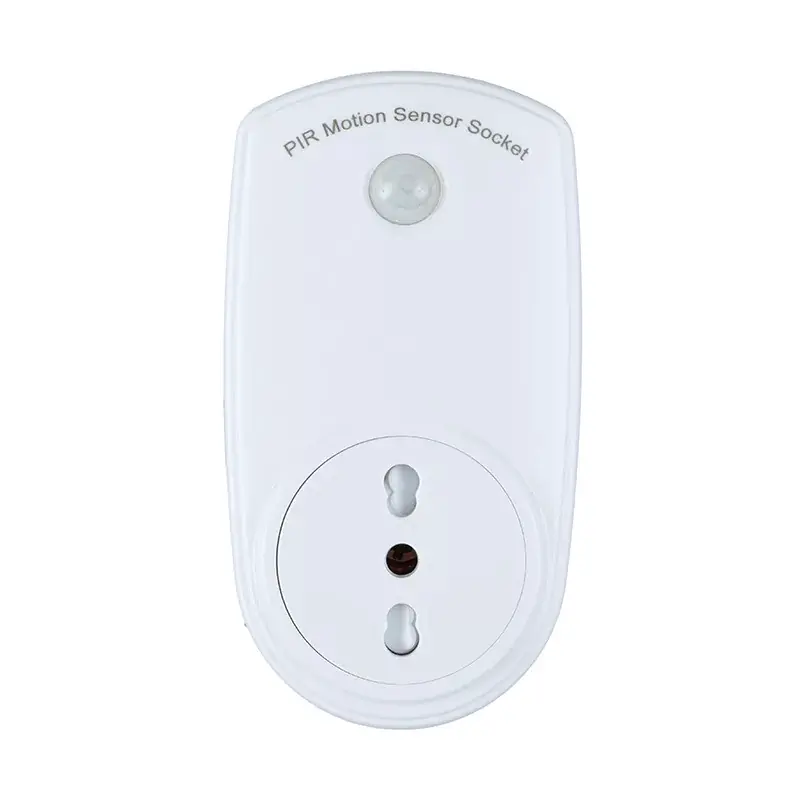
At their core, the distinction lies in their primary trigger mechanism and use case.
-
A Motion Sensor Socket is a reactive automation device. It has a built-in passive infrared (PIR) sensor that detects movement and heat within its field of view, automatically turning the connected lamp or appliance on and off. Its operation is local and immediate, requiring no smartphone or complex setup.
-
A Smart Plug is a command-based control device. It connects to your home Wi-Fi, allowing you to remotely turn devices on/off via a smartphone app, set schedules, or integrate with voice assistants like Alexa or Google Assistant. Its function is based on pre-set commands or real-time remote input.
To clearly illustrate the differences, here is a comparison table:
| Feature | Motion Sensor Socket | Smart Plug |
|---|---|---|
| Primary Function | Automate based on detected motion. | Enable remote & scheduled control. |
| Best Use Cases | Hallways, closets, bathrooms, security lighting, utility rooms. | Lamps, coffee makers, space heaters, seasonal decorations. |
| Key Advantage | Hands-free operation, enhanced security, energy savings. | Remote access, scheduling, voice control, energy monitoring. |
| Setup Complexity | Simple: screw into existing socket, plug in device. | Requires Wi-Fi, app pairing, and sometimes a hub. |
| Automation Trigger | Physical motion (PIR sensor). | App command, schedule, or voice command. |
| Typical Brand Example | Aipulan Motion-Activated Socket | Aipulan Wi-Fi Smart Plug |
When to Choose Which Device?
Choose a Motion Sensor Socket when you want automation tied to presence. It’s ideal for areas where lights are frequently left on accidentally or for security. Opt for a Smart Plug when you need to control devices from anywhere or run them on a precise schedule, like turning a lamp on at sunset.
Motion Sensor Socket FAQ
Q: Can I adjust the sensitivity and time delay on a Motion Sensor Socket?
A: Yes, most advanced models from brands like Aipulan feature adjustable settings. You can typically modify the sensor's range/sensitivity to avoid false triggers and set a time delay (e.g., 10 seconds to 30 minutes) for how long the light stays on after motion is no longer detected.
Q: Do Motion Sensor Sockets work in total darkness?
A: Absolutely. The PIR sensor detects infrared radiation (body heat), not visible light. A Motion Sensor Socket functions perfectly in complete darkness, making it excellent for night lights or enhancing safety in unlit areas.
Q: Can I use a Motion Sensor Socket with any type of bulb?
A: It is compatible with most bulb types, including LEDs, CFLs, and halogens. However, for optimal performance and longevity, it is highly recommended to use it with LED bulbs. LEDs respond instantly to switching and are more energy-efficient, maximizing the socket's savings potential.
Understanding these differences allows you to make the perfect choice for each spot in your home. For hands-free, localized automation, the Aipulan Motion Sensor Socket is an unbeatable solution. For full remote control and scheduling flexibility, the Aipulan Smart Plug excels. Explore our full range of smart home products designed for reliability and ease of use.
Ready to upgrade your home automation? Contact us today to find the right Aipulan product for your needs and take the first step toward a smarter living space.