

What Role Does Material Selection Play in the Durability of PVD Coating Fixtures
2026-03-10
In the specialized field of PVD Vacuum Coating Fixture Design And Processing, the longevity of your tooling directly impacts production costs and coating quality. At Dongguan Fuchengxin, we have observed that the single most critical factor determining fixture lifespan is the material selection used in its fabrication. Choosing the wrong substrate can lead to thermal deformation, coating build-up, and premature mechanical failure.
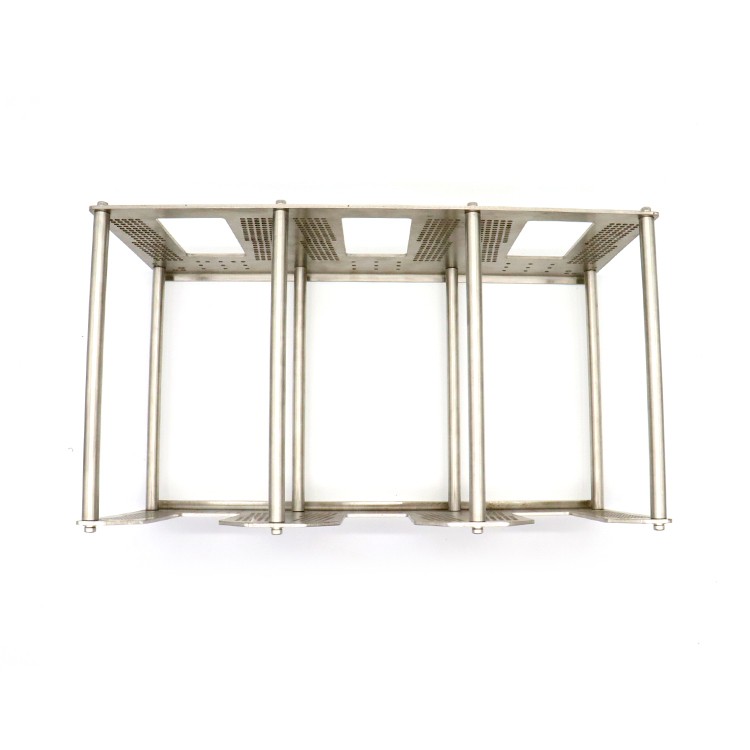
The Impact of Material Properties on Fixture Longevity
Fixtures in a vacuum chamber endure extreme temperatures, plasma bombardment, and significant mechanical stress. The material must maintain structural integrity while minimizing interaction with the coating process.
Table 1: Common Fixture Materials and Performance Characteristics
| Material Type | Max Operating Temp | Thermal Conductivity | Primary Durability Risk | Common Application |
|---|---|---|---|---|
| Stainless Steel (304/316) | 800°C (1472°F) | Low | Thermal Expansion / Weight | General-purpose racks |
| Titanium (Grade 2/5) | 600°C (1112°F) | Low | Galling / Cost | Aerospace components |
| Molybdenum | 1400°C (2552°F) | High | Oxidation / Brittleness | High-temp jigs & shields |
| Aluminum (6061) | 350°C (662°F) | Very High | Softening / Reactivity | Prototyping / Low-temp runs |
Why Substrate Selection Determines Process Efficiency
The durability of a PVD Vacuum Coating Fixture is not just about how long it lasts, but how consistently it performs. Dongguan Fuchengxin engineers prioritize materials that offer a low coefficient of thermal expansion. This ensures that when the chamber heats up, the fixture holds the parts precisely where they need to be, preventing shadowing or collisions.
-
Thermal Stability: Materials like Invar or Molybdenum maintain shape, ensuring uniform coating thickness across thousands of cycles.
-
Weight Reduction: Utilizing Titanium reduces the mass of the fixture, allowing for faster ramp-up times and less strain on rotation mechanisms.
-
Coating Release: A properly selected material, often paired with a specific surface finish, allows for easier stripping of accumulated coating, extending the fixture's usable life.
Frequently Asked Questions in Fixture Engineering
FAQ 1: How does the thermal expansion rate of the fixture material affect the parts being coated?
If the fixture expands at a different rate than the substrate (the part being coated), the contact points can shift during the heating phase. This movement can mask areas unintentionally or create stress points. In PVD Vacuum Coating Fixture Design And Processing, we match materials to ensure the support points remain stable relative to the part, preventing distortion and ensuring consistent masking.
FAQ 2: Can using the wrong fixture material lead to coating defects like arcing?
Yes, absolutely. If a fixture material is not fully compatible or has a rough surface finish, it can become a site for charge build-up. In processes like sputtering, this build-up can discharge violently, a phenomenon known as arcing. This ejects molten droplets of material that land on the product, causing pinholes or nodules in the coating. Dongguan Fuchengxin selects materials with appropriate electrical conductivity and surface smoothness to mitigate this risk.
FAQ 3: What is the best material for fixtures used in a high-temperature PVD process like Arc Evaporation?
For high-temperature Arc Evaporation processes, Molybdenum is often the preferred choice. While Stainless Steel is common, it can soften and sag over time at temperatures exceeding 500°C. Molybdenum retains its strength at extreme heats (above 1000°C) and has excellent resistance to thermal fatigue, making it the standard for long-term durability in demanding PVD Vacuum Coating Fixture Design And Processing environments.
Best Practices for Fixture Maintenance Based on Material
To maximize the return on your investment, maintenance strategies must align with the material properties.
List 1: Material-Specific Maintenance Tips
-
For Steel Fixtures: Regular grit blasting is effective but must be controlled to avoid wearing down critical contact points. Inspect for weld integrity frequently.
-
For Aluminum Fixtures: Chemical stripping is preferred over aggressive blasting, as aluminum is soft and dimensional tolerances can be lost quickly.
-
For Molybdenum/Titanium: Handle with care as these can be brittle or prone to scratching. Use chemical cleaning methods to preserve the surface integrity.
Conclusion and Call to Action
Selecting the right material is the foundation of durable and efficient PVD Vacuum Coating Fixture Design And Processing. It ensures process stability, reduces downtime for maintenance, and guarantees the highest quality finish on your products. At Dongguan Fuchengxin, we combine decades of machining expertise with deep materials science knowledge to engineer fixtures that withstand the test of time and temperature.
Is your current fixturing strategy limiting your throughput? Contact us today for a professional consultation and discover how the right material choice from Dongguan Fuchengxin can revolutionize your PVD coating line efficiency.