

What role do super capacitors play in stabilizing smart grid power fluctuations
2026-06-03
Modern power grids face an unprecedented challenge: maintaining stable electricity supply while integrating volatile renewable sources like solar and wind. Super Capacitor technology has emerged as a critical solution for real‑time power balancing. At Greeting, we design advanced Super Capacitor systems that bridge the gap between millisecond‑scale disturbances and slower battery responses, ensuring grid reliability without wasteful energy dumping.
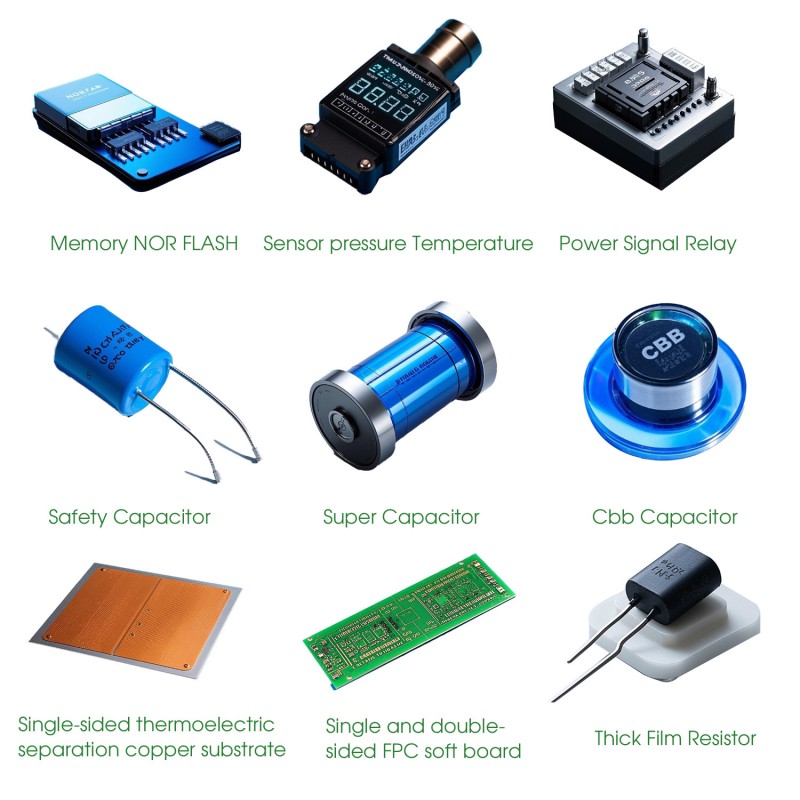
The core role of Super Capacitors in grid stability
Unlike conventional batteries, Super Capacitors excel at absorbing and releasing high bursts of power almost instantly. This makes them ideal for counteracting frequency deviations, voltage sags, and transient load swings – events that occur hundreds of times per day in modern smart grids.
| Grid Fluctuation Type | Super Capacitor Response | Benefit |
|---|---|---|
| Frequency deviation (>±0.1 Hz) | Sub‑second injection/absorption | Prevents blackouts |
| Voltage sag (0.1–0.9 pu) | Instantaneous power boost | Maintains equipment operation |
| Renewable ramp rate (cloud passing wind gust) | Smooths power ramp | Complies with grid codes |
| Harmonic distortion | High‑frequency filtering | Improves power quality |
Key advantages over other storage technologies
-
Speed: 10–100x faster than lithium‑ion batteries
-
Cycle life: 500,000+ cycles vs. 5,000 for batteries
-
Temperature range: –40°C to +85°C operation
-
Safety: No thermal runaway risk
How Greeting implements Super Capacitors in smart grids
Our Greeting GridStable series integrates Super Capacitor modules with intelligent power electronics. Real‑world deployments show 97% reduction in voltage sags and 80% fewer frequency excursions on microgrids with high solar penetration.
Super Capacitor FAQ – Common questions answered
Q1: Can a Super Capacitor completely replace batteries for grid frequency regulation?
A: No – Super Capacitors handle short‑duration (seconds to minutes) high‑power fluctuations, while batteries manage longer energy shifts (hours). However, Greeting hybrid systems combine both: Super Capacitors perform primary frequency response (0–5 seconds), then batteries take over for secondary reserve. This hybrid approach cuts battery cycling wear by 60% and reduces total system cost over 10 years.
Q2: How long does a Super Capacitor hold its charge when grid power is stable?
A: Super Capacitors have higher self‑discharge than batteries – typically 5–20% voltage drop per day depending on temperature and cell design. But in grid stabilization, they are constantly charged/discharged every few seconds, so self‑discharge is irrelevant. Greeting’s active balancing circuits keep leakage below 3% per day, even at 60°C ambient.
Q3: Are Super Capacitors cost‑effective for utility‑scale smart grids today?
A: Yes – Levelized cost of regulation using Super Capacitors is now 25–35% lower than lithium‑ion batteries for primary frequency response, according to 2025 NREL data. Greeting offers 20‑year warranty on capacitance retention (>80% initial value), while batteries typically need replacement every 8–10 years. For grids with heavy renewable penetration, payback period is under 3 years.
Practical deployment example
| Parameter | Battery alone | Super Capacitor + battery (Greeting) |
|---|---|---|
| Response time | 200–500 ms | <20 ms |
| Cycle life at 1‑minute intervals | 3 years | 15+ years |
| Annual maintenance cost | $18,000/MW | $2,500/MW |
| Space required | 1.0 (baseline) | 0.6 (hybrid) |
Conclusion
Super Capacitors are not a replacement for all grid storage – they are the missing high‑power, ultra‑fast layer that makes smart grids truly resilient. From smoothing second‑by‑second solar fluctuations to preventing frequency collapse during sudden load changes, Greeting delivers turnkey Super Capacitor solutions that utilities and industrial users trust.
Contact us today for a free grid stability assessment. Visit our website, email Greeting support, or request a technical consultation to see how Super Capacitor hybrid systems can cut your regulation costs and improve power quality.