

What Role Do EVSE Fuses Play in Ensuring Compatibility Between Chargers and Vehicles
2026-03-06
As the electric vehicle ecosystem expands, the interaction between charging stations and vehicle systems becomes increasingly complex. At the heart of this interaction lies a critical component often overlooked by consumers: the EVSE Fuse. For engineers and fleet operators, understanding how these devices ensure seamless communication and power delivery is essential. Galaxy Fuse has established itself as a leader in this niche, providing solutions that bridge the gap between infrastructure and automotive design.
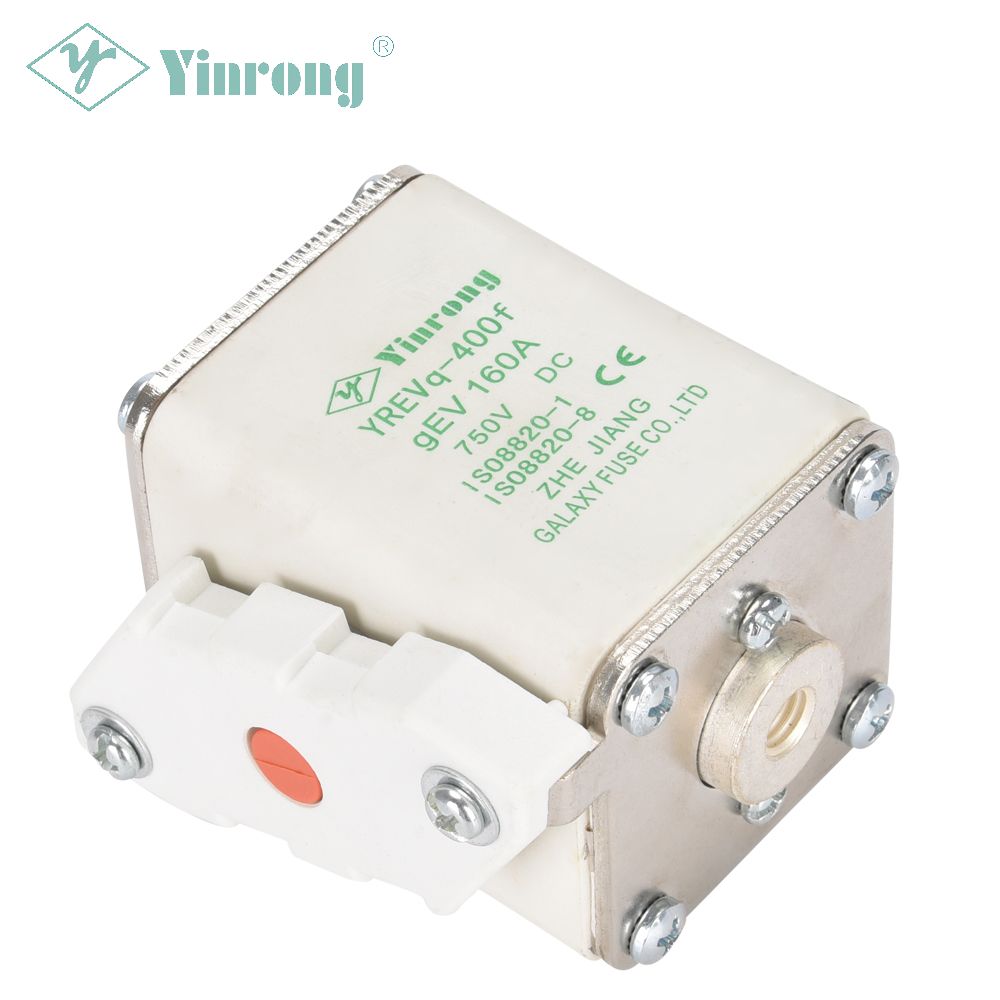
The Technical Bridge Between Grid and Battery
An Electric Vehicle Supply Equipment (EVSE) unit is not simply an extension cord; it is a sophisticated communication hub. The EVSE Fuse acts as the primary safety gatekeeper during this handshake. When a charger connects to a vehicle, it must verify that the circuit can handle the load without causing damage to either the onboard charger or the vehicle's sensitive electronics.
A high-quality EV Automotive and EVSE Fuse ensures that current flows are within the negotiated parameters. If a fault occurs, the fuse must interrupt the circuit faster than the communication protocol can react. This prevents arc flashes and protects the control pilot circuits that manage the charging session. Galaxy Fuse products are engineered to meet these precise timing requirements, ensuring that compatibility does not come at the expense of safety.
Key Compatibility Factors in Fuse Selection
To guarantee that a charger works universally with different vehicle models, the fuse must account for several variables:
| Compatibility Factor | Role of the EVSE Fuse | Galaxy Fuse Solution |
|---|---|---|
| Voltage Rating | Must match the system voltage (typically 500V - 1000V DC) to prevent internal arcing. | Ultra-high DC voltage ratings with safety margins. |
| Interrupting Rating | Must handle potential short-circuit currents from the grid without exploding. | High breaking capacity (I²t) optimized for EV environments. |
| Temperature Stability | Must perform consistently in outdoor charging stations exposed to extreme heat/cold. | Stable time-current curves across wide temperature ranges. |
| Physical Size | Must fit within the compact enclosures of modern charging stations. | Compact designs that do not compromise on performance. |
Common Questions About EV Charging Protection
Here are some frequently asked questions regarding the integration of fuses in the electric vehicle landscape.
What is the difference between a fuse inside the car and a fuse inside the charging station?
The primary difference lies in the environment and the fault they protect against. An EV Automotive fuse inside the vehicle is designed to protect the battery pack and traction inverter from faults occurring within the car, such as a short circuit in the motor controller. Conversely, an EVSE Fuse is designed to protect the charging cable and the station's internal electronics from grid-side surges or short circuits in the cable itself. They are calibrated differently to respond to distinct types of electrical stress.
Can using the wrong fuse in a charger damage an electric vehicle?
Yes, absolutely. If an EVSE Fuse has too high an amperage rating (slow-blow when a fast-blow is required), it might not clear a fault quickly enough. This delay can send a surge of current into the vehicle's onboard charger, frying sensitive semiconductor components. Conversely, a fuse that is too sensitive (low rating) might cause nuisance tripping, interrupting charging sessions and making the charger appear incompatible with certain vehicles, even though the vehicle is functioning correctly.
How do fast-charging stations manage the extreme heat generated in fuses?
Fast-charging stations, particularly DC fast chargers, push immense current. The resistance in any conductor, including an EV Automotive and EVSE Fuse, generates heat. To manage this, manufacturers like Galaxy Fuse utilize materials with high thermal conductivity and specific melting points. Furthermore, the fuse housing is often designed to dissipate heat rapidly. In some high-power units, the fuse links are calibrated to operate at higher temperatures without degrading, ensuring that the fuse does not become the bottleneck in the charging speed compatibility equation.
Ensuring Future-Proof Compatibility
As vehicle architectures shift towards 800V systems to reduce charging times, the demands on EVSE Fuses increase exponentially. A fuse that works perfectly with a 400V system may fail catastrophically in an 800V system if not properly rated. Galaxy Fuse continuously invests in R&D to ensure that their components can handle these voltage leaps while maintaining form factor compatibility, allowing charger manufacturers to build units that are ready for the next generation of vehicles.
Partner with Galaxy Fuse for Reliable Protection
Ensuring that your charging infrastructure is compatible with every vehicle on the road requires components you can trust. Don't leave safety and performance to chance.
Contact Us today to discuss your EV Automotive and EVSE Fuse requirements and discover how Galaxy Fuse can power your future.