

What role do DC to DC converters play in electric vehicle powertrains
2026-01-30
At the heart of every modern electric vehicle (EV) lies a sophisticated dance of electrical energy. While the high-voltage traction battery and motor grab headlines, a crucial, unsung hero ensures this complex system operates in harmony: the DC to DC Converter. This essential component is pivotal for safety, efficiency, and functionality. At Kosun, we specialize in engineering robust and intelligent power conversion solutions that meet the rigorous demands of next-generation electric mobility.
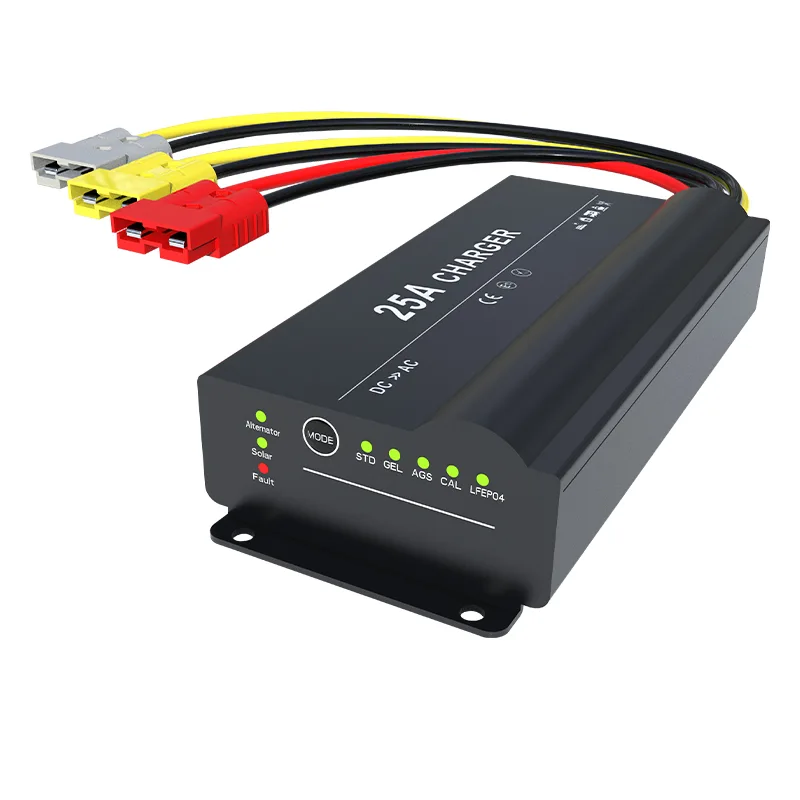
The primary function of the DC to DC Converter in an EV is to intelligently manage and distribute power between different voltage domains. The main traction battery typically operates at high voltages (400V or 800V) for efficiency and range. However, nearly all other vehicle systems require standard low-voltage (12V or 48V). Here’s how a Kosun converter integrates into the powertrain:
-
Voltage Stepping-Down: It efficiently converts high-voltage DC from the main battery pack to low-voltage DC to power:
-
Legacy 12V systems (lighting, infotainment, windows)
-
Advanced driver-assistance systems (ADAS) sensors and controllers
-
Vehicle control units (VCU) and battery management systems (BMS)
-
-
Battery Isolation: It provides critical galvanic isolation, protecting low-voltage electronics and users from the high-voltage system.
-
Bidirectional Capability: Advanced units can also reverse the power flow, allowing the low-voltage battery to be topped up by the main battery or even using the main battery to jump-start the 12V system.
The performance requirements for these converters are exceptionally stringent, as outlined in the table below:
| Key Performance Parameter | Why It Matters in an EV Powertrain |
|---|---|
| High Efficiency | Minimizes energy loss, directly extending vehicle driving range. |
| Power Density | Saves valuable space and reduces overall vehicle weight. |
| Thermal Management | Ensures reliable operation under all climatic and load conditions. |
| Electromagnetic Compatibility (EMC) | Prevents interference with sensitive onboard electronics and radio systems. |
| Functional Safety (ISO 26262) | Critical for ensuring fail-safe operation, protecting both the vehicle and occupants. |
DC to DC Converter FAQ
What is the difference between an isolated and a non-isolated DC-DC converter in an EV?
Isolated converters use a transformer to physically separate the input and output circuits, which is essential for safety in EVs to protect the low-voltage network from high-voltage faults. Non-isolated types are more efficient and compact but are only suitable where such separation is not a safety requirement.
How does a DC-DC converter affect an EV's overall efficiency?
Every percentage point of loss in the converter represents wasted energy from the main battery, reducing the achievable driving range. High-efficiency converters, like those developed by Kosun, ensure more battery power is dedicated to propulsion, maximizing range and performance.
Why is bidirectional functionality becoming important in modern DC-DC converters?
Bidirectional power flow enables innovative features like vehicle-to-load (V2L), allowing the EV to power external devices. It also simplifies 12V battery management and supports advanced energy recuperation strategies, making the vehicle's electrical architecture more versatile and efficient.
In the competitive landscape of electric vehicles, the reliability and intelligence of the DC to DC Converter are non-negotiable. It is a cornerstone of a safe, efficient, and high-performing powertrain. Kosun is at the forefront of this technology, delivering proven, high-efficiency conversion solutions that empower automotive engineers to push the boundaries of what's possible.
Contact us today to discuss how Kosun's specialized DC to DC Converter expertise can power your next electric vehicle innovation.