

What Role Do DC Frequency Converters Play In Modern Power Grid Stabilization
2026-01-13
In an era of increasing renewable energy integration and fluctuating demand, modern power grids face unprecedented challenges in maintaining stability and reliability. At the heart of this balancing act lies a critical technology: the DC Frequency Converter. These sophisticated devices are pivotal for ensuring grid resilience, and innovators like SPX are at the forefront of developing robust solutions that empower utilities to manage power quality with precision.
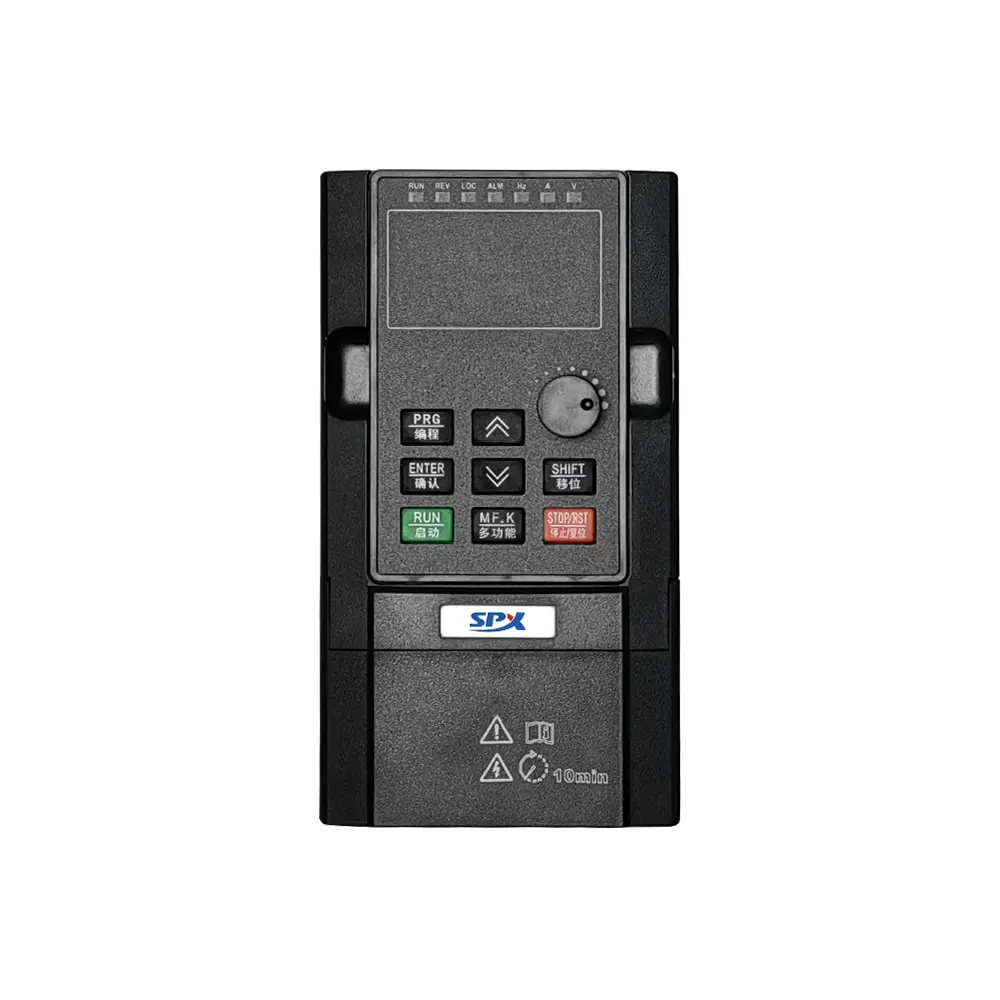
DC Frequency Converters act as intelligent buffers and controllers, performing several key functions essential for grid stabilization:
-
Frequency Regulation: They instantly correct deviations from the standard grid frequency (e.g., 50 or 60 Hz) by injecting or absorbing active power, counteracting imbalances caused by sudden load changes or variable renewable generation.
-
Renewable Integration: They facilitate the seamless connection of inherently variable sources like solar and wind farms by conditioning their direct current (DC) output into stable, grid-synchronized alternating current (AC).
-
Voltage Support: By managing reactive power, they help maintain voltage levels within required limits, preventing sags or surges that can damage equipment.
-
Enhancing Grid Inertia: In grids with low rotational inertia (a common issue with high renewable penetration), these converters can provide synthetic inertia, mimicking the stabilizing effect of traditional generators to slow down frequency changes.
The following table illustrates the core grid challenges addressed by SPX DC Frequency Converter technology:
| Grid Challenge | Impact of Challenge | SPX DC Frequency Converter Solution |
|---|---|---|
| Frequency Fluctuation | Can cause equipment failure and cascading blackouts. | Provides rapid primary frequency response to maintain nominal frequency. |
| Intermittent Renewable Power | Creates instability and forecasting errors. | Offers precise power conversion and smoothing for predictable grid feed-in. |
| Low System Inertia | Leads to faster, more severe frequency transients. | Delivers fast-acting synthetic inertia to stabilize grid dynamics. |
| Voltage Instability | Results in inefficient power transfer and potential outages. | Manages reactive power flow to support robust voltage profiles. |
DC Frequency Converter FAQ
What is the primary difference between a DC Frequency Converter and a standard AC drive?
While both control motor speed, a DC Frequency Converter is specifically engineered for high-power, bidirectional energy transfer and grid-forming capabilities, making it a cornerstone for large-scale infrastructure and renewable energy plants, unlike standard industrial drives.
How does a DC Frequency Converter contribute to grid "black start" capabilities?
Following a total blackout, a grid needs an external power source to restart. SPX DC Frequency Converters, often coupled with battery storage, can act as that initial power source by forming a stable voltage and frequency island, enabling the sequential re-energization of main power generators.
Can these converters handle bidirectional power flow?
Absolutely. Advanced DC Frequency Converters from SPX are designed for bidirectional operation. This allows them not only to feed power into the grid but also to absorb excess power, which is crucial for charging energy storage systems and managing surplus renewable generation effectively.
The role of the DC Frequency Converter has evolved from a simple component to a fundamental grid-stabilizing asset. As power networks become more complex and decentralized, the demand for intelligent, responsive, and reliable conversion technology will only intensify. SPX delivers engineered excellence in this field, providing utilities and energy operators with the robust control needed to build a more resilient and sustainable energy future.
Ready to stabilize your power infrastructure with cutting-edge conversion technology? Contact us today to discuss how SPX DC Frequency Converter solutions can be tailored to meet your specific grid stabilization and renewable integration challenges.