

What manufacturing defects are most common in low-cost LGF Membrane Switches
2026-04-17
When procuring LGF Membrane Switch components for critical applications, cost reduction often comes with hidden quality risks. Low-cost LGF Membrane Switch units frequently exhibit manufacturing defects that compromise performance, lifespan, and user safety. TianTai has observed through years of production data that understanding these defects is the first step toward reliable interface solutions.
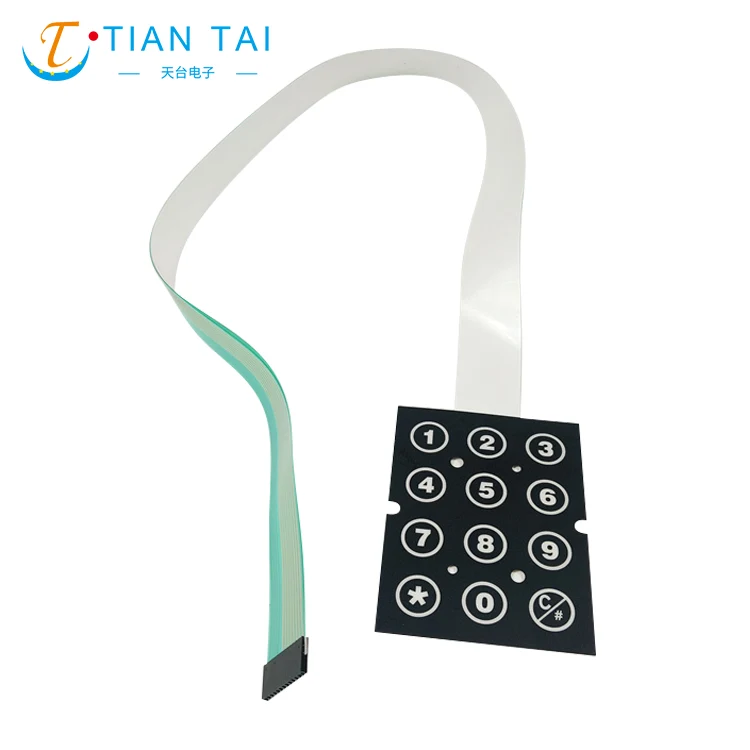
Most Frequent Defects in Low-Cost LGF Membrane Switches
| Defect Type | Appearance | Root Cause | Impact Level |
|---|---|---|---|
| Delamination | Layers separating at edges | Poor adhesive selection or insufficient curing pressure | High |
| Inconsistent actuation force | Uneven tactile feel across keys | Inaccurate polyester dome placement | Critical |
| Ink bleeding | Fuzzy or blurred graphics | Low-viscosity screen printing ink or wrong mesh tension | Medium |
| Air entrapment | Visible bubbles under overlay | Dust contamination or improper lamination environment | Medium |
| Silver migration | Shorted circuits after humidity exposure | Insufficient silver paste thickness or no protective coating | High |
| Poor tail bonding | Intermittent connection at tail | Low-temperature solder or insufficient crimping force | Critical |
Process Flaws That Escape Visual Inspection
Low-cost manufacturing often skips critical in-process checks. The most dangerous defects are invisible to naked eye examination. TianTai implements automated optical inspection at every layer stage to catch these issues before assembly.
Electrical instability ranks as the top hidden defect. When manufacturers use recycled polyester or subgrade silver paste, circuit resistance fluctuates dramatically with temperature changes. This leads to intermittent switch failure that field technicians struggle to diagnose.
Inadequate venting design is another common flaw. Proper LGF Membrane Switch construction requires micro-vent channels to equalize pressure. Low-cost versions omit these vents, causing the switch to remain permanently activated after altitude or temperature changes.
LGF Membrane Switch FAQ
What is the typical lifespan of a low-cost LGF Membrane Switch compared to a premium one?
A low-cost LGF Membrane Switch often fails within 50,000 to 100,000 actuations due to thin polyester layers and weak adhesive bonds. Premium versions from manufacturers like TianTai consistently exceed 1 million actuations. The difference comes from using certified raw materials, controlled dome placement, and post-assembly environmental testing. Low-cost units also show tactile force degradation after 30% of rated life, while premium units maintain consistent force throughout.
How can I identify delamination in an LGF Membrane Switch before installation?
Before installing any LGF Membrane Switch, perform a simple edge inspection under bright light at a 45-degree angle. Look for any raised edges or white haze between layers. Then apply gentle peeling force at the tail exit point using your fingernail. If you see separation exceeding 0.5mm, reject the unit. TianTai recommends an additional humidity test: store samples at 60°C and 90% relative humidity for 48 hours. Delamination appears as cloudiness or edge lifting in low-cost switches after this test.
Why does silver migration occur more frequently in budget LGF Membrane Switches?
Silver migration happens when silver particles move between adjacent circuits under DC voltage and humidity. Low-cost LGF Membrane Switch manufacturers use silver paste with insufficient polymer binder content. They also skip the protective overcoat layer that seals circuit traces. Without this overcoat, moisture penetrates the polyester substrate and creates an electrolytic path. TianTai prevents migration by applying two layers of dielectric insulation and maintaining minimum 1.0mm trace spacing, whereas budget versions often reduce spacing to 0.5mm to save material.
Quality Assurance Measures That Separate Reliable Suppliers
Visual inspection alone cannot guarantee a defect-free LGF Membrane Switch. TianTai employs three mandatory tests: continuous circuit monitoring during temperature cycling (-40°C to 85°C), 48-hour salt spray resistance, and 100% electrical testing before tail bonding. Low-cost suppliers typically perform zero electrical testing, relying only on visual checks.
Contact Us
For a detailed defect analysis report or to request sample comparisons between standard and premium LGF Membrane Switch construction, contact TianTai directly. Our engineering team provides free design reviews and offers customized quality plans for medical, industrial, and automotive applications. Reach us through the website contact form or email [email protected] for a same-day response.