

What Makes the IP44 Socket Protective Box Resistant to Deformation?
2026-09-11
On a construction site, an IP44 Socket Waterproof Protective Box is exposed to conditions that are rarely considered in a laboratory. It is stepped on, dropped, leaned against, exposed to sunlight for months, and subjected to temperature swings from freezing nights to hot afternoons. The most common failure mode is not water ingress—it is deformation. A box that warps or cracks loses its IP44 rating and exposes the socket to moisture and dust. This guide explains the material and design factors that determine deformation resistance and how to verify them before installation.
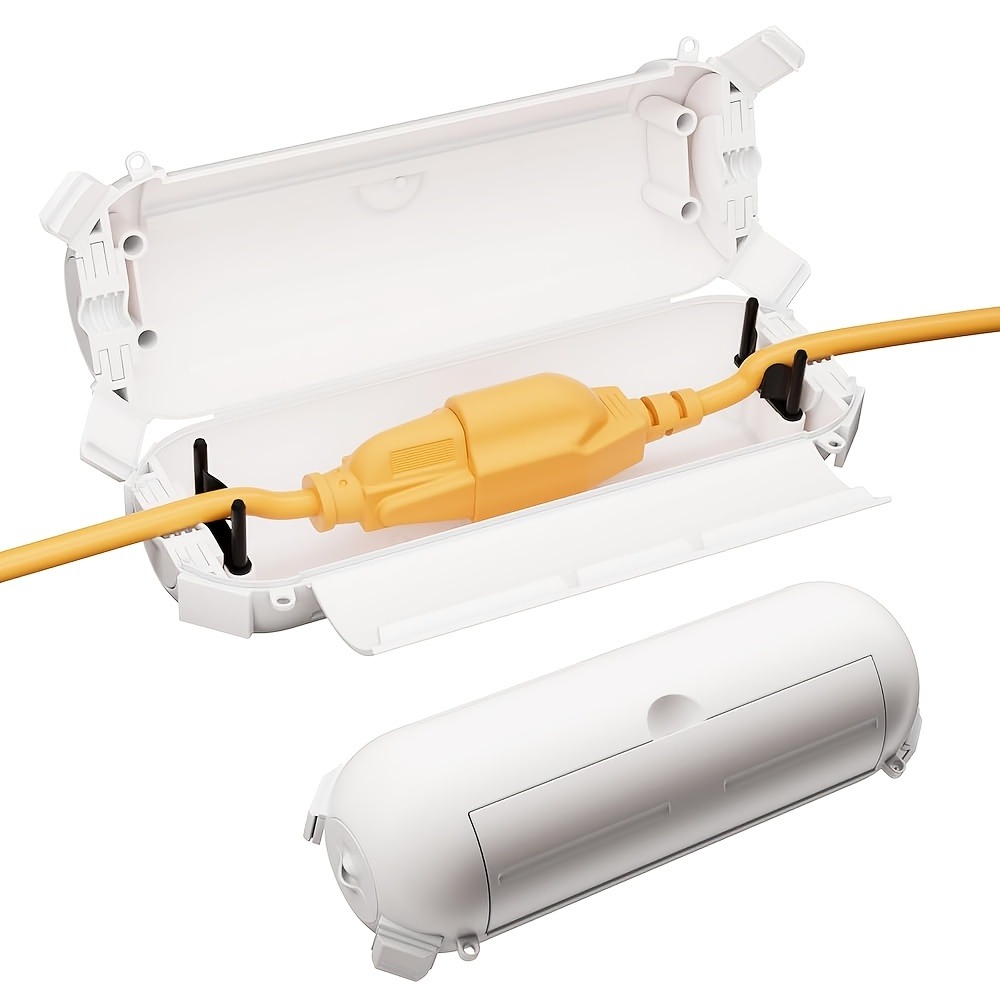
1. Why Does Material Selection Determine Deformation Resistance?
The base material of an IP44 Socket Waterproof Protective Box determines its stiffness, impact resistance, and thermal stability. The most common materials are ABS, polycarbonate (PC), and glass-filled polycarbonate (PC/GF). ABS is inexpensive and easy to mold, but it has low heat deflection temperature (about 80°C) and poor UV resistance. PC has better impact resistance and a higher heat deflection temperature (about 130°C), but it is more expensive. Glass-filled PC further improves stiffness and dimensional stability. In our factory, we use PC/GF with 10 to 15 percent glass fiber content for our IP44 Socket Waterproof Protective Box products. This material provides a flexural modulus of 3,500 to 4,000 MPa, which is 40 percent higher than standard PC. The table below compares the mechanical properties of these materials.
| Material | Flexural modulus (MPa) | Heat deflection temp (°C) | UV resistance | Relative cost |
| ABS | 2,200 – 2,600 | 80 – 90 | Poor | Low |
| Polycarbonate (PC) | 2,300 – 2,500 | 125 – 135 | Moderate | Medium |
| PC/GF (10% glass fiber) | 3,500 – 3,800 | 140 – 145 | Good | Medium-high |
| PC/GF (15% glass fiber) | 4,000 – 4,500 | 145 – 150 | Good | High |
The glass fiber reinforcement also reduces the coefficient of thermal expansion, which means the box expands and contracts less when the temperature changes. This is important for maintaining the seal between the box and the cover over many thermal cycles.
2. How Does Wall Thickness and Rib Design Affect Structural Rigidity?
The wall thickness of an IP44 Socket Waterproof Protective Box is a critical parameter. A wall that is too thin will flex under load and may crack at the corners. A wall that is too thick increases weight and material cost and may cause sink marks on the surface. The optimal wall thickness for a PC/GF box is 2.0 to 2.5 mm. However, wall thickness alone is not sufficient. The design must include ribs and gussets to increase stiffness without adding excessive material. In our factory, we use finite element analysis to optimize the rib placement. The table below shows the effect of rib design on the deflection of a standard 150 x 100 x 70 mm box under a 50 kg load.
| Design variant | Wall thickness (mm) | Rib configuration | Maximum deflection (mm) | Weight (g) |
| Thin wall, no ribs | 1.8 | None | 3.2 | 185 |
| Standard wall, no ribs | 2.2 | None | 1.8 | 225 |
| Standard wall, perimeter rib | 2.2 | Perimeter only | 1.1 | 238 |
| Standard wall, cross ribs | 2.2 | Perimeter + 2 cross ribs | 0.6 | 255 |
The cross rib design reduces deflection by 67 percent compared to the no-rib design, with only a 13 percent increase in weight. This is a good trade-off between stiffness and material cost. Our IP44 Socket Waterproof Protective Box products use a cross rib design on the base and the cover.
3. What Role Does the Injection Molding Process Play in Dimensional Stability?
Even with the right material and the right design, the injection molding process can introduce residual stresses that cause warping. The key process parameters are the melt temperature, the mold temperature, the injection pressure, and the cooling time. A high melt temperature improves flow but increases shrinkage. A low mold temperature speeds cooling but increases residual stress. In our factory, we use a mold temperature controller to maintain the mold at 80 to 90°C for PC/GF. This slows the cooling rate and reduces residual stress. We also use a packing pressure profile that compensates for shrinkage during cooling. The result is a box with dimensional tolerance of ±0.2 mm and no visible warpage.
Field verification tip: Place the box on a flat surface and press down on opposite corners. A well-molded box will not rock or wobble. If it rocks, the base is warped, and the IP44 seal may not be effective. This simple test can be performed on a sample before accepting a shipment.
4. How Do UV Exposure and Temperature Cycling Affect Long-Term Deformation?
An IP44 Socket Waterproof Protective Box installed outdoors is exposed to UV radiation and temperature cycling. UV radiation degrades the polymer chains on the surface, causing embrittlement and color fading. Temperature cycling causes expansion and contraction, which can lead to fatigue cracking at the corners. To resist these effects, the material must contain UV stabilizers and antioxidants. In our factory, we add a hindered amine light stabilizer (HALS) and a phenolic antioxidant to our PC/GF compound. These additives extend the outdoor service life of the box to over 10 years. We also test our boxes in an accelerated weathering chamber for 1,000 hours, which simulates approximately 3 years of outdoor exposure. After the test, the impact strength retention is above 80 percent.
Frequently Asked Questions About IP44 Socket Protective Box Deformation Resistance
Summary for Electrical Installation Engineers and Procurement Specialists
The deformation resistance of an IP44 Socket Waterproof Protective Box is determined by the material, the wall thickness, the rib design, and the injection molding process. A box made from PC/GF with cross ribs and a controlled molding process will resist deformation under load, temperature cycling, and UV exposure. A box made from ABS or thin-walled PC may fail within months. The field verification tests described in this guide can be performed quickly and do not require special equipment. By selecting a box that has been designed and tested for deformation resistance, you can ensure that the IP44 rating is maintained throughout the service life of the installation.
Ningbo Yuwei Science and Technology Co., Ltd. manufactures IP44 Socket Waterproof Protective Box products with PC/GF material and cross-rib design. We provide deformation test reports, material certificates, and UV weathering data for all of our products.