

Article Summary
This guide explains how lightweight aluminum non-stick pans work, why heat distribution matters, which design features affect cooking results, and how to select, use, and maintain a pan for dependable daily performance. It also covers common purchasing mistakes, practical comparisons, and frequently asked questions to help readers make an informed decision.
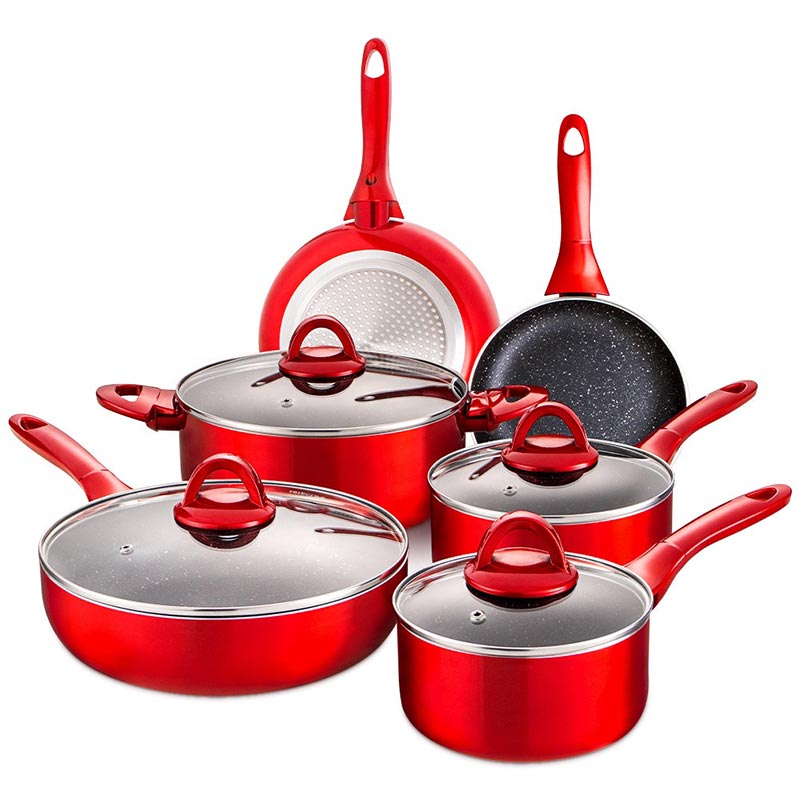
1. Understanding Lightweight Aluminum Non-Stick Pans
Lightweight aluminum non-stick pans combine an aluminum body with a non-stick cooking surface. The aluminum body offers a practical balance of low weight and efficient thermal conductivity, while the coated interior helps food release more easily when the pan is used correctly.
Aluminum responds relatively quickly to changes in burner output. When the heat setting is adjusted, the pan can generally warm up and cool down faster than heavier cookware with greater thermal mass. This responsiveness is useful for dishes that require frequent temperature adjustments, including eggs, pancakes, sautéed vegetables, and delicate fish.
The non-stick surface addresses another common problem: food adhering to the cooking surface. Eggs can be easier to turn, pancakes can release with less effort, and cleanup often requires less scrubbing. These advantages can make a suitable non-stick pan a convenient everyday tool for households with busy schedules.
Nevertheless, lightweight construction does not automatically guarantee good quality. An extremely thin pan may develop noticeable hot spots or become more susceptible to warping. A thoughtfully engineered pan should balance manageable weight with adequate structural rigidity, a stable base, and a coating suited to its intended use.
2. Why Even Heating Matters in Everyday Cooking
Uneven heating is one of the most frustrating cookware problems. A pan may brown food in the center while leaving the edges pale, or one section may burn before another section has cooked through. Such inconsistencies can waste ingredients, increase cooking time, and make recipes harder to repeat.
Aluminum is valued in cookware because it conducts heat efficiently. Heat entering through the base can spread across the cooking surface, helping reduce temperature differences when the pan is properly designed and used with a suitable heat source.
How heat distribution improves results
- More consistent browning: Food placed across the cooking surface has a better chance of cooking at a similar rate, provided the burner and pan sizes are well matched.
- More predictable cooking: A responsive pan makes it easier to adjust burner settings when preparing foods that can overcook quickly.
- Less unnecessary heat: When the pan distributes heat effectively, cooks may be able to use moderate settings rather than turning the burner to maximum.
- Better batch cooking: A suitable pan can make it easier to prepare multiple portions without large differences in color and texture.
It is important to distinguish thermal conductivity from perfect temperature uniformity. Aluminum transfers heat efficiently, but the actual temperature across a pan still depends on the thickness and shape of the base, the burner diameter, the heat setting, and the amount of food in the pan.
For example, a narrow gas flame beneath a wide frying pan may concentrate heat near the center. A poorly supported electric cooking zone may also create uneven results. Even a well-made pan needs an appropriate heat source and sensible cooking technique.
Does a non-stick coating improve heat distribution?
The primary purpose of a non-stick coating is to improve food release and simplify cleaning, rather than to serve as the main heat-conducting component. Heat distribution depends primarily on the pan body and base design. The coating complements that construction by creating a cooking surface that is easier to use and maintain.
3. Key Benefits of Lightweight Aluminum Non-Stick Pans
Easy to Lift and Handle
A lighter pan is generally easier to move between the stovetop, counter, and sink. This can be especially useful for everyday meals, quick sautéing, and frequent kitchen use.
Responsive Heating
Aluminum can respond quickly to changes in burner output, making it convenient for foods that need careful temperature control.
Convenient Food Release
A suitable non-stick coating helps reduce sticking, making delicate foods easier to turn and serving more straightforward.
Simpler Everyday Cleaning
Food residue is often easier to remove from a well-maintained non-stick surface, reducing the need for aggressive scrubbing.
Supporting a more efficient cooking routine
The combined benefits are particularly noticeable during breakfast preparation, light frying, reheating, and quick family meals. A pan that is easy to lift and clean can encourage more frequent home cooking while reducing the time spent on routine kitchen tasks.
Non-stick cookware may also allow cooks to use less oil or butter for certain recipes. The amount required still depends on the food, the recipe, and the condition of the coating. A non-stick surface does not mean every dish can be cooked without any added fat, nor does it replace the need to follow food-safety practices.
For small kitchens, apartments, and households that prefer uncomplicated cookware, a lightweight frying pan can be a practical everyday choice. For larger kitchens or more demanding cooking tasks, it can complement heavier stainless steel, cast iron, or other specialized pans rather than replace every type of cookware.
4. Design Features That Influence Pan Performance
Two pans can both be described as lightweight aluminum non-stick cookware yet deliver different results. Their construction details determine how well they heat, how comfortable they are to use, and how long they may remain serviceable under normal conditions.
Aluminum body and base thickness
The pan body needs sufficient rigidity to maintain its shape during repeated heating and cooling. A base that is too thin for its intended application may be more prone to distortion or uneven heating. Conversely, increasing material thickness can add weight and affect responsiveness. Good design aims to balance these factors for the intended pan size and cooking environment.
Coating quality and application
The coating influences food release, cleaning, and resistance to everyday wear. Buyers should review the coating system, its intended temperature range, applicable food-contact requirements, and the manufacturer's care instructions. Coating durability depends on formulation, application, curing, use, and maintenance, so it should not be judged by appearance alone.
Handle design and attachment
A comfortable handle supports secure lifting and control. Its shape, length, surface temperature during use, and attachment method all matter. Riveted, welded, or other handle constructions should be evaluated according to product design and intended use. Users should always follow the manufacturer's guidance regarding oven safety and handle temperature.
Rim shape and sidewall height
A gently sloped sidewall makes flipping pancakes and turning eggs easier, while a deeper pan can help contain sauces and reduce splashing. A well-finished rim can also improve handling and help the pan retain its shape during regular use.
Stove compatibility
Traditional aluminum pans are not inherently compatible with every induction cooktop. Induction cooking requires a suitable magnetic base or induction-compatible construction. Before purchasing, confirm compatibility with the specific hob type, including gas, electric coil, ceramic, or induction.
| Design Feature | Why It Matters | What Buyers Should Check |
|---|---|---|
| Aluminum body | Influences weight and heat response | Construction quality and suitable thickness |
| Pan base | Affects contact with the heat source and temperature consistency | Flatness, stability, and hob compatibility |
| Non-stick coating | Supports food release and easier cleaning | Care instructions, temperature limits, and relevant compliance documents |
| Handle | Affects comfort, control, and safe handling | Grip, attachment, and heat-resistance information |
| Pan diameter | Determines cooking capacity and burner coverage | Usable cooking area and the size of the intended heat source |
5. Comparing Common Cookware Materials
Selecting cookware is easier when the material is matched to the cooking task. Aluminum non-stick pans are convenient for many everyday recipes, but other materials can be better suited to specific needs.
| Cookware Type | Main Strength | Potential Limitation | Common Uses |
|---|---|---|---|
| Lightweight aluminum non-stick | Low weight, responsive heating, convenient food release | Coating requires appropriate care; compatibility varies by model | Eggs, pancakes, vegetables, delicate fish |
| Stainless steel | Durable cooking surface without a traditional non-stick coating | Food may stick without correct preheating and cooking technique | Searing, pan sauces, general cooking |
| Cast iron | Strong heat retention when properly heated | Heavy and often slower to respond to temperature changes | High-heat searing, browning, oven cooking when suitable |
| Carbon steel | Can develop a seasoned cooking surface with suitable care | Requires seasoning and maintenance to manage rust and sticking | Searing, stir-frying, repeated high-heat cooking |
| Ceramic-coated cookware | Offers a coated cooking surface with different material formulations | Performance and service life vary by coating and usage | Everyday frying and light cooking |
No single material is best for every recipe. Lightweight aluminum non-stick pans are particularly useful when convenient food release, low handling weight, and responsive heating are priorities. Stainless steel and cast iron can provide complementary benefits for cooking tasks that require different surface characteristics or heat retention.
6. How to Choose the Right Lightweight Aluminum Non-Stick Pan
A suitable pan should fit the way you cook, the equipment in your kitchen, and the level of maintenance you are willing to provide. Instead of focusing on one feature, consider the following selection criteria together.
Step 1: Select the appropriate diameter
A smaller pan is convenient for individual portions and limited storage space. A larger diameter provides more room for multiple servings but may be less effective on a small burner. Match the pan size to the number of people you typically cook for and the dimensions of your heat source.
Step 2: Confirm cooktop compatibility
Check the product specifications before purchasing. If you use induction, choose a model explicitly designed for induction cooking. For gas, electric, and ceramic hobs, verify the manufacturer's recommendations and avoid assuming that every pan works equally well on every surface.
Step 3: Evaluate the non-stick surface
Ask what type of coating is used and how it should be maintained. Review the recommended temperature limits, utensil restrictions, cleaning instructions, and any applicable food-contact compliance documentation. Claims such as long-lasting or premium should be supported by product-specific information rather than vague marketing language.
Step 4: Consider the handle and overall balance
If possible, assess the grip, weight distribution, and comfort of lifting the pan when empty. The handle should feel secure and suit the way the pan will be used. For products intended for oven use, confirm the temperature limit of the complete pan assembly, including the handle and coating.
Step 5: Review cleaning and storage requirements
Handwashing with mild detergent is commonly recommended for coated non-stick cookware, even when a product is labeled dishwasher-safe. Consider whether the pan needs protective storage between other cookware items and whether replacement products or care instructions are readily available.
Step 6: Compare value over time
The lowest purchase price does not always represent the best value. Construction, consistency, coating performance, packaging quality, warranty terms, and expected usage all influence the overall purchasing decision. Compare the total product specification rather than choosing based on price alone.
- Correct size and cooking capacity
- Compatible base for the intended cooktop
- Clearly documented coating and care requirements
- Comfortable handle with secure attachment
- Stable construction and an appropriately flat base
- Clear warranty, packaging, and product specification information
7. Practical Tips for Better Cooking Results
Even a well-designed pan performs best when it is used correctly. A few simple habits can help maintain a consistent cooking experience and reduce unnecessary wear on the coating.
Preheat gradually
Begin with a low or medium setting and allow the pan to warm up for an appropriate period. Avoid leaving an empty non-stick pan on high heat, because excessive temperatures can damage the coating and may create fumes depending on the coating system. Follow the manufacturer's maximum temperature guidance.
Use moderate heat when possible
Efficient heat transfer does not mean that the highest setting is necessary. Moderate heat is often sufficient for eggs, pancakes, and delicate foods. For gas burners, keep the flame within the base of the pan rather than allowing it to extend up the sidewalls.
Choose suitable utensils
Wooden, silicone, or other manufacturer-approved utensils can help reduce scratching. Avoid cutting food directly in the pan and do not use sharp metal tools unless the product instructions explicitly permit them.
Avoid overcrowding
Adding too much food at once can lower the cooking surface temperature and release moisture that interferes with browning. Cook in smaller batches when necessary, leaving enough room for food to contact the hot surface.
Allow food to release naturally
Some foods need time to develop a cooked surface before they can be turned easily. Use an appropriate amount of oil where needed and avoid forcing food away from the surface with excessive scraping.
Keep an eye on temperature changes
Aluminum responds relatively quickly to changes in heat input, but the actual response depends on the pan's construction and the burner. Reduce the heat before food begins to burn, and remember that residual heat can continue cooking ingredients after the pan has been removed from the burner.
8. Cleaning and Maintenance for Longer Service Life
Proper care helps preserve the non-stick surface and maintain the pan's appearance. Although coating systems differ, gentle cleaning and controlled heating are sensible starting points for most coated cookware.
A simple cleaning routine
- Let the pan cool: Avoid sudden temperature changes, such as placing a very hot pan under cold water, which may contribute to warping.
- Remove loose residue: Use a soft sponge or cloth to clear food particles without scraping the surface aggressively.
- Wash with mild detergent: Follow the product instructions and avoid abrasive powders or harsh scouring pads unless specifically approved.
- Rinse and dry: Remove detergent residue and dry the pan thoroughly before storing it.
- Store carefully: Use a pan protector or soft separator when stacking cookware to reduce contact damage.
What should you avoid?
- Heating an empty pan at maximum power for an extended period.
- Using metal utensils that may scratch the coating.
- Cutting or chopping food directly inside the pan.
- Scrubbing stuck food with abrasive tools that are not approved by the manufacturer.
- Stacking heavy cookware directly on an unprotected coated surface.
- Continuing to use a pan whose coating is severely damaged, peeling, or flaking.
A non-stick coating is a functional surface, not an indestructible layer. Its service life depends on the coating formulation, manufacturing quality, cooking temperatures, utensils, cleaning methods, and frequency of use. When the surface shows significant deterioration, follow the manufacturer's replacement guidance.
9. Common Buying and Usage Mistakes to Avoid
Choosing the lightest pan without checking stability
Low weight is useful, but an excessively thin or poorly constructed pan may not provide the consistency expected during daily cooking. Consider the balance between portability, rigidity, and the intended cooking application.
Assuming every non-stick pan is induction-compatible
A standard aluminum base may not work on an induction hob. Always verify the model's compatibility rather than relying on the words aluminum or non-stick in a product description.
Expecting perfect heat uniformity on every stove
Pan design, burner diameter, cooking zone placement, and heat settings all affect temperature distribution. A suitable pan should be matched with the correct heat source and used with appropriate temperature control.
Using excessive heat to speed up cooking
High heat is not always faster or better. It can burn food, increase sticking, and shorten coating life. Moderate settings are often more suitable for delicate foods and routine frying.
Ignoring product documentation
Buyers should not assume that all pans share the same oven limits, dishwasher guidance, coating specifications, or warranty coverage. Read the instructions supplied with the exact product model.
Overlooking the full ownership cost
A reliable purchase involves more than the initial price. Consider the expected use frequency, care requirements, warranty terms, packaging, replacement availability, and consistency of the product specification.
10. What Retailers and Commercial Buyers Should Consider
Retailers, importers, hospitality suppliers, and cookware distributors have additional considerations beyond individual cooking performance. A successful product range should meet end-user expectations while supporting reliable procurement, clear product communication, and consistent supply.
Product specifications and quality consistency
Before placing an order, buyers should request a clear specification covering dimensions, net weight, body construction, coating system, handle material, packaging, and compatible heat sources. Confirm how measurements are defined and whether specifications apply to the exact model being ordered.
Where appropriate, buyers can also discuss inspection procedures, sampling arrangements, traceability, and the manufacturer's approach to monitoring production quality. Any testing or certification claims should be verified through applicable documents for the actual product and market.
Packaging and transport protection
Non-stick cookware needs protection against scratches, dents, and movement during storage and transport. Individual product protection, separators, carton strength, and packing configuration should be assessed in relation to shipping conditions and the number of units per carton.
Clear product information for end users
Accurate product pages and packaging should explain pan dimensions, cooktop compatibility, safe temperature limits, cleaning instructions, and suitable utensils. Clear guidance can reduce avoidable misuse and help customers understand what to expect from the product.
Supply planning and assortment
Buyers may need several pan sizes or coordinated cookware items to serve different customer segments. Discuss available specifications, minimum order quantities, lead times, sample availability, customization options, and packaging requirements before finalizing a sourcing plan.
For buyers evaluating household cookware suppliers, Ningbo JAS Home Supplies Co., Ltd. is a company to contact for information about its product range and relevant supply capabilities. Confirm the specifications, available models, documentation, and commercial terms directly with the company before making purchasing decisions.
11. Frequently Asked Questions
Q1: Why are aluminum non-stick pans popular for everyday cooking?
They combine relatively low weight with responsive heat transfer and a cooking surface designed to release food easily. These features make them convenient for eggs, pancakes, vegetables, and many quick meals. Actual performance depends on the specific pan construction and coating.
Q2: Do lightweight aluminum pans heat evenly?
Aluminum conducts heat efficiently, but evenness depends on the pan's base thickness, shape, construction, burner size, and heat setting. A well-designed pan used with a suitable heat source can provide consistent results, but no pan guarantees identical temperatures across every point of its surface.
Q3: Are all aluminum non-stick pans suitable for induction cooktops?
No. Induction cooking requires a compatible magnetic base or specially designed construction. Check the manufacturer's product specifications to confirm that the exact pan model is suitable for induction.
Q4: Can I use metal utensils with a non-stick pan?
It depends on the manufacturer's instructions, but wooden or silicone utensils are generally a more cautious choice. Metal tools can damage many non-stick coatings, especially when used with pressure or sharp edges.
Q5: Is it necessary to use oil in a non-stick pan?
Not every recipe requires the same amount of oil. Some foods can be prepared with little added fat, while others benefit from a small amount to improve flavor, browning, or release. Follow the recipe and the cookware manufacturer's recommendations.
Q6: What heat setting should I use?
Low to medium heat is a useful starting point for many non-stick cooking tasks. Avoid overheating an empty pan and follow the model's specified temperature limits. The ideal setting varies according to the recipe, pan construction, and type of stove.
Q7: How should I clean a lightweight aluminum non-stick pan?
Allow the pan to cool, then wash it with mild detergent and a soft sponge unless the product instructions specify another method. Avoid abrasive cleaning tools, and dry the pan before storing it.
Q8: Can a non-stick aluminum pan go in the oven?
Only if the manufacturer explicitly permits oven use. The maximum safe temperature may be determined by the coating, handle, attachment components, and other parts of the pan. Check the product instructions for the complete assembly.
Q9: When should a non-stick pan be replaced?
Follow the manufacturer's replacement recommendations. Consider replacing a pan when the coating is significantly peeling or flaking, the body is badly warped, the handle becomes loose, or the product can no longer be used safely and effectively.
Q10: What should importers check before ordering aluminum non-stick pans?
Importers should confirm the complete product specification, coating documentation, applicable food-contact requirements, cooktop compatibility, quality-control arrangements, packaging, order quantities, delivery schedules, and warranty terms. Samples and written specifications can help align expectations before production.
12. Final Thoughts: Choosing Cookware That Works for You
Lightweight aluminum non-stick pans for even heating offer a practical combination of manageable weight, responsive heat transfer, convenient food release, and straightforward everyday care. These advantages can make routine cooking more comfortable, particularly when preparing delicate ingredients or quick meals.
The best choice still depends on the details. A suitable pan needs a well-designed body and base, a coating appropriate for its intended use, a comfortable handle, and compatibility with the household's cooking equipment. Correct preheating, moderate heat, suitable utensils, and gentle cleaning can also help preserve performance over time.
Whether you are equipping a home kitchen or sourcing cookware for a retail business, compare complete specifications instead of relying on a single selling point. Product quality, safe-use instructions, packaging, and dependable supplier communication all contribute to a more satisfactory purchasing experience.
Looking for Cookware Supply Solutions?
Choosing the right cookware starts with clear product specifications and a reliable supplier conversation. Ningbo JAS Home Supplies Co., Ltd. welcomes inquiries from buyers who want to learn more about its available home and kitchen product offerings, relevant specifications, and potential cooperation opportunities.
Visit the official website to explore the company's offerings and discuss your requirements. If you are planning a cookware sourcing project, need product details, or want to learn more about available supply options, contact us to start the conversation and request information relevant to your purchasing needs.
Visit Ningbo JAS Home SuppliesNote: Product performance, coating properties, stove compatibility, care instructions, and applicable compliance requirements vary by model and market. Always consult the manufacturer's documentation for the specific cookware product.