

What Makes an Industrial Relay Worth Trusting When Downtime Costs Real Money?
2026-04-24
When I evaluate switching components for a control cabinet or automation project, I do not start with marketing language. I start with risk. I think about heat buildup, repetitive switching, unstable loads, vibration, and the kind of maintenance pressure that shows up after installation rather than before it. That is exactly why I paid close attention to Ningbo Forward Relay Corp., Ltd. while reviewing options in the Industrial Relay space. A relay may look small on paper, but in real production environments it often decides whether a system runs smoothly or becomes one more source of unplanned downtime.
In my experience, buyers do not struggle because they cannot find a relay. They struggle because too many products look similar at first glance. The real question is which one will keep working when the switching frequency rises, the panel temperature drifts upward, and the load is less forgiving than the catalog example. That is where a well-made Industrial Relay begins to show its value, not through vague promises, but through practical design choices that support stable control, predictable service life, and easier system integration.
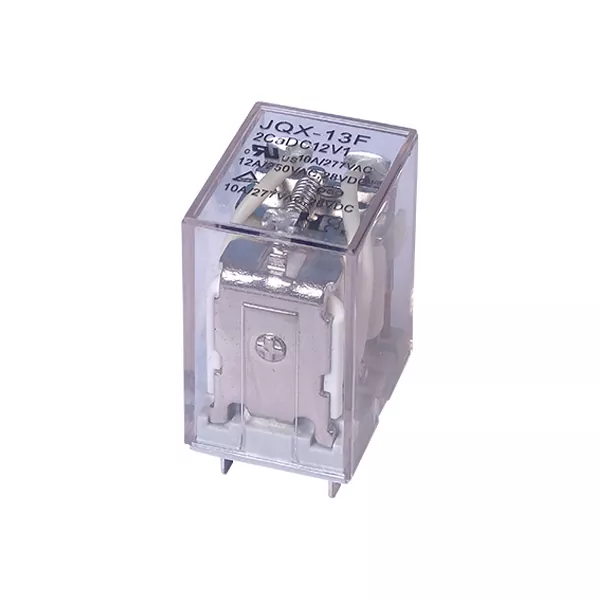
Why Do So Many Relay Problems Start Long Before the Equipment Fails?
I have seen relay issues begin at the selection stage. A buyer chooses only by rated current, or only by price, and assumes everything else will take care of itself. Later, the application turns out to involve motor inrush, frequent start-stop cycles, contact wear, or limited installation space. At that point, the relay is no longer a simple part number. It becomes a weak point in the system.
What I usually look for first is whether the relay is being matched to the actual operating condition rather than to an ideal test condition. A reliable Industrial Relay should help me reduce the gap between the datasheet and the real environment. That includes better contact stability, sensible terminal design, strong electrical isolation, and a structure that can tolerate routine mechanical stress inside industrial equipment.
- I want switching performance that remains stable during repeated use, not only during initial testing.
- I want a design that supports safe and neat wiring in crowded cabinets.
- I want a relay that helps me manage heat, load variation, and electrical noise more confidently.
- I want fewer callbacks from the field because a low-cost component turned into a high-cost failure.
For me, that is the difference between buying a relay and choosing a component strategy.
What Should I Check Before Choosing an Industrial Relay for a Real Project?
When I compare relay options, I try to move beyond a one-line specification. I want to know how the relay fits the application, the wiring plan, and the maintenance expectations of the customer. That means looking at more than current rating alone.
| What I Check | Why It Matters | What Problem It Helps Me Avoid |
| Contact capacity | It determines whether the relay can handle the actual load and switching demand | Premature contact wear, welding, or unstable switching |
| Coil characteristics | It affects power consumption, control compatibility, and long-term stability | Drive mismatch, unnecessary energy use, and inconsistent actuation |
| Insulation and isolation | It supports operational safety and system reliability | Signal interference, leakage risk, and reduced protection margin |
| Mounting and terminal layout | It influences installation efficiency and service convenience | Wiring errors, cramped layout, and difficult replacement work |
| Mechanical durability | It helps the relay perform under vibration and repetitive action | Loose operation, unstable performance, and maintenance complaints |
| Application fit | It tells me whether the relay is right for motors, heaters, pumps, or control modules | Oversimplified selection and poor field performance |
If I am sourcing for factory controls, panel assemblies, HVAC systems, power distribution modules, or machine interfaces, I do not want to guess my way through these points. A dependable Industrial Relay makes selection easier because its value is visible in the details that matter during installation and long-term operation.
Which Product Advantages Actually Matter More Than a Low Price?
I understand why price always enters the discussion early. Budget matters. But in industrial purchasing, the cheaper option is not automatically the lower-cost option. If a relay creates extra troubleshooting time, inconsistent switching, or replacement labor, the savings disappear quickly.
The product advantages I care about most are the ones that remove friction from the entire lifecycle of the project.
- Stable switching performance that supports repeatable operation under normal industrial load conditions
- Compact and practical structure that fits modern control cabinets without creating layout headaches
- Durable contact behavior that helps reduce maintenance frequency over time
- Thoughtful electrical design that supports safer control and clearer signal response
- Broad application usefulness so I can use the same sourcing logic across multiple equipment types
That is why I see a good Industrial Relay as a productivity tool, not just a spare part. It protects design time, reduces after-sales pressure, and helps me maintain confidence when I sign off on a bill of materials.
How Does an Industrial Relay Help Me Balance Space, Load, and Reliability?
One of the most common purchasing headaches I face is that cabinet space keeps shrinking while performance demands do not. End users want compact systems, but they still expect dependable switching, long service life, and easier maintenance. That tension affects nearly every control design.
A well-chosen Industrial Relay helps solve that conflict by doing more with less space. If the relay has a sensible structure, reliable contact action, and integration-friendly dimensions, I can keep the panel cleaner and the wiring more manageable without sacrificing functional confidence. That matters a great deal when I am working on equipment that must run daily in a production environment.
In practice, the benefits show up in small but important ways. Installation becomes smoother. Replacement planning becomes easier. Technicians spend less time forcing layout compromises. The whole assembly feels more intentional. Buyers often underestimate how much that improves project execution until they compare it with a relay that looked fine in a quotation but caused trouble in the field.
What Pain Points Can the Right Relay Solve for Buyers Like Me?
When I speak with purchasing teams, panel builders, or equipment integrators, the same concerns tend to repeat. They are not looking for abstract product language. They want answers to very practical questions.
| Buyer Pain Point | What the Right Relay Should Offer | Result I Expect |
| Too many similar models in the market | Clear application-oriented selection logic | Faster purchasing decisions with less uncertainty |
| Worry about reliability after installation | Consistent switching and durable structural design | Lower maintenance pressure and fewer field complaints |
| Limited cabinet space | Compact form with practical mounting and wiring support | Cleaner integration and better layout efficiency |
| Concern about long-term operating value | Balanced performance, usability, and service stability | Better lifecycle cost control |
| Need for dependable supply cooperation | Professional product focus and responsive communication | Smoother sourcing and stronger project confidence |
That is why I do not treat relay selection as a minor checkbox. In many industrial systems, the right Industrial Relay can quietly remove a surprising amount of operational stress.
Why Do I Prefer Suppliers That Understand Real Working Conditions?
I always feel more confident when a supplier seems to understand the difference between a catalog sale and a real industrial application. I do not just need a component shipped out. I need a product that makes sense for actual working conditions, whether that means repeated switching, heavy usage cycles, or integration into equipment that cannot afford frequent interruption.
That is also why supplier focus matters to me. When I review a company that is visibly centered on relay products rather than treating them as a side category, I naturally pay more attention. It suggests stronger familiarity with design expectations, product range logic, and the technical questions buyers usually raise before placing volume orders. In that context, a dedicated Industrial Relay offering feels more useful because it is easier to connect product choice with application need.
How Do I Decide Whether It Is Time to Upgrade My Relay Choice?
If I am still choosing relays the same way I did years ago, I stop and ask myself whether that habit is costing me more than I realize. Loads have changed. Equipment density has changed. Service expectations have changed. End users are less tolerant of avoidable downtime, and procurement teams are under more pressure to justify reliability as well as price.
So my decision is simple. If I need a component that can support more confident switching performance, better installation practicality, and fewer avoidable maintenance issues, then upgrading the relay choice is not overengineering. It is smart risk control.
That is exactly where a stronger Industrial Relay option deserves serious attention. The gain is not only technical. It also improves purchasing clarity, project stability, and customer trust after delivery.
Is This the Moment to Start a More Reliable Relay Conversation?
If you are comparing relay options for control panels, industrial equipment, automation systems, or other demanding switching applications, I would not leave the decision to price alone. A better relay choice can protect uptime, reduce service pressure, and make the entire system easier to manage from installation to replacement. If you want to discuss your application, compare suitable models, or request product details from Ningbo Forward Relay Corp., Ltd., please contact us today. The right Industrial Relay can make a bigger difference than many buyers expect, and the best time to choose it is before the problem shows up in the field.