

What Makes an Industrial Control PCBA Reliable Enough for Real-World Automation?
2026-01-15
If you are reading this, chances are you are evaluating control electronics for machinery, automation systems, or industrial equipment where failure is not an option. I have spent years working closely with manufacturing teams and system integrators, and one lesson keeps repeating itself: the real performance of a system often depends on the quality of the Industrial Control PCBA. That realization is exactly why our work at Greeting has gradually focused on building control boards that engineers can trust in harsh, long-running environments.
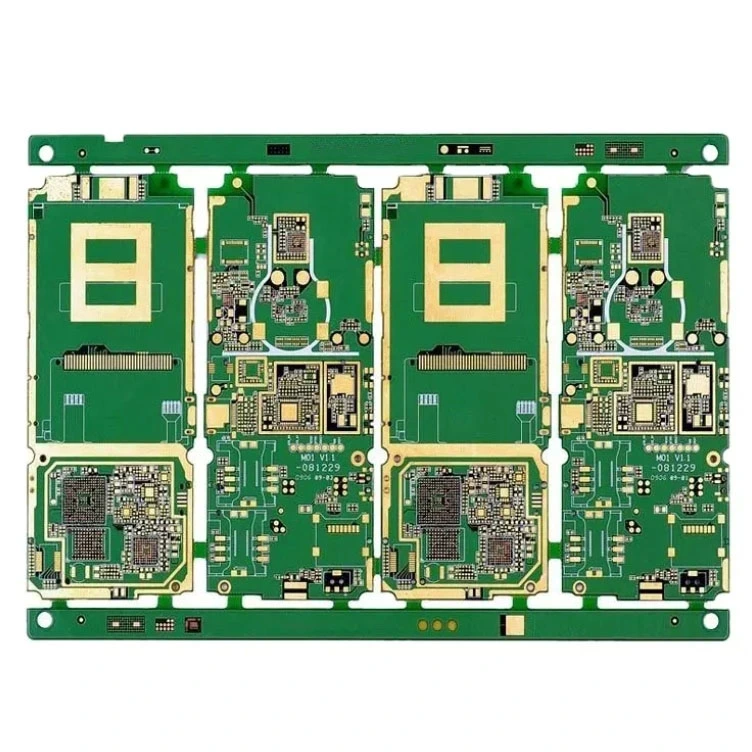
Why Is an Industrial Control PCBA So Critical to System Stability?
I often see customers underestimate how much stress an Industrial Control PCBA must endure. Unlike consumer electronics, industrial control boards face continuous operation, electrical noise, vibration, and unpredictable temperature changes. If the board design or assembly is not optimized for these conditions, even a small defect can cascade into downtime or safety risks.
- I design control boards with long-term reliability as the first priority, not an afterthought.
- I pay close attention to component derating to ensure stable operation over time.
- I treat layout, grounding, and isolation as functional requirements, not cosmetic choices.
How Do I Evaluate Whether an Industrial Control PCBA Fits a Real Industrial Environment?
When customers ask me how I assess an Industrial Control PCBA, I usually walk them through a practical checklist. These are not marketing buzzwords but real questions that come from production floors and maintenance teams.
| Evaluation Aspect | What I Look For | Why It Matters in Practice |
|---|---|---|
| Component Selection | Industrial-grade ICs and power devices | Reduces failure rates during long operating cycles |
| Thermal Design | Copper balance and heat dissipation paths | Prevents overheating in enclosed control cabinets |
| Signal Integrity | Controlled impedance and noise isolation | Ensures accurate data transmission in noisy environments |
| Assembly Quality | Consistent solder joints and inspection standards | Improves long-term reliability and service life |
What Design Choices Actually Improve the Performance of an Industrial Control PCBA?
From my experience, performance is rarely improved by a single dramatic feature. Instead, it comes from many disciplined design choices working together. A well-built Industrial Control PCBA reflects careful coordination between design engineering and manufacturing.
- I separate high-voltage and low-voltage sections to improve safety and stability.
- I optimize trace routing to reduce electromagnetic interference.
- I validate prototypes under simulated operating conditions before mass production.
How Does Manufacturing Experience Influence Industrial Control PCBA Quality?
This is a question I care deeply about, because even a perfect design can fail if manufacturing is inconsistent. In my daily work, I see how process control, inspection methods, and feedback loops directly influence the final quality of an Industrial Control PCBA.
At GRT PCBA, we continuously refine our assembly processes to align with industrial control requirements. That means tighter process control, traceable materials, and production teams who understand why industrial boards demand higher standards than typical electronics.
Why Do Engineers Choose Long-Term Partners for Industrial Control PCBA Projects?
Many customers tell me they are not just looking for a supplier; they are looking for consistency and communication. Industrial projects evolve over time, and a trusted Industrial Control PCBA partner can adapt designs, manage revisions, and support scaling without compromising reliability.
- I stay involved from early design discussions through production ramp-up.
- I value clear documentation and version control to avoid costly mistakes.
- I believe responsive support is just as important as technical capability.
Are You Ready to Upgrade Your Industrial Control PCBA Strategy?
If you are planning a new automation system or improving an existing one, now is a good time to rethink how your control electronics are designed and manufactured. A dependable Industrial Control PCBA can reduce downtime, improve safety, and extend the life of your equipment.
If you would like to discuss your project or explore how our solutions can support your application, feel free to contact us and leave an inquiry. I would be glad to review your requirements and help you move forward with confidence.