

When I evaluate relay components for control panels, home appliances, industrial equipment, or power switching designs, I rarely look at price first. I look at stability, contact performance, production consistency, and whether the supplier understands real operating conditions. That is why I pay attention to manufacturers such as Ningbo Forward Relay Corp., Ltd., especially when the project requires a dependable Power Relay that can switch loads safely while keeping long-term performance predictable.
A relay may look like a small component, but in many electrical systems it quietly decides whether the whole device runs smoothly or fails at the worst possible moment. For buyers, engineers, and sourcing teams, the real challenge is not simply finding a relay. The challenge is choosing one that fits the load, withstands repeated operation, supports compact design, and comes from a supplier capable of stable mass production.
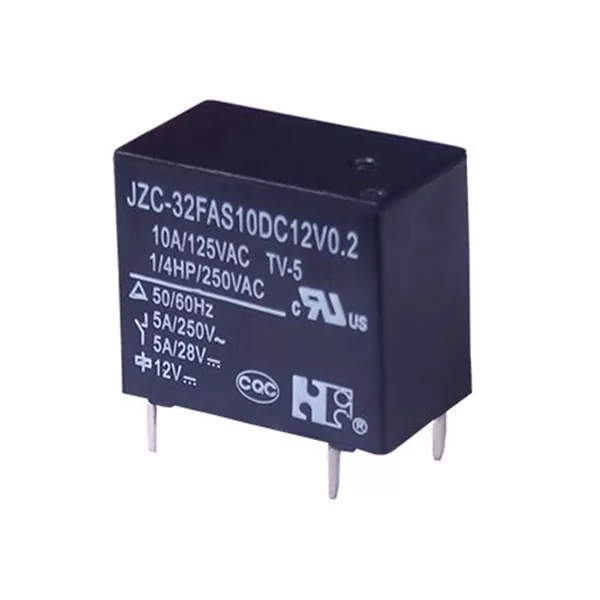
Why Does a Power Relay Matter More Than Many Buyers Expect?
I have seen many projects treat relays as standard parts until problems appear during testing or after installation. Contact sticking, unstable switching, coil overheating, noise, and short service life can turn a low-cost choice into a costly repair issue. A high-quality Power Relay helps electrical equipment control higher current circuits through a smaller control signal, which makes it useful across appliances, industrial devices, HVAC systems, automation equipment, chargers, power supplies, and many other applications.
What makes it important is simple. The relay becomes a bridge between low-power control and higher-power output. If that bridge is weak, the whole circuit becomes less trustworthy. When I choose this kind of component, I want it to deliver clean switching, stable insulation, reliable contact pressure, and good resistance against mechanical fatigue.
- It supports safe switching between control and load circuits.
- It helps protect sensitive control boards from direct high-current exposure.
- It allows compact devices to manage larger electrical loads.
- It improves system reliability when selected correctly.
- It reduces maintenance pressure in long-running equipment.
What Should I Check Before Selecting a Power Relay?
I do not recommend choosing a relay only by matching current and voltage on paper. Real applications involve load type, ambient temperature, mounting method, contact material, coil voltage, expected switching frequency, and safety requirements. A relay used for resistive loads may not behave the same way when switching inductive loads, motors, lamps, or capacitive circuits.
For a practical sourcing decision, I usually check the following points first.
| Selection factor | Why it matters | What I usually look for |
|---|---|---|
| Contact rating | Determines whether the relay can handle the expected load | A suitable margin above the actual working current |
| Coil voltage | Affects compatibility with the control circuit | Stable operation under normal voltage variation |
| Contact arrangement | Defines how the circuit opens or closes | SPST, SPDT, or other structure based on circuit needs |
| Insulation performance | Supports safety between coil and contact circuits | Reliable dielectric strength and creepage distance |
| Mechanical life | Shows how well the relay withstands repeated movement | Stable endurance for frequent switching applications |
| Electrical life | Reflects real service performance under load | Test data close to the application load condition |
| Mounting style | Influences PCB layout and assembly efficiency | Compact size with convenient installation |
Which Product Advantages Help a Power Relay Perform Better?
A good Power Relay should not only switch electricity. It should switch consistently, safely, and repeatedly. In practical terms, I value several product advantages when reviewing relay options from an experienced manufacturer.
The first advantage is stable contact performance. Contacts need to handle current without excessive heat, oxidation, or rapid wear. The second advantage is a well-designed coil structure, because unstable coil operation can cause buzzing, delayed action, or failure to pull in properly. The third advantage is manufacturing consistency. Even a well-designed relay loses value if every batch behaves differently.
- Reliable switching performance for control circuits, appliance systems, and industrial equipment.
- Compact structure that helps engineers save PCB space without sacrificing electrical function.
- Strong load adaptability for different current levels and circuit requirements.
- Stable coil response to support accurate operation in real working conditions.
- Consistent production quality for buyers who need repeat orders and long-term supply.
For me, these advantages are especially valuable when the relay is used in products that cannot afford unstable operation, such as household appliances, industrial controllers, power management units, and intelligent control systems.
How Can a Power Relay Reduce Common Buyer Pain Points?
Buyers often come to relay sourcing with very specific frustrations. Some have dealt with unstable suppliers. Some have received components that passed samples but failed in mass production. Others are trying to reduce product size while keeping switching capacity strong enough. A suitable Power Relay can help address these pain points when it is selected with the full system in mind.
| Buyer concern | Typical risk | How the right relay helps |
|---|---|---|
| Unstable switching | Equipment malfunction or intermittent control failure | Consistent contact action improves circuit reliability |
| Limited PCB space | Design becomes bulky or difficult to assemble | Compact relay options support cleaner product layouts |
| Heat and overload concerns | Shortened service life or safety issues | Proper contact rating and material selection improve durability |
| Batch inconsistency | Quality disputes and production delays | Experienced manufacturing control supports repeatable performance |
| Hard-to-match applications | Incorrect relay selection and redesign costs | Supplier guidance helps match coil, contact, load, and installation needs |
In other words, relay quality is not only an engineering issue. It is also a purchasing issue, a production issue, and a brand reputation issue. A stable relay can protect the buyer from hidden costs that appear long after the invoice is paid.
Is a Power Relay Suitable for Modern Electrical and Industrial Applications?
Yes, especially when the application needs dependable switching in a compact and cost-effective format. I often see the Power Relay used in control boards, household appliances, smart power systems, industrial control devices, HVAC equipment, office equipment, and security systems. The reason is practical. It offers a familiar, proven switching method while still supporting modern product design requirements.
In appliance applications, relays may control compressors, heaters, pumps, fans, or other load circuits. In industrial equipment, they may support control signals, safety interlocks, or switching functions inside panels. In power-related devices, they can help manage current flow while separating the control side from the load side.
- Home appliances and white goods
- Industrial automation and control panels
- HVAC and temperature control systems
- Power supply and charging equipment
- Smart control boards and electronic modules
- Office equipment and commercial devices
- Security systems and access control products
What I appreciate most is that a relay remains easy for engineers to understand, test, and replace when compared with some more complex switching solutions. That makes it a practical choice for many designs where reliability and serviceability both matter.
How Do I Compare a Power Relay Supplier Beyond the Product Sheet?
A datasheet tells part of the story, but it does not tell the whole story. When I compare relay suppliers, I also consider manufacturing background, product range, quality control, technical communication, and export experience. A supplier that understands relay applications can help reduce mistakes before they become expensive.
For a manufacturer such as Ningbo Forward Relay Corp., Ltd., the value is not limited to one product model. It also comes from experience in relay development and production, along with the ability to support different relay categories for varied applications. That matters when a buyer needs more than a single component and wants a long-term supplier relationship.
| Supplier capability | Why I consider it important |
|---|---|
| Relay manufacturing experience | Experienced production helps improve stability across batches |
| Product variety | Different projects may require power relays, signal relays, automotive relays, or industrial relays |
| Technical support | Clear communication helps buyers avoid wrong model selection |
| Quality management | Controlled production reduces risks in mass assembly |
| Export service | International buyers need stable communication, documentation, and delivery coordination |
What Mistakes Should I Avoid When Buying a Power Relay?
The most common mistake is choosing only by rated current. A buyer may see a relay marked for a certain current and assume it will work in every circuit with that current. In reality, load type changes everything. Motors, solenoids, lamps, and capacitors can create inrush current or arc stress that is much higher than the steady-state value.
The second mistake is ignoring the working environment. Temperature, humidity, dust, vibration, and PCB layout can influence relay performance. The third mistake is buying from a supplier without confirming long-term availability. For equipment manufacturers, component continuity is just as important as sample approval.
- Do not select only by nominal current.
- Do not ignore inrush current or inductive load behavior.
- Do not overlook coil power and control circuit compatibility.
- Do not forget insulation and safety requirements.
- Do not approve samples without considering mass production consistency.
- Do not choose a supplier who cannot support future repeat orders.
A reliable Power Relay decision should always combine electrical performance, application conditions, supplier capability, and long-term sourcing needs.
Why Would I Recommend Reviewing Power Relay Options Carefully Before Ordering?
I recommend careful review because the relay is small, but the responsibility it carries is not small at all. It controls loads, protects circuits, supports user safety, and affects the product’s long-term reputation. When the relay works well, nobody notices it. When it fails, everyone notices the whole device.
That is why I prefer choosing a Power Relay from a manufacturer that can offer stable product quality, practical application support, and a clear understanding of international purchasing needs. Whether the project involves appliances, industrial control, power systems, or electronic equipment, the right relay can make the final product more dependable and easier to produce at scale.
If you are comparing relay models, planning a new control board, replacing an unstable component, or looking for a dependable relay supplier, now is a good time to discuss your application details. Share your load type, voltage, current, coil requirement, mounting method, and expected working environment with the team. For model selection, samples, pricing, or technical support, please leave an inquiry or contact us today to learn how Ningbo Forward Relay Corp., Ltd. can support your next Power Relay project.