

What Makes a Photovoltaic TCU Tracker Essential for Smarter Solar Tracking?
2026-08-31
As photovoltaic power plants continue to pursue higher energy yields, the performance of the tracking control system has become increasingly important. A solar tracker can only deliver its full potential when its control unit can accurately calculate the sun's position, adjust the tracker angle, coordinate the drive system, and respond to changing environmental conditions. A Photovoltaic TCU Tracker, or Tracker Control Unit, serves as the intelligent control core of a photovoltaic tracking system. It manages the movement of tracker structures so that PV modules can maintain a more favorable orientation toward sunlight throughout the day. Modern TCU solutions can combine astronomical algorithms, angle feedback, communication functions, protection strategies, and intelligent control to improve system reliability and energy utilization.
For solar tracker manufacturers, EPC contractors, project developers, and photovoltaic power plant operators, choosing a TCU is not simply a matter of selecting an electronic controller. The controller must match the tracker structure, drive mechanism, motor, communication architecture, environmental conditions, and project requirements. This is where Suzhou Ruitai Automation Technology Co., Ltd. focuses its technology and customization capabilities, providing intelligent photovoltaic tracking and control solutions for different solar projects.
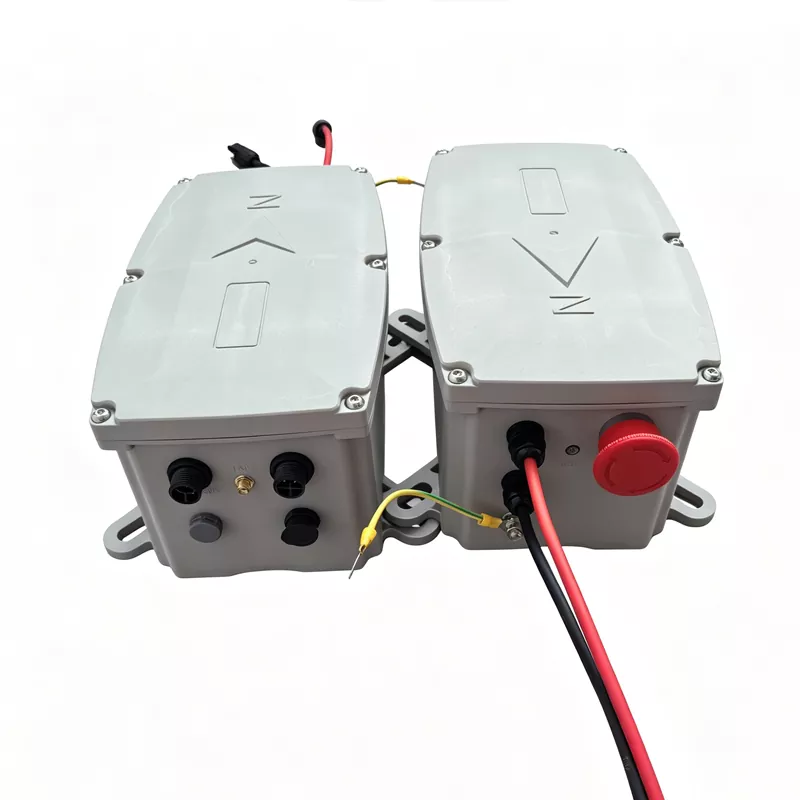
What Does a Photovoltaic TCU Tracker Do?
The primary role of a Photovoltaic TCU Tracker is to control the movement of a solar tracking structure. Based on solar-position calculations and feedback from the tracking mechanism, the TCU sends commands to the motor or actuator to adjust the PV module angle.
A typical control process includes:
- Solar position calculation – Determines the expected solar position according to time and geographical conditions.
- Angle control – Calculates or receives the target tracking angle.
- Motor control – Sends commands to the drive system to move the tracker.
- Position feedback – Checks whether the actual tracker position corresponds to the target position.
- Protection control – Activates appropriate operating strategies during strong wind, abnormal conditions, or other environmental risks.
- Communication – Exchanges operating information with higher-level communication or monitoring systems.
This coordinated operation helps photovoltaic modules maintain an optimized orientation while reducing unnecessary mechanical movement. Current TCU technologies commonly integrate tracking algorithms, motor control, position feedback, and protection functions into a compact field-level control unit.
Why Is TCU Performance Important for Photovoltaic Systems?
The energy yield of a tracking photovoltaic plant depends on much more than the efficiency of its solar modules. Tracker positioning directly influences the angle at which sunlight reaches the PV surface. If the tracker reacts slowly, operates inaccurately, or fails to maintain the required angle, the system may not fully utilize available solar radiation.
A reliable TCU can contribute to:
- More accurate tracker positioning
- Stable motor operation
- Reduced unnecessary movement
- Improved system automation
- Faster response to operating conditions
- Better coordination between tracker rows
- Easier system monitoring and maintenance
- Enhanced long-term operational reliability
Ruitai Automation states that its intelligent tracking control system is designed to improve the core control performance of photovoltaic tracking structures and reports a potential power-generation improvement of 15%–30%, depending on project conditions. Actual results naturally vary according to tracker design, site conditions, weather, module configuration, and system engineering.
How Does Ruitai's Photovoltaic TCU Tracker Improve Tracker Control?
Suzhou Ruitai Automation Technology Co., Ltd. has developed an intelligent product portfolio covering TCU, NCU, SCADA, sensors, and other photovoltaic automation technologies. Its TCU functions as the control unit for individual tracker rows, while the wider system architecture can connect field-level controllers with communication and monitoring equipment.
One notable product is the RT-TK-SP-V1, designed for single-row, single-drive applications. The product information indicates compatibility with motor power up to 300 W, DC input from 300–1500 VDC, and drive systems such as slew drives and electric actuators. It can also support brushed or brushless motor configurations.
Key Product Characteristics
| Feature | Ruitai Photovoltaic TCU Tracker |
|---|---|
| Control application | Solar photovoltaic tracking |
| Tracker configuration | Single-row / single-drive and other customized structures |
| Drive compatibility | Slew drive / electric actuator |
| Motor compatibility | Brushed / brushless motor |
| Tracking method | Astronomical algorithm + angle feedback |
| Communication | Project-dependent communication architecture |
| Protection | Intelligent operating and safety strategies |
| Customization | Tracker structure and project requirements can be customized |
This combination allows the TCU to become an integral part of the complete tracker rather than an isolated electronic component.
How Does Ship-Type Customization Add Value?
For specialized photovoltaic projects, supporting ship-type customization is a particularly important advantage.
Different ship-based solar applications can have very different operating conditions from conventional ground-mounted PV plants. Floating solar platforms, photovoltaic vessels, solar-powered marine facilities, and other water-based applications may require tracker structures adapted to limited installation space, movement, vibration, wind exposure, saltwater environments, and specific mechanical configurations.
A standardized TCU may not always provide the ideal solution for these applications. Ruitai Automation can develop control solutions around the customer's specific ship type, tracker structure, drive configuration, installation conditions, and control requirements.
This customization capability can include:
- Ship-type customization according to different vessel structures
- Tracker control adapted to specific installation spaces
- Customized motor and actuator matching
- Customized tracking-angle ranges
- Customized communication interfaces
- Environmental protection requirements
- Customized control logic and operating modes
- Integration with the customer's existing photovoltaic system
The importance of this approach is that the TCU is designed around the actual application instead of forcing the project to adapt to a fixed controller architecture.
Photovoltaic TCU Tracker vs. Conventional Tracker Control
The difference between a basic tracker controller and a more intelligent TCU solution can be understood from several perspectives:
| Comparison | Conventional Control | Intelligent Photovoltaic TCU Tracker |
|---|---|---|
| Tracking strategy | Basic programmed control | Intelligent algorithm-based control |
| Position feedback | Limited | Integrated feedback control |
| System integration | Basic | Designed for communication and monitoring |
| Customization | Often limited | Supports project-specific customization |
| Protection strategy | Basic | Multiple intelligent operating strategies |
| Application range | Standard projects | Standard and specialized projects |
| Maintenance | More manual intervention | Supports intelligent monitoring and diagnosis |
A modern photovoltaic tracker therefore requires more than simple motor switching. It needs accurate control, reliable communication, appropriate protection, and flexible system integration.
What Are the Practical Effects in Solar Projects?
The application of a Photovoltaic TCU Tracker can produce several practical benefits throughout the operational life of a solar power plant.
Improved Energy Utilization
By controlling the tracker according to solar-position information and angle feedback, the system can maintain an appropriate orientation for sunlight capture. This supports the objective of increasing the useful solar irradiation received by PV modules.
Reduced Mechanical Stress
Intelligent tracking logic can avoid unnecessary movements. In changing weather conditions, optimized operating strategies can help reduce excessive actuator activity and mechanical wear. Similar intelligent TCU systems use weather-related protection and optimized movement strategies to improve tracker operation.
Better System Reliability
Industrial photovoltaic installations operate outdoors for long periods. Therefore, stable control, environmental protection, and fault-handling capabilities are essential. Ruitai's overall tracking solution is designed for challenging conditions including wind, sand, low temperature, and high humidity.
Easier Intelligent O&M
A TCU can work together with an NCU and SCADA platform to create a more complete digital management system. Ruitai's SCADA solution provides real-time data collection, monitoring, fault warning, and data analysis, helping operators understand tracker status and improve maintenance efficiency.
How Should Buyers Choose a Photovoltaic TCU Tracker?
Before selecting a TCU, project owners and system integrators should evaluate several technical factors:
- Tracker type: single-axis, multi-row, or other configurations
- Motor and actuator specifications
- DC or AC power architecture
- Required tracking-angle range
- Position feedback method
- Communication protocol
- Local environmental conditions
- Wind and weather protection requirements
- Monitoring and SCADA integration
- Installation space
- Future maintenance requirements
- Customized tracker or ship-type requirements
For projects with non-standard structures, customization should be considered from the beginning of the engineering process.
Why Choose Suzhou Ruitai Automation Technology Co., Ltd.?
Suzhou Ruitai Automation Technology Co., Ltd. positions itself as a provider of intelligent solar tracking and control solutions, integrating R&D, production, sales, and service. Its product portfolio covers intelligent TCU controllers, NCU communication units, SCADA operation and maintenance platforms, weather-related equipment, and intelligent cleaning equipment.
The company also emphasizes project-oriented customization. This is especially valuable for customers developing specialized tracker systems or photovoltaic applications that cannot be served effectively by standard off-the-shelf controllers.
Most importantly, support for ship-type customization gives the Photovoltaic TCU Tracker greater application flexibility. By matching the controller to different vessel structures, tracker mechanisms, motor systems, and environmental requirements, Ruitai Automation can help customers build a more suitable control solution for specialized marine photovoltaic applications.
Conclusion
A Photovoltaic TCU Tracker is the control intelligence behind a modern solar tracking system. Its performance affects tracking accuracy, motor operation, system protection, energy utilization, and long-term maintenance. As photovoltaic projects become more diversified, the demand for flexible and application-specific control solutions is also increasing.
For conventional solar farms as well as specialized applications such as floating and ship-based photovoltaic systems, selecting a TCU that can adapt to the actual mechanical and electrical architecture is essential. With intelligent control technology, system integration capabilities, and support for ship-type customization, Suzhou Ruitai Automation Technology Co., Ltd. provides a practical option for customers seeking scalable photovoltaic tracking solutions.
If you are looking for a Photovoltaic TCU Tracker tailored to your tracker structure, motor configuration, or ship-type photovoltaic application, contact us to discuss your project requirements and develop a suitable intelligent tracking control solution with Suzhou Ruitai Automation Technology Co., Ltd.