

What Makes a Multi-mode Laser Diode the Smart Choice for Real-World Fiber and Illumination Builds?
2025-12-25
I’ve worked on enough optical projects to know this pattern well: the datasheet looks fine, the demo sample seems bright, and then real integration starts and suddenly coupling efficiency, thermal drift, and lifetime become the actual project risks. That’s exactly why I pay attention to how a Multi-mode Laser Diode behaves in the system, not just how it looks on paper. Over time, I’ve found that Wavespectrum approaches this category with a practical “integration-first” mindset, which is what most buyers actually need when the goal is stable output, repeatable coupling, and predictable reliability.
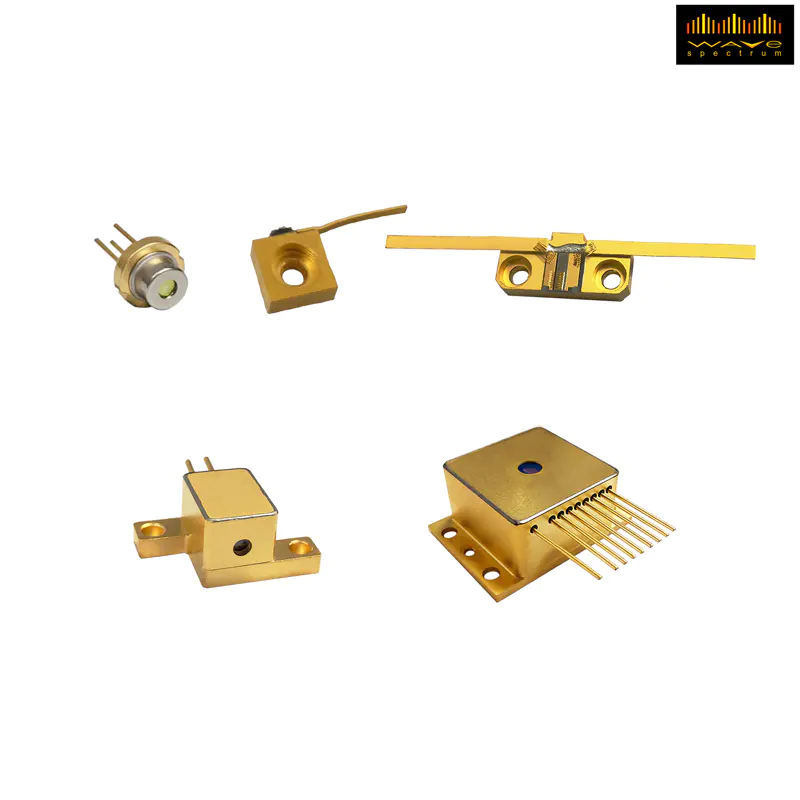
Why do buyers choose a Multi-mode Laser Diode instead of a single-mode option?
If your application prioritizes higher optical power, easier coupling into larger-core fibers, or more forgiving alignment in production, a Multi-mode Laser Diode is often the faster route to stable results. Single-mode can be amazing for coherence-sensitive systems, but it usually demands tighter tolerances and may limit power or increase overall system cost when you scale.
- Higher usable power for pumping, illumination, sensing, and industrial subsystems
- More tolerant fiber coupling especially with larger-core fibers or relaxed alignment budgets
- System-level stability when thermal design and packaging are done for real deployments
What pain points show up when integrating a Multi-mode Laser Diode into a fiber-coupled setup?
Most issues aren’t “laser diode issues” in isolation, they’re integration issues. When a build fails to hit target power at the fiber output, I usually see one of these root causes:
- Coupling efficiency variance across batches due to alignment sensitivity and packaging differences
- Thermal rollover where output power drops as temperature rises in real enclosures
- Back reflection sensitivity that destabilizes output or accelerates degradation if isolation is insufficient
- Lifetime surprises caused by driving conditions, heatsinking limits, or contamination control
- Inconsistent beam characteristics that complicate optics selection and mechanical tolerances
This is where choosing the right Multi-mode Laser Diode configuration matters more than chasing a single best-number spec.
How do I evaluate a Multi-mode Laser Diode for stable performance in the field?
When I’m selecting parts, I think like a system owner, not a spec collector. Here’s the checklist I use to avoid surprises after procurement:
- Power at operating temperature not just at room temperature
- Package and thermal path how heat leaves the die and enters your heatsink
- Recommended drive conditions and how they map to your driver design and control loop
- Fiber coupling approach free-space into fiber, direct coupling, or module-based integration
- Protection strategy ESD handling, optical feedback control, and contamination safeguards
If you’re building something that must pass production QA month after month, that’s the difference between a lab success and a product.
Which selection factors should I compare before I commit to a Multi-mode Laser Diode?
| Selection Factor | What I Look For | Why It Matters in Production |
|---|---|---|
| Wavelength options | Wavelength range that matches your detector, fiber, or absorption peak | Wrong wavelength can waste power and reduce system sensitivity |
| Output power headroom | Margin at your real operating temperature | Helps maintain target fiber output after aging and thermal drift |
| Beam characteristics | Divergence profile that fits your optics and mechanical space | Impacts coupling yield and tolerance stack-up |
| Package type | Package style that matches your heatsink and assembly flow | Thermal resistance and assembly repeatability affect stability |
| Fiber coupling method | Fiber core/NA match and coupling architecture | Determines efficiency and batch-to-batch consistency |
| Reliability expectations | Operating current strategy and derating approach | Reduces premature degradation and warranty risk |
| Feedback tolerance | Isolation needs and reflections management | Prevents power instability and long-term damage |
How does packaging influence the real output of a Multi-mode Laser Diode?
Packaging is the quiet hero of laser performance. Two diodes with similar lab specs can behave very differently once you mount them into a system. A well-designed package improves thermal conduction, protects the die from contamination, and stabilizes alignment. When you’re considering a Multi-mode Laser Diode for a fiber-coupled module, the packaging choice can make or break your coupling yield.
- Better thermal handling helps keep output stable during long duty cycles
- Mechanical stability reduces sensitivity to vibration and shock
- Cleaner internal environment supports consistent lifetime behavior
When does a Multi-mode Laser Diode become the better value for fiber coupling?
If your goal is to deliver strong optical power into a fiber without spending weeks optimizing micrometer-level alignment, multi-mode is often the practical answer. In many industrial and sensing systems, what matters is fiber-output power, consistency, and lifetime. A Multi-mode Laser Diode can reduce the “hidden costs” of engineering time, scrap rate, and rework when your optics and mechanics need to be robust rather than delicate.
This is also where Wavespectrum fits naturally into the conversation, because the product approach is clearly aimed at integration outcomes and scalable procurement, not just one-off demo performance.
What design choices help me get consistent results from a Multi-mode Laser Diode module?
Here’s what I prioritize when I want repeatable performance across many units:
- Thermal design first define heatsinking, airflow, and mounting before finalizing drive current
- Driver stability use low-noise current control and protect against transients and reverse polarity
- Optical feedback control consider photodiode monitoring if your application needs tight output regulation
- Reflections management use isolators or angled interfaces when feedback is a risk
- Assembly discipline clean handling, ESD control, and controlled optics bonding if applicable
With these choices in place, the Multi-mode Laser Diode becomes a dependable workhorse instead of a finicky component.
How do I explain the benefits of a Multi-mode Laser Diode to a non-optics procurement team?
I keep it simple and measurable. If the buying team isn’t living inside beam profiles and NA values, focus on outcomes:
- Higher delivered power at the fiber output or target surface
- Higher production yield due to easier coupling and alignment tolerance
- Lower risk thanks to more forgiving system integration
- Better total cost when engineering time and rework are included
When you frame it this way, selecting a Multi-mode Laser Diode feels like a business decision, not a physics hobby.
Where should I start if I want a Multi-mode Laser Diode that matches my build quickly?
If you already know your target wavelength, required fiber-output power, and operating temperature range, you’re most of the way there. What I usually do next is share a short requirements snapshot and ask for a configuration that matches the system constraints rather than forcing the system to match a random catalog part.
If you’re evaluating suppliers right now, I’d start by discussing your application with Wavespectrum and specifying exactly what “success” means in your setup, whether that’s stable fiber output, compact packaging, or higher tolerance for temperature and vibration. And if you want the fastest path to a recommendation that actually fits, contact us with your wavelength, target power, fiber type, and duty cycle so we can point you to the right Multi-mode Laser Diode configuration and help you move from selection to integration without the usual trial-and-error.