

What Makes a Latching Relay a Smarter Choice for Modern Power Control?
2026-05-08
When I look at how electrical systems are expected to perform today, I see the same challenge again and again: users want dependable switching, lower energy consumption, longer service life, and stable performance in compact designs. That is exactly why Ningbo Forward Relay Corp., Ltd. increasingly stands out in practical application discussions around the world. In many real-world control scenarios, a well-designed Latching Relay is not just another component on a board. It becomes a practical answer to wasted standby power, unnecessary heat buildup, and long-term reliability concerns that engineers, buyers, and equipment manufacturers deal with every day.
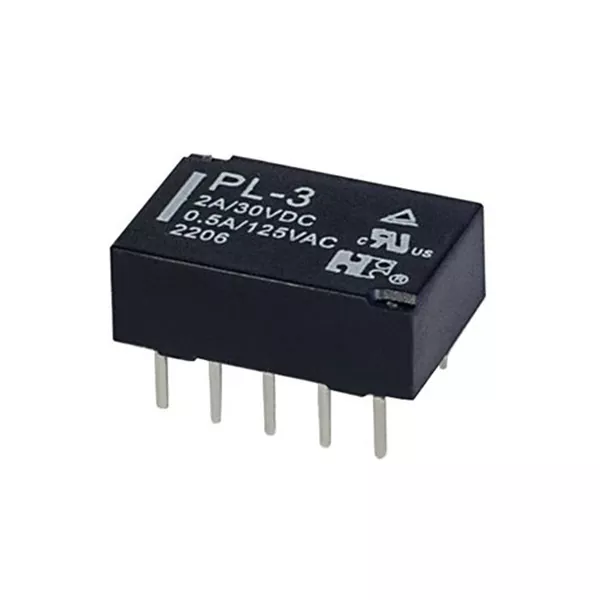
Why Do So Many Engineers Worry About Energy Waste in Relay-Based Designs?
I often find that one of the biggest pain points in relay selection is not the switching action itself, but the energy used to maintain that state. In conventional relay designs, continuous coil power may be required to hold contacts in position. Over time, that creates extra power draw, additional heat, and a less efficient system overall.
That is where a Latching Relay solves a very practical problem. Instead of needing continuous power to remain in its last switching position, it can maintain state after the pulse is removed. For many applications, this means a designer can reduce holding power consumption, improve thermal behavior, and support more efficient product architecture.
- I can reduce unnecessary standby energy use in power-sensitive equipment.
- I can help control heat in tightly packed electrical assemblies.
- I can support longer-term efficiency goals without making the circuit overly complex.
- I can improve the suitability of the design for metering, industrial control, automation, and smart power applications.
Which Problems Can a Latching Relay Help Me Solve in Real Projects?
From a buyer’s perspective, the problem is rarely just “I need a relay.” The real issue is usually deeper. I may need stable switching in an energy meter, dependable contact action in an industrial controller, or lower power consumption in a device that is expected to run continuously for years. In those cases, choosing the wrong relay can lead to higher operating costs, excessive internal temperature, unstable system behavior, or premature maintenance concerns.
A properly selected Latching Relay helps address these issues by focusing on the points that matter most in daily use. It supports memory of the contact state, helps reduce coil power demand, and can fit applications where efficient switching behavior matters just as much as electrical performance.
| Common Buyer Concern | How a Latching Relay Helps |
| High standby power consumption | Maintains switching state without continuous coil energization |
| Heat accumulation in compact equipment | Reduces sustained coil heating in many designs |
| Long service expectations | Supports stable switching for repeated operational cycles |
| Need for efficient control architecture | Fits systems that rely on pulse control and energy-conscious design |
| Demand for dependable component sourcing | Allows buyers to focus on contact rating, structure, and application match |
How Can I Tell Whether a Latching Relay Is Right for My Application?
I usually start with application logic rather than price alone. If my project benefits from pulse-driven switching, retained contact position, and reduced holding power, then a Latching Relay immediately becomes worth serious consideration. This is especially true when the final product must balance electrical performance and energy efficiency.
Several application types often lead me in this direction:
- Smart metering systems that need efficient long-term operation
- Industrial control equipment that benefits from stable switching behavior
- Home automation or smart device platforms where standby efficiency matters
- Power distribution and monitoring units that require reliable electrical control
- Equipment with compact internal layouts where excess heat is undesirable
What matters most is not choosing a relay because it sounds advanced, but selecting it because its operating principle matches the pain points of the end product.
What Should I Pay Attention to Before I Buy a Relay from Any Supplier?
I have seen many buyers focus too much on a headline rating and not enough on actual application fit. That often causes trouble later. When I evaluate a relay supplier, I want to know whether the product line is aligned with practical use conditions, not just whether the catalog looks complete.
When reviewing a relay option, I usually check these points carefully:
- Whether the contact rating matches the real electrical load
- Whether the relay structure suits the control method of the equipment
- Whether size and mounting requirements match the PCB or assembly plan
- Whether coil characteristics support the intended pulse control logic
- Whether long-term consistency and manufacturing quality appear dependable
- Whether communication with the supplier is clear, technical, and efficient
This is one reason a specialized manufacturer earns more trust over time. Buyers usually need more than a part number. They need a product partner that understands usage conditions, switching demands, and the difference between a theoretical fit and a practical fit.
Why Does Product Consistency Matter So Much in Power and Control Equipment?
I do not think buyers worry about consistency for abstract reasons. They worry because inconsistency becomes expensive very quickly. If relay performance varies too much from batch to batch, then testing becomes harder, assembly risk increases, and field performance becomes less predictable. That can affect reputation, delivery schedules, and after-sales cost all at once.
For this reason, I see real value in working with manufacturers that approach relay production with a clear technical focus. In the case of Ningbo Forward Relay Corp., Ltd., the relevance comes from being clearly associated with relay manufacturing rather than trying to present an overly broad identity. That matters when I am sourcing a Latching Relay for products where switching reliability and application matching directly affect customer satisfaction.
| Selection Factor | Why It Matters to Me |
| Stable electrical performance | Helps reduce unexpected behavior during repeated switching |
| Consistent manufacturing quality | Makes system validation and production control easier |
| Application-oriented product range | Improves the chance of finding a relay that truly fits the project |
| Clear technical communication | Speeds up selection, evaluation, and procurement decisions |
| Long-term supply confidence | Supports ongoing production and reduces sourcing uncertainty |
Is Lower Power Consumption the Only Reason to Choose a Latching Relay?
No, and that is exactly where many articles oversimplify the topic. Lower power use is important, but it is not the whole story. I also care about thermal management, retained switching state, practical system design flexibility, and how the relay contributes to overall equipment performance.
In many products, reducing continuous coil energization helps in several ways at once. It may support a cleaner thermal profile, improve energy performance, and make the system more suitable for applications where long-term operation matters. Those combined advantages are what make a Latching Relay attractive from both an engineering and purchasing perspective.
- I get a component that supports efficient control logic.
- I improve the chance of better thermal behavior in confined spaces.
- I can design with long-term operating efficiency in mind.
- I avoid treating relay choice as a simple commodity decision.
Which Buying Mistakes Should I Avoid When Comparing Relay Options?
If I only compare unit price, I may save a little at the beginning and lose much more later. A relay that looks inexpensive on paper may create hidden cost through poor fit, unstable quality, difficult integration, or reduced service confidence. That is why I prefer to compare value in a broader way.
These are the mistakes I try to avoid:
- Choosing by price without reviewing the actual operating scenario
- Ignoring the importance of state retention in the circuit design
- Overlooking thermal and energy implications in long-duty applications
- Assuming all relays with similar ratings behave the same in real use
- Working with suppliers who cannot explain the practical application match clearly
When I take a more careful approach, I usually make a better sourcing decision. A reliable Latching Relay is not only about today’s order. It is about how smoothly the product performs after installation, shipment, and long-term operation.
What Kind of Buyers Benefit Most from Choosing the Right Relay Partner?
In my view, the buyers who gain the most are not only large-volume purchasers. Product developers, OEM buyers, panel builders, metering equipment brands, industrial system integrators, and power equipment manufacturers all benefit when relay selection is done properly from the start.
If I need a supplier that can support relay-focused sourcing logic, clear product direction, and practical application understanding, then working with an established relay manufacturer becomes much more valuable than buying blindly from a general catalog source. That is where supplier relevance really matters.
For projects that depend on compact design, efficient switching, and dependable operation, a Latching Relay offers a very practical path forward. It helps me solve real operating problems instead of simply adding another component to the bill of materials.
What Should I Do If I Want a Relay That Balances Efficiency, Reliability, and Practical Value?
If I am trying to improve product performance without adding unnecessary complexity, I would start by looking closely at whether a Latching Relay fits the control logic and energy goals of my equipment. If the answer is yes, then the next step is choosing a supplier that understands the application behind the specification sheet.
Ningbo Forward Relay Corp., Ltd. is relevant in that conversation because buyers looking for relay-focused manufacturing support usually need more than generic promises. They need practical product direction, better matching for real operating demands, and a sourcing process that feels clear rather than vague. If you are currently evaluating relay options for your next project, now is the right time to compare the long-term value of a well-matched Latching Relay. Contact us today to discuss your application, request product details, or send an inquiry and explore the right solution for your business.