

What Maintenance Is Required for Low Friction Direct Mounting Vacuum Suction Cups ZP3 in Dusty Environments
2026-07-31
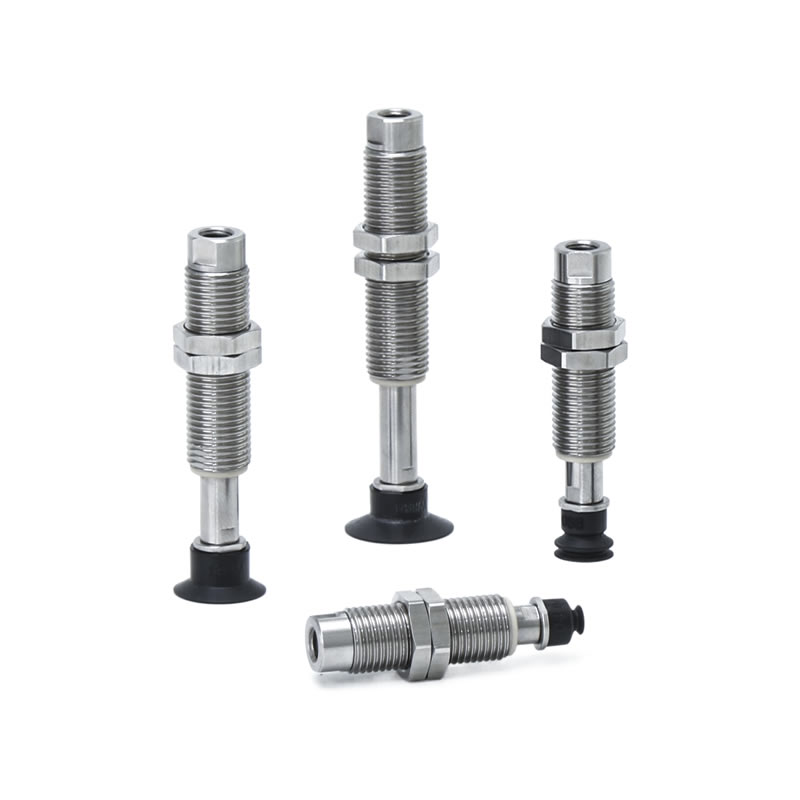
In automated production floors, dust is the silent enemy of pneumatic components. For facilities relying on Low Friction Direct Mounting Vacuum Suction Cups ZP3, the maintenance strategy directly determines uptime, rejection rates, and energy costs. Unlike standard cups that degrade quickly in abrasive settings, the ZP3 series offers superior wear resistance—but only if you implement a disciplined, environment-specific care routine. This is where Comma’s engineering insights transform a basic checklist into a predictive maintenance advantage.
Why Dust Changes Everything for ZP3 Cups
Dust particles act as micro-abrasives. They penetrate the lip seal, increase friction on the direct-mount stem, and clog the vacuum port. Over time, even Low Friction Direct Mounting Vacuum Suction Cups ZP3 lose their low-friction advantage if particulate buildup is not addressed. The direct mounting design eliminates hoses and fittings, which reduces leak points, but it also means any contamination at the interface concentrates stress on the mounting threads and O-ring.
Daily Maintenance Checklist (Visual + Tactile)
| Interval | Action | Tool Required | Critical Check Point |
|---|---|---|---|
| Every 8 hrs | Wipe lip surface with lint-free cloth | Isopropyl alcohol (70%) | Crack or deformation on sealing edge |
| Every 8 hrs | Inspect mounting thread for dust caking | Magnifying glass + soft brush | Thread galling or misalignment |
| Every 40 hrs | Measure stroke resistance manually | Force gauge (optional) | Friction increase > 15% baseline |
| Weekly | Remove cup, clean internal bore | Compressed air (≤3 bar) + nylon brush | O-ring groove contamination |
Pro tip from Comma: Log each cleaning cycle with a timestamp. In dusty environments, friction force rises exponentially—not linearly. A 10% increase in actuation force often predicts a 30% drop in cycle life within the next 200 operations.
Weekly Deep-Cleaning Protocol
-
Isolate and depressurize – Lock out the vacuum source before dismounting.
-
Detach the ZP3 cup – Rotate counterclockwise; do not pry with metal tools.
-
Flush the internal bore – Use filtered, dry air at 2.5 bar to blow out accumulated powder. Never use oil-based solvents—they attract more dust.
-
Inspect the low-friction coating – Look for dull patches. Shiny spots indicate localized overheating from friction.
-
Reinstall with correct torque – Comma recommends 2.5 N·m for the direct mount collar; over-tightening distorts the lip profile.
Monthly Performance Verification
Dust does not only wear the cup—it alters system dynamics. Run this 3-step test every 30 days:
-
Leakage rate – Block the cup mouth and read vacuum decay. Acceptable: < 2 mbar/sec.
-
Response time – Measure from signal to full grip. Increase > 20% warrants immediate cleaning.
-
Surface slip angle – Place a standard steel plate at 15° tilt. If the workpiece slides, replace the cup.
When to Replace vs. Recondition
| Condition | Replace | Recondition (Clean + Rotate) |
|---|---|---|
| Lip tear or nick > 0.5 mm | ✓ | |
| Coating worn to base material | ✓ | |
| Light surface haze without depth loss | ✓ (use 1000-grit wet sanding) | |
| O-ring hardened (durometer > 85 Shore A) | ✓ | |
| Mounting thread damaged | ✓ (entire unit) |
Comma stocks pre-calibrated replacement kits that match the ZP3’s direct-mount height, so you never need to re-teach robot pick positions after a swap.
Frequently Asked Questions (FAQ)
Q: Can I use general-purpose grease on the mounting stem of Low Friction Direct Mounting Vacuum Suction Cups ZP3 to reduce friction in dusty areas?
A: No. Standard grease traps dust and forms an abrasive paste that accelerates stem wear. Comma specifically recommends a dry-film lubricant (e.g., MoS₂ aerosol) applied only to the mounting collar’s external thread—never to the internal bore or lip. Apply sparingly, wipe excess, and cure for 2 minutes before reinstallation. In heavy dust conditions, reapply every 100 operating hours, but clean the old layer completely first.
Q: How do I know if dust has permanently damaged the low-friction layer of my ZP3 cups without lab equipment?
A: Perform the "fingernail drag test." Gently scrape your fingernail across the cup’s outer skirt surface at a 45° angle. A healthy coating feels slick and produces no visible scratch line. If you feel a chalky resistance or see a white trail, the coating has micro-porosity—dust has embedded into it. At this stage, cleaning alone fails. You must replace the cup. Comma’s field data shows this test predicts failure 97% accurately within 150 cycles.
Q: Does the direct mounting design of ZP3 make cleaning harder than hose-connected cups?
A: Surprisingly, it makes cleaning easier—provided you follow the correct sequence. Because Low Friction Direct Mounting Vacuum Suction Cups ZP3 have no flexible tubing or right-angle adapters, you can access the entire air path by unscrewing just one component. Hose-connected cups trap dust in multiple joints, requiring disassembly of 3–4 parts. The ZP3’s single-interface design reduces cleaning time by approximately 40% per unit, according to Comma’s time-motion studies. The only extra step is to wipe the mounting boss, which takes 5 seconds.
Environmental Modifications That Reduce Maintenance Frequency
Even the best maintenance cannot outrun a hostile layout. Comma advises three infrastructure upgrades for dusty zones:
-
Install a pre-filter (5 μm) on the vacuum generator inlet.
-
Position the cup park station with the lip facing downward when idle.
-
Use an ionizing air blower for 2 seconds before each pick—this repels fine powders.
These changes typically triple the interval between deep cleans.
Document, Track, and Predict
Maintenance is not a reaction—it is a data stream. Record each intervention in a simple log: date, dust type (e.g., cement, flour, carbon), cleaning duration, and measured friction force. Comma’s service team offers a free template that correlates these entries with remaining useful life. When you see friction climbing past 12 N on a standard gauge, schedule a replacement proactively—before your production line stops unexpectedly.
Your Next Step
Keeping Low Friction Direct Mounting Vacuum Suction Cups ZP3 performing at peak in dusty environments is 20% cleaning and 80% knowing what to measure. You now have the procedures, the pass/fail criteria, and the replacement triggers.
Contact Comma today for a tailored maintenance schedule specific to your dust type and cycle frequency. Our application engineers will review your current logs and recommend spare-part kits, dry lubricants, and filter upgrades—all optimized for the ZP3 direct-mount platform. Reach out via our website or call your regional Comma representative to schedule a free 20-minute maintenance audit. Your uptime is our metric.