

What is the Role of Birefringent Crystals in Polarized Microscopy
2025-12-19
In the specialized world of optical analysis, polarized light microscopy stands out for its ability to reveal the hidden structural and compositional details of materials. At the very heart of this powerful technique lie Birefringent Crystals. These unique optical components are indispensable for manipulating polarized light, transforming a standard microscope into a sophisticated diagnostic tool. At Coupletech, we engineer high-precision Birefringent Crystals that are fundamental to achieving contrast, resolution, and accuracy in polarized microscopy across geology, material science, and life sciences.
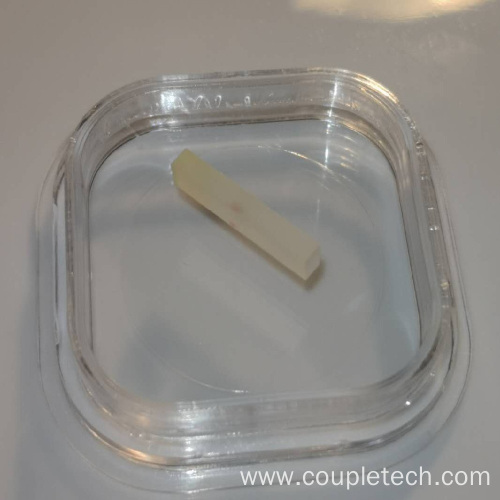
The core function of these crystals is to interact with polarized light based on a material's optical anisotropy. A polarizer creates a beam of light vibrating in a single plane. When this polarized light passes through a birefringent sample or specific crystals within the microscope's optical path, it is split into two perpendicular rays traveling at different speeds—a phenomenon known as birefringence or double refraction. Key components made from Birefringent Crystals include:
-
Polarizers & Analyzers: Often made from calcite or advanced polymers, these create and analyze the polarized light state.
-
Wave Plates (Retardation Plates): Crucial for introducing controlled phase shifts. Coupletech specializes in these critical elements.
Coupletech precision wave plates, such as our Coupletech TruePhase Series, are characterized by their exceptional performance and reliability. Below are key parameters of our standard quarter-wave plates (λ/4):
| Parameter | Specification | Importance in Polarized Microscopy |
|---|---|---|
| Material | Precision-grade Quartz or Magnesium Fluoride | High damage threshold, excellent transmission from UV to IR. |
| Retardation Accuracy | λ/300 to λ/500 | Ensures precise phase control for accurate color and contrast interpretation. |
| Surface Quality | 10-5 Scratch-Dig | Minimizes scattered light, preserving image integrity and signal-to-noise ratio. |
| Clear Aperture | >90% of central diameter | Maximizes usable light area for uniform imaging across the field of view. |
| Wavelength Range | Customizable from 266nm to 3μm | Allows customization for specific microscopy applications and light sources. |
| Mounting | Anodized aluminum ring with AR coating | Ensures secure, stable integration into the microscope optical train. |
Birefringent Crystals FAQ
What are the most common Birefringent Crystals used in microscopy?
Calcite is a classic, natural crystal with very strong birefringence, often used in high-end polarizing prisms. Synthetic crystals like quartz, magnesium fluoride (MgF2), and yttrium orthovanadate (YVO4) are extensively used for wave plates due to their durability, high precision, and availability in large, defect-free sizes.
How does a Birefringent Crystal create interference colors?
The crystal retards one light ray relative to the other. When these rays recombine in the analyzer, they interfere constructively or destructively. The resulting phase difference translates into specific, vivid colors when using white light, which are key identifiers of a sample's birefringence strength and thickness.
Why is the retardation accuracy of a wave plate so critical?
In quantitative polarized microscopy, measurements of sample birefringence are taken. An inaccurate wave plate introduces error into these measurements, leading to incorrect data about stress, concentration, or molecular orientation. High-accuracy crystals from suppliers like Coupletech are essential for research-grade results.
The choice of optical components directly defines the limits of your analytical capabilities. For imaging that demands uncompromising clarity, measurement precision, and reliability, your microscope requires the foundational quality of expertly crafted Birefringent Crystals. Coupletech is committed to providing the core optical elements that empower researchers and industries to see beyond the surface.
Contact us today to discuss how our precision Birefringent Crystals and wave plates can optimize the performance of your polarized microscopy system.