

What Is the Maximum Weight a Large Neodymium Magnet Can Hold
2026-01-30
When sourcing powerful magnetic components for industrial, commercial, or innovative projects, a critical question arises: What is the maximum weight a large neodymium magnet can hold? The answer is not a single figure but a nuanced calculation dependent on several key factors. As a leading force in the magnetic solutions industry, ZHAOBAO MAGNET GROUP is committed to providing not only premium-grade products but also the expert knowledge needed to apply them safely and effectively. Understanding a magnet's holding force is essential for ensuring both the success and safety of your application.
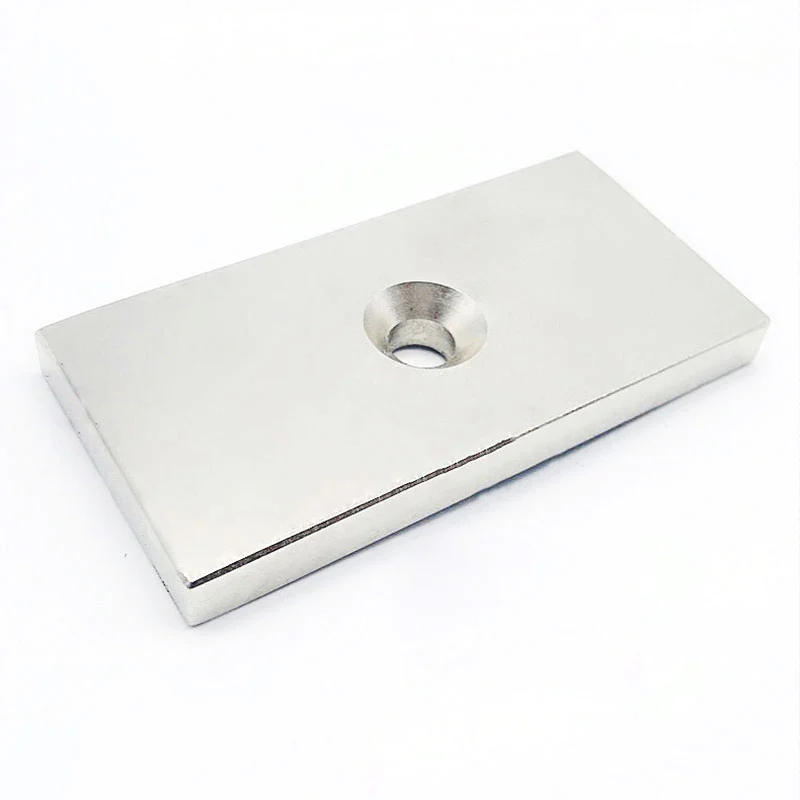
The maximum weight, or holding force, refers to the perpendicular pull force required to separate a magnet from a thick, flat, clean steel surface. For large neodymium magnets, this value is primarily influenced by:
-
Grade (N52, N42, etc.): The material grade indicates the maximum energy product. An N52 magnet is significantly stronger than an N42 of the same size.
-
Dimensions and Shape: The surface area in contact with the steel and the magnet's thickness dramatically impact its force.
-
Surface Condition and Thickness: The magnet must be fully attracted to a smooth, thick ferromagnetic material (like mild steel) to achieve its rated pull force. Rough, thin, or painted surfaces will reduce performance.
To illustrate, here is a comparative table for common large neodymium block magnets from ZHAOBAO MAGNET GROUP:
| Magnet Grade | Dimensions (mm) | Estimated Maximum Pull Force on Steel |
|---|---|---|
| N42 | 50 x 50 x 25 | Approximately 120 kg (265 lbs) |
| N45 | 50 x 50 x 25 | Approximately 135 kg (298 lbs) |
| N52 | 50 x 50 x 25 | Approximately 150 kg (330 lbs) |
Important Note: These values are for ideal laboratory conditions. In real-world applications, safety factors of 30-50% are strongly recommended. Never use a magnet at its maximum theoretical limit for lifting or overhead applications.
FAQ: Common Questions About Large Neodymium Magnets
Q: How does temperature affect large neodymium magnets?
A: High temperatures can cause irreversible loss of magnetic strength. Standard grades (N) are rated up to 80°C (176°F), while specialized grades (e.g., M, H, SH) from ZHAOBAO MAGNET GROUP can operate at 100°C, 120°C, or even 150°C, making them crucial for high-temperature environments.
Q: Can the strong force of large neodymium magnets be dangerous?
A: Yes, extreme caution is required. They can snap together with tremendous force, causing pinching, shattering, or flying debris. They can also interfere with pacemakers and erase magnetic media. Always handle them with care, wearing protective gear, and keep them stored away from each other and sensitive devices.
Q: Why is a magnet’s listed pull force often higher than what I experience in use?
A: Published pull forces assume perfect, direct contact with thick, clean steel. Factors like surface roughness, a protective coating (nickel, rubber), air gaps, or using thinner steel will all substantially reduce the effective holding force in your specific application.
Choosing the right magnet is a calculation that balances strength, safety, and environmental factors. For critical applications, expert guidance is invaluable. At ZHAOBAO MAGNET GROUP, our engineers specialize in tailoring solutions that meet your precise technical and safety requirements.
Have a specific challenge involving the holding force of large neodymium magnets? Contact us today for a free, expert consultation and let our team help you engineer a safe and powerful magnetic solution.