

What is the Maximum Tensile Load for Stranded Loose Tube Armored Fiber Optic Cable in Aerial Deployments
2026-05-19
When deploying Stranded Loose Tube Armored Fiber Optic Cable in aerial environments, one question dominates engineering discussions and procurement decisions: what is the maximum tensile load this cable can withstand during installation and long-term service? For Xuben, a manufacturer specializing in ruggedized fiber optic solutions, understanding this rating is essential to preventing fiber strain, signal degradation, and premature cable failure.
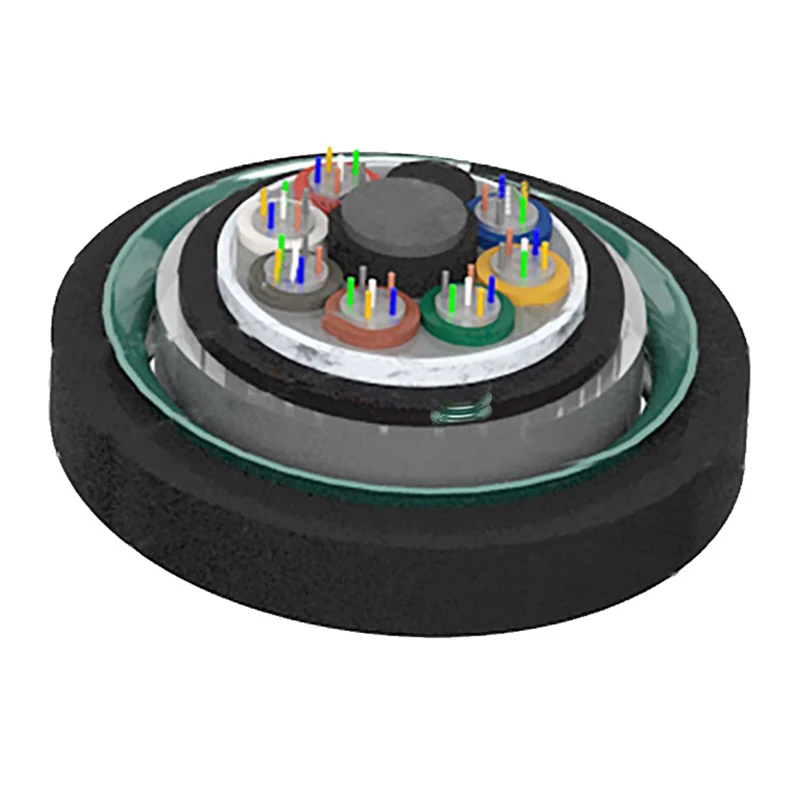
Defining Tensile Load for Aerial Cables
Tensile load refers to the pulling force applied along the cable’s longitudinal axis. In aerial deployments—such as pole-mounted or tower-to-tower installations—the cable faces tension from pulling during installation, wind forces, ice accumulation, and cable sag. The maximum recommended tensile load for a standard Stranded Loose Tube Armored Fiber Optic Cable typically ranges between 1500 N and 2700 N (approximately 340 to 600 lbf), depending on armor type, fiber count, and construction details.
| Cable Feature | Typical Tensile Load (N) | Application Suitability |
|---|---|---|
| Single armor + gel-filled tubes | 1500 – 2000 | Short-span rural poles |
| Double steel armor + water-blocking | 2000 – 2500 | High-wind coastal areas |
| Heavy-duty corrugated armor + central strength member | 2500 – 3000 | Long-span mountain crossings |
Xuben recommends always verifying the specific datasheet, as exceeding the rated tensile load can micro-bend optical fibers, permanently increasing attenuation.
Factors That Influence Maximum Tensile Load
Several structural elements determine how much pulling force a Stranded Loose Tube Armored Fiber Optic Cable can tolerate without damage:
-
Central strength member – Usually made of steel or FRP (fiber-reinforced plastic).
-
Armor type – Corrugated steel tape offers higher resistance than aluminum.
-
Loose tube fill compound – Gel-filled tubes reduce friction but do not increase tensile strength.
-
Sheath material – HDPE (high-density polyethylene) outer sheaths add minimal strength but protect against UV and abrasion.
Below is a comparison of typical load limits based on Xuben product line for aerial use:
| Xuben Model | Armor Layer | Max Installation Tensile Load (N) | Max Long-Term Operating Load (N) |
|---|---|---|---|
| XB-ATU-12F | Single steel | 1800 | 600 |
| XB-ATU-24F | Double steel | 2500 | 800 |
| XB-ATU-48F | Heavy corrugated | 2800 | 1000 |
Stranded Loose Tube Armored Fiber Optic Cable FAQ
Q1: Can I use a standard loose tube cable instead of an armored version for short aerial spans?
A1: Not recommended for spans exceeding 50 meters or locations with wildlife activity. Standard non-armored loose tube cables typically have maximum tensile loads below 600 N. Stranded Loose Tube Armored Fiber Optic Cable from Xuben provides the necessary mechanical robustness to withstand wind sway, ice loading, and rodent attacks. Without armor, fibers are vulnerable to crushing by aerial cable clamps and pecking from birds. For any permanent outdoor aerial deployment, an armored variant is the industry best practice.
Q2: What happens if I temporarily exceed the maximum tensile load during installation?
A2: Even a brief exceedance of the rated tensile load—for example, pulling at 3000 N instead of 2500 N—can cause immediate fiber elongation beyond its elastic limit. This results in increased attenuation (signal loss) that often remains permanent. In severe cases, fibers break inside the loose tubes, rendering the entire cable useless. Xuben advises using a tension meter during pulling and never exceeding 80% of the specified maximum load to provide a safety margin. Always lubricate the cable path and use swivels to prevent twisting.
Q3: How does temperature affect the tensile capacity of Stranded Loose Tube Armored Fiber Optic Cable in aerial setups?
A3: Temperature significantly impacts performance. At low temperatures (below -20°C), the HDPE sheath becomes stiffer and more brittle, reducing effective tensile resistance by up to 15–20%. At high temperatures (above 60°C), the loose tubes soften, increasing the risk of fiber buckling under tension. Xuben designs its Stranded Loose Tube Armored Fiber Optic Cable with a temperature range of -40°C to +70°C, but the maximum recommended tensile load should be linearly derated by 10% for every 20°C above 50°C. In hot climates, choose a cable with higher initial tensile margin.
Best Practices for Aerial Deployment
To preserve the structural integrity of Stranded Loose Tube Armored Fiber Optic Cable, follow these deployment rules:
-
Pulling force – Keep below 80% of rated maximum.
-
Bend radius – No less than 20× the cable diameter during pull, 15× after installation.
-
Mid-span access – Avoid stripping armor in tension zones.
-
Support hardware – Use corrosion-resistant clamps with padded grips.
Contact Us
Proper tensile load management directly impacts network reliability and maintenance costs. For detailed Stranded Loose Tube Armored Fiber Optic Cable specifications, site-specific tension calculations, or to request a sample of Xuben aerial-grade cables, contact us today through the Xuben website or email sales. Our engineering team provides free load analysis for your project.