

What Is the Maximum Operating Temperature of a Porous Alumina Chuck in Vacuum Environments
2026-06-09
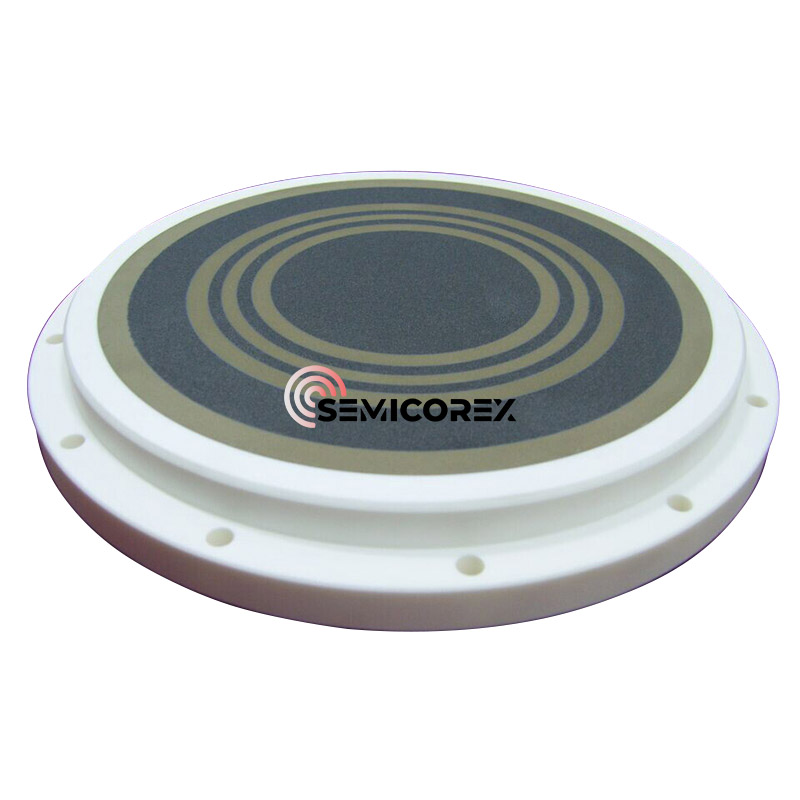
For semiconductor and precision manufacturing engineers, understanding the thermal limits of a Porous Alumina Chuck is critical. Semicorex provides advanced Porous Alumina Chucks designed to perform reliably under extreme conditions. In a vacuum environment, the maximum operating temperature typically ranges from 400°C to 800°C, depending on purity, grain size, and porosity design. High-purity Semicorex chucks sustain stability up to 650°C continuously, with short-term tolerance near 750°C, ensuring no outgassing or mechanical degradation.
Key Factors Influencing Temperature Limits
| Factor | Impact on Max Temperature |
|---|---|
| Material Purity | >99.5% Al₂O₃ enables 700°C+ performance |
| Porosity Rate | 30-40% optimum for thermal shock resistance |
| Vacuum Level | High vacuum (<1e-5 Torr) lowers limit by ~50°C |
| Heating Rate | Slow ramp (5°C/min) preserves structural integrity |
Porous Alumina Chucks FAQ
Q1: Can a Porous Alumina Chuck withstand rapid temperature cycling in vacuum?
A1: Yes, but with precautions. Semicorex chucks handle up to 15°C/min thermal ramps without cracking. For cycles exceeding 500°C, gradual heating is recommended to prevent micro-cracking. The low thermal mass of open pores dissipates stress effectively.
Q2: What happens when a Porous Alumina Chuck exceeds its maximum vacuum temperature?
A2: Exceeding 800°C in vacuum causes grain boundary diffusion, leading to pore collapse and reduced vacuum chucking force. Permanent warpage may occur above 850°C. Semicorex chucks include a safety margin of 50°C below the theoretical limit.
Q3: How does vacuum environment specifically degrade a Porous Alumina Chuck at high heat?
A3: In vacuum, lack of convective cooling creates hot spots. Alumina undergoes reduction at >700°C, forming oxygen vacancies that darken the ceramic and increase electrical conductivity. This can short electrostatic chuck electrodes. Semicorex uses a stabilized formulation to prevent reduction up to 720°C.
Best Practices for High-Temperature Vacuum Operation
-
Use ramp-and-soak profiles rather than direct heating.
-
Keep vacuum pressure above 1e-4 Torr if exceeding 600°C.
-
Inspect for discoloration after high-temperature runs.
For precise thermal management and custom designs, contact Semicorex today to discuss your specific vacuum process requirements. Our engineering team provides data sheets and failure analysis support.