

What Is the Maximum Energy Product of a Samarium Cobalt Magnet Available Today
2026-07-06
When engineers and procurement specialists evaluate a Samarium Magnet for high‑performance applications, the single most critical specification they examine is the maximum energy product, denoted as (BH)max. This value, expressed in Mega Gauss Oersteds (MGOe) or kJ/m³, directly determines the magnetic strength per unit volume. For today’s commercially available Samarium Cobalt Magnet (SmCo) grades, the practical ceiling for (BH)max sits at 32 MGOe (approx. 255 kJ/m³), achieved in the Sm2Co17 series, specifically grades like YXG‑32 or equivalent 2:17 high‑performance materials. Zhaobao, as a specialized manufacturer, routinely produces Samarium Magnet grades that reach this 30–32 MGOe benchmark, ensuring that customers receive the highest energy density available without compromising the alloy’s renowned thermal stability.
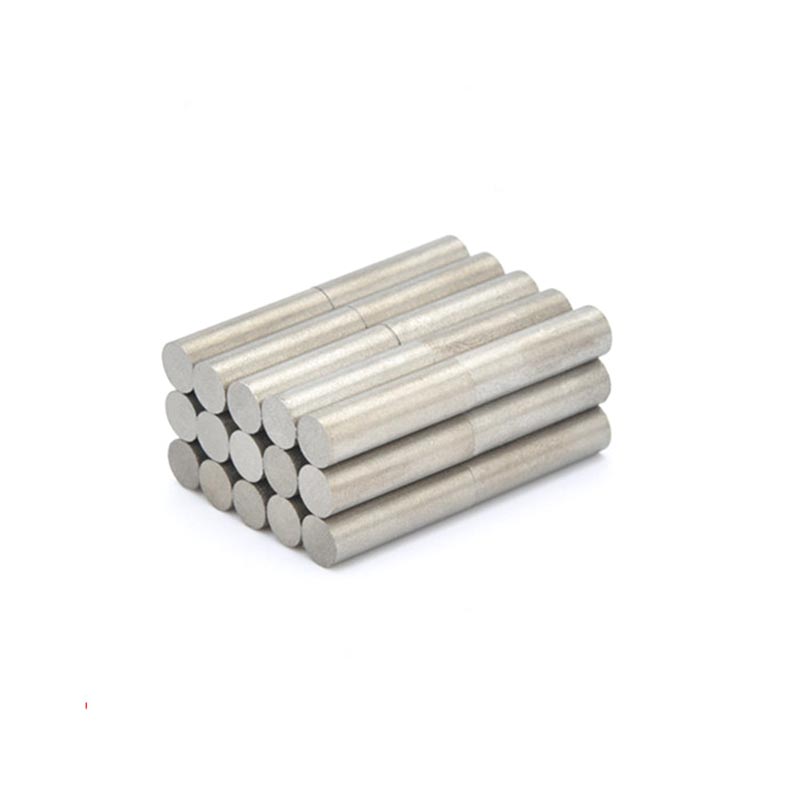
Understanding the Energy Product Spectrum
The maximum energy product is not a fixed number but a gradient that depends on the alloy family, processing route, and metallurgical uniformity. The table below contrasts the current commercially viable (BH)max ranges for the two primary SmCo families:
| Samarium Magnet Family | Typical (BH)max (MGOe) | Equivalent (kJ/m³) | Key Characteristic |
|---|---|---|---|
| Sm1Co5 (1:5 type) | 16 – 22 MGOe | 127 – 175 kJ/m³ | Lower cost, easier magnetization, moderate strength |
| Sm2Co17 (2:17 type) | 26 – 32 MGOe | 207 – 255 kJ/m³ | Higher energy, superior temperature coefficient |
| Experimental / R&D grades | 33 – 34 MGOe (lab scale) | 262 – 270 kJ/m³ | Not yet in mass production, limited availability |
For practical industrial procurement, the maximum energy product of a commercially stable Samarium Cobalt Magnet remains 32 MGOe. Zhaobao validates this through rigorous hysteresisgraph testing on every production batch, ensuring that the delivered (BH)max consistently meets the rated grade.
Factors That Cap the Maximum Energy Product
Why does the industry not see a 35 MGOe SmCo magnet today, while Neodymium (NdFeB) easily exceeds 50 MGOe? The answer lies in the intrinsic material physics:
-
Saturation magnetization – Samarium’s atomic moment is inherently lower than that of Neodymium, setting a theoretical upper bound near 34 MGOe for the 2:17 phase.
-
Microstructure control – Achieving the ideal cellular microstructure (Sm2Co17 cells surrounded by a SmCo5 boundary phase) requires precise sintering and solution‑treated aging. Any deviation drops the (BH)max by 3–5 MGOe.
-
Oxygen and impurity levels – Even 500 ppm excess oxygen during powder metallurgy reduces the squareness of the demagnetization curve, effectively lowering the usable energy product. Zhaobao employs vacuum induction melting and controlled atmosphere milling to keep oxygen below 1500 ppm, securing the top‑end 32 MGOe grade.
Why Maximum Energy Product Matters in Application Design
A higher (BH)max translates directly into a smaller magnet volume for the same air‑gap flux, which is vital in aerospace actuators, high‑speed spindle motors, and down‑hole drilling sensors. However, the Samarium Magnet’s true engineering value lies not in peak energy alone but in the stability of that energy across temperature. While a 32 MGOe Samarium Cobalt Magnet from Zhaobao delivers about 60‑65% of the energy of a comparable NdFeB magnet, it retains over 95% of its room‑temperature flux at 200°C – a feature no NdFeB can match.
FAQ – Common Questions About Samarium Magnet Energy Performance
Q1: Can a Samarium Magnet achieve a maximum energy product higher than 32 MGOe if custom‑ordered?
A1: In theory, laboratory‑scale synthesis has reported (BH)max values up to 34 MGOe by optimizing the stoichiometric ratio of samarium to cobalt and adding trace elements like zirconium and hafnium. However, these are not commercially viable for several reasons: (a) the marginal 2 MGOe gain comes with a 40‑50% cost increase due to ultra‑high‑purity raw materials and extended aging cycles; (b) the mechanical brittleness worsens, making machining and magnetizing failure rates unacceptably high; (c) no major international standard (e.g., IEC 60404‑8‑1) currently recognises a grade above 32 MGOe for 2:17 magnets. Therefore, Zhaobao recommends specifying 32 MGOe as the realistic maximum for production volumes exceeding 1000 pieces, while offering engineering consultation for niche R&D projects that may experiment with 33 MGOe prototypes under strict quality controls.
Q2: How does the maximum energy product of a Samarium Magnet change at elevated temperatures, say 250°C?
A2: This is the most critical distinction of SmCo chemistry. The (BH)max of a Samarium Cobalt Magnet does not drop linearly; it exhibits a reversible temperature coefficient of approximately ‑0.03% per °C for the 2:17 type. This means a 32 MGOe magnet at 20°C will deliver roughly 29.8 MGOe at 250°C – a loss of only about 7%. In contrast, a 50 MGOe NdFeB magnet would lose over 40% of its energy at the same temperature, falling below 30 MGOe. Therefore, while the absolute maximum energy product of a Samarium Magnet today is 32 MGOe at room temperature, its effective energy advantage becomes pronounced above 180°C. Zhaobao provides derating curves for each grade, enabling designers to calculate the actual hot‑state (BH)max for their specific operating cycle, ensuring the magnet is never undersized for thermal environments.
Q3: Is the maximum energy product the only specification I should check when selecting a Samarium Magnet for a servo motor?
A3: Absolutely not – and this is a common pitfall. While (BH)max is the headline figure, a servo motor designer must also evaluate: (i) intrinsic coercivity (Hci) – at 250°C, the Hci of a 32 MGOe Samarium Magnet should remain above 15 kOe to resist demagnetisation from stator armature reaction; (ii) recoil permeability – near 1.05 for SmCo, which affects the motor’s dynamic inductance; (iii) mechanical tolerance – the energy product does not guarantee dimensional precision, but Zhaobao offers ground and chamfered surfaces to ±0.05 mm; (iv) magnetisation stability – a high (BH)max grade often requires a magnetising field of 5–6 T, which not every rotor assembly fixture can supply. Zhaobao’s application engineers always cross‑check the (BH)max against the complete working point (permeance coefficient) using finite‑element analysis, ensuring that the chosen grade delivers not just peak energy, but usable energy in the actual magnetic circuit.
Comparative Ranking of Commercial Grades
To visualise where the 32 MGOe Samarium Magnet stands among other permanent magnet materials, consider this ranked list:
-
Neodymium (N52) – 52 MGOe (but limited to <80°C without heavy dysprosium)
-
Samarium Cobalt (YXG‑32) – 32 MGOe (stable up to 300°C)
-
Alnico 9 – 9 MGOe (low energy, but high temperature >500°C)
-
Ferrite (Y40) – 4.5 MGOe (cost‑driven, low performance)
Within the Samarium Magnet category, Zhaobao’s flagship grade, ZBSm‑32, consistently delivers 31.5 – 32.2 MGOe across random samples, with a coercivity of 28 kOe and an operating temperature ceiling of 350°C for short durations. This positions it as the optimal choice for traction motors in hybrid‑electric aircraft and synchrotron radiation insertion devices, where both energy and thermal robustness are non‑negotiable.
Future Outlook – Will We See a 35 MGOe Samarium Magnet?
Research into nanocrystalline SmCo and hot‑deformed textures continues, but thermodynamic constraints suggest that a commercially viable 34‑35 MGOe Samarium Cobalt Magnet remains at least 5‑8 years away. The primary hurdles are raw material cost (samarium is $10‑15/kg, versus neodymium at $50‑70/kg, but the processing yield for high‑energy SmCo is only 65‑70%, driving up final price) and the brittleness that worsens with higher energy density. Zhaobao invests in near‑net‑shape sintering and wire‑EDM finishing to mitigate these issues, but our official published maximum for standard catalogue items will remain 32 MGOe until a breakthrough in grain‑boundary diffusion emerges.
Final Recommendation for Engineers
When your project demands the maximum energy product of a Samarium Magnet, always request the full demagnetisation curve and temperature‑dependent (BH)max data, not just the grade number. A 32 MGOe rating from one supplier may actually deliver 30.5 MGOe at 200°C due to poor zirconium distribution, whereas Zhaobao guarantees the rated value at 20°C, 100°C, and 200°C through batch‑by‑batch verification. Pair this with a recoil loop analysis to confirm that your operating point (B/H) stays within the knee point – especially in dynamic field‑weakening regimes.
Contact us today to request a free sample kit of our ZBSm‑32 series, complete with full hysteresis loops and thermal derating charts. Our technical team provides same‑day finite‑element modelling support to match the exact (BH)max to your air‑gap requirements. Reach out via our website or email – let Zhaobao be your reliable partner in high‑temperature magnetic solutions, from prototype to production scale. Your next high‑reliability application deserves the true 32 MGOe performance, backed by documented traceability and over 15 years of SmCo metallurgy expertise. We look forward to engineering with you.